
7 Year Rule For IHT: How It Works and What You Need to Know
August 18, 2026
Leaving the UK: Do You Still Have to Pay UK Tax?
August 20, 2026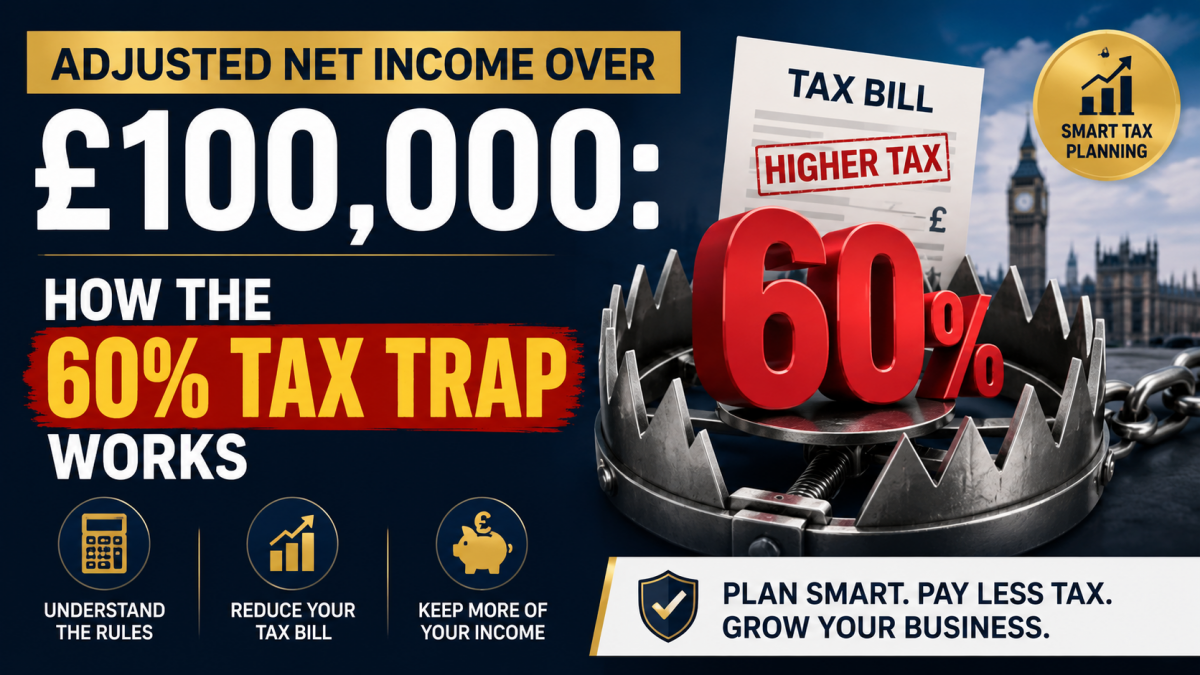
£100k 60% Tax Trap: How Adjusted Net Income Over £100,000 Works
£100k 60% Tax Trap is the term commonly used to describe the unusually high effective tax rate that can apply when your adjusted net income exceeds £100,000. For many higher earners, reaching a six-figure income feels like an important financial milestone. However, once adjusted net income moves above £100,000, the UK tax system starts withdrawing your tax-free Personal Allowance.
The result is that some income between £100,000 and £125,140 can effectively be taxed at 60% for taxpayers subject to the main UK income tax rates. The £100k 60% Tax Trap does not arise because HMRC has introduced a formal 60% Income Tax band. Instead, it results from paying 40% Income Tax while simultaneously losing part of your Personal Allowance.
The £100k 60% Tax Trap can affect UK taxpayers whose adjusted net income exceeds £100,000. At this point, your Personal Allowance starts to reduce, potentially creating an effective 60% marginal Income Tax rate.
The £100k 60% Tax Trap happens because your Personal Allowance is reduced by £1 for every £2 of income above £100,000. Once adjusted net income reaches £125,140, the standard Personal Allowance is completely lost.
Understanding the £100k 60% Tax Trap can help you plan ahead. Pension contributions and Gift Aid donations may reduce adjusted net income and potentially help restore some or all of your Personal Allowance.
Understanding the £100k 60% Tax Trap is particularly important for company directors, employees receiving bonuses, landlords, consultants and other professionals whose total taxable income is around the £100,000 threshold. Good planning can sometimes reduce adjusted net income and therefore restore some or all of the Personal Allowance.
What is adjusted net income?
Adjusted net income is a specific tax calculation used by HMRC. It is not necessarily the same as your salary, taxable income or the amount shown on your P60.
Broadly, you begin with your total taxable income from different sources. This could include employment income, self-employment profits, dividends, savings interest, rental profits, pension income and certain other taxable receipts. Relevant deductions and adjustments are then made to arrive at adjusted net income.
This distinction matters because the £100k 60% Tax Trap is determined by adjusted net income rather than simply your employment salary. Someone earning a salary below £100,000 could therefore still be affected if they also receive substantial dividends, rental profits or other taxable income.
What is adjusted net income?
Adjusted net income is your total taxable income from different sources before certain tax reliefs are taken into account. It can include salary, bonuses, dividends, rental profits, savings interest and self-employment income, so it is not necessarily the same as the figure shown on your P60.
This calculation is important because the £100k 60% Tax Trap is based on adjusted net income rather than salary alone. Even if your salary is below £100,000, additional income from property, dividends or investments could push you above the threshold and start reducing your Personal Allowance.
For example, an individual earning £92,000 from employment and receiving £12,000 of taxable rental profit could potentially have income above the £100,000 threshold. Looking only at their salary could cause them to overlook the £100k 60% Tax Trap.
How the £100k 60% Tax Trap works
For the 2026/27 tax year, the standard Personal Allowance is £12,570. However, once adjusted net income exceeds £100,000, the Personal Allowance is reduced by £1 for every £2 of adjusted net income above £100,000.
This withdrawal creates the £100k 60% Tax Trap.
If your adjusted net income is £110,000, you are £10,000 above the threshold. Your Personal Allowance is therefore reduced by £5,000:
£10,000 ÷ 2 = £5,000
Your Personal Allowance would consequently fall from £12,570 to £7,570.
Once adjusted net income reaches £125,140, the entire £12,570 Personal Allowance has been withdrawn. This is why the £100k 60% Tax Trap broadly applies to income between £100,000 and £125,140 for taxpayers subject to the main rates applicable in England, Wales and Northern Ireland.
The rules for Scottish taxpayers differ because Scotland has different Income Tax rates and bands on non-savings, non-dividend income, so the effective marginal rate can differ.
Why does the effective tax rate reach 60%?
The £100k 60% Tax Trap becomes easier to understand with a simple example.
Suppose your adjusted net income increases from £100,000 to £102,000. The additional £2,000 would ordinarily be taxed at the higher rate of 40%, producing £800 of Income Tax.
However, because your adjusted net income has exceeded £100,000 by £2,000, you also lose £1,000 of your Personal Allowance. That additional £1,000 becomes taxable at 40%, creating another £400 of tax.
The total additional Income Tax is therefore:
- £800 tax on the additional £2,000 of income
- £400 tax because £1,000 of Personal Allowance is lost
- Total additional tax: £1,200
You earned an additional £2,000 but paid £1,200 of additional Income Tax.
That is an effective marginal Income Tax rate of 60%.
This calculation is the reason the £100k 60% Tax Trap can be surprisingly expensive. National Insurance and other deductions can affect the overall amount retained from additional earnings, but the commonly quoted 60% figure specifically describes the Income Tax effect of the Personal Allowance taper.
£100k 60% Tax Trap example
Consider someone with adjusted net income of £120,000.
Their income exceeds £100,000 by £20,000. As the Personal Allowance falls by £1 for every £2 above the threshold, they lose £10,000 of their allowance.
Their remaining Personal Allowance would therefore be only £2,570.
This is where the £100k 60% Tax Trap can make bonuses and additional income particularly costly. A person may receive a sizeable pay increase but retain significantly less than expected because additional income is taxed while their tax-free allowance is simultaneously disappearing.
The £100k 60% Tax Trap can also arise unexpectedly where an employee receives a year-end bonus, taxable benefits, investment income or rental income. Therefore, estimating total annual income before the tax year ends can be valuable.
What income counts towards the £100k threshold?
A common misunderstanding about the £100k 60% Tax Trap is that only salary counts towards the £100,000 limit. In reality, adjusted net income can include income from several sources.
The £100,000 threshold is based on adjusted net income, which can include income from several sources. This may include salary, bonuses, taxable benefits, self-employment profits, rental income, dividends, savings interest and pension income.
This means you could be affected by the £100k 60% Tax Trap even if your salary is below £100,000. For example, additional rental profits, dividends or investment income could push your adjusted net income above the threshold and begin reducing your Personal Allowance.
Depending on your circumstances, relevant income may include salary and bonuses, taxable benefits, self-employment profits, rental profits, dividends, savings interest and pension income.
This means a director receiving a relatively modest salary but substantial dividends could still enter the £100k 60% Tax Trap. Similarly, an employee earning £95,000 could cross the threshold because of rental income or investment income.
Tax planning should therefore consider your overall position rather than one individual source of income.
Pension contributions and the £100k 60% Tax Trap
Pension planning can be particularly relevant when dealing with the £100k 60% Tax Trap. Certain personal pension contributions can reduce adjusted net income, potentially restoring some or all of the Personal Allowance.
For example, suppose your adjusted net income before considering an eligible pension contribution is £110,000. If an appropriate gross pension contribution reduces your adjusted net income to £100,000, the Personal Allowance taper may be eliminated.
The potential benefit can be significant because the pension contribution may not only attract pension tax relief but may also help recover Personal Allowance that would otherwise have been lost through the £100k 60% Tax Trap.
However, pension planning must be considered carefully. Annual allowance rules, previous contributions, employer contributions, relevant earnings requirements and potential tapering of the pension annual allowance for very high earners can all be relevant.
It is therefore important not to make a pension contribution purely on the assumption that it will automatically remove the £100k 60% Tax Trap without first checking how the contribution affects your individual tax position.
Gift Aid and adjusted net income
Gift Aid donations can also be relevant to the £100k 60% Tax Trap. Qualifying Gift Aid donations can extend the basic-rate band and reduce adjusted net income based on the grossed-up value of the donation.
For example, if you donate £800 under Gift Aid, the charity normally claims £200 from HMRC, giving a gross donation of £1,000. Subject to the relevant conditions, that £1,000 gross amount can be taken into account when calculating adjusted net income.
For someone slightly above £100,000, this can potentially help reduce exposure to the £100k 60% Tax Trap while supporting a charity.
Gift Aid should nevertheless reflect genuine charitable giving. You should also ensure you have paid sufficient UK Income Tax and/or Capital Gains Tax to cover the tax reclaimed by charities on your donations.
Bonuses can unexpectedly trigger the tax trap
Employees often enter the £100k 60% Tax Trap because of bonuses. Someone with a basic salary of £90,000 may initially assume the Personal Allowance taper is irrelevant. However, a £15,000 bonus could take employment income to £105,000 before other taxable income and benefits are considered.
The same issue can occur with commission, overtime, share-related employment income or taxable benefits.
If your earnings fluctuate, reviewing your expected adjusted net income before 5 April can provide time to consider legitimate tax-planning options rather than discovering the £100k 60% Tax Trap after the tax year has ended.
Directors and business owners
Company directors may have more flexibility over how and when they extract income, although decisions must be commercially justified and comply with company and tax law.
Salary, dividends and benefits can all influence adjusted net income. A director considering a large dividend should therefore assess whether it could push adjusted net income into the £100k 60% Tax Trap.
For example, taking an additional dividend simply because the company has sufficient distributable reserves may have wider personal tax consequences. The director’s salary, dividends from all companies, property income, interest and other taxable income should be considered together.
Timing can therefore matter, although income should never be artificially manipulated without considering the relevant tax rules.
Other consequences of earning over £100,000
The £100k 60% Tax Trap is not the only reason to monitor adjusted net income around £100,000.
One particularly important issue for parents is Tax-Free Childcare. Eligibility includes an adjusted net income limit of £100,000 per parent. Exceeding that limit can therefore create financial consequences beyond the Personal Allowance taper.
Higher income can also affect other allowances, reliefs and tax-planning decisions depending on individual circumstances.
This means that the real financial impact of moving from £99,000 to slightly above £100,000 can sometimes be greater than the Income Tax calculation alone suggests.
Can you avoid the £100k 60% Tax Trap?
There is no universal solution to the £100k 60% Tax Trap, but legitimate tax planning can sometimes reduce its impact.
Depending on the circumstances, planning could involve qualifying pension contributions, Gift Aid donations, reviewing the timing of discretionary income or considering how a company director extracts profits.
The objective should not simply be to avoid earning more. Instead, it is to understand how additional income interacts with the Personal Allowance and make informed financial decisions.
It is also important to distinguish tax avoidance schemes from ordinary tax planning. Pension contributions and genuine Gift Aid donations are established parts of the UK tax system, whereas artificial arrangements designed primarily to obtain a tax advantage can carry significant risks.
Why planning before 5 April matters
The £100k 60% Tax Trap is best considered before the tax year ends.
Once 5 April has passed, some planning opportunities may no longer be available for that particular tax year. If your expected adjusted net income is close to £100,000, forecasting income several months before the year-end can therefore be useful.
Start by estimating salary, bonuses, dividends, rental profits, interest and other taxable income. Then consider relevant deductions and reliefs when calculating expected adjusted net income.
If the calculation shows income of £103,000, £110,000 or £120,000, there may still be time to assess whether appropriate action could reduce the impact of the £100k 60% Tax Trap.
Common mistakes to avoid
One of the biggest mistakes is assuming the £100,000 threshold applies only to salary. Another is waiting until the Self Assessment tax return is prepared to consider the issue.
Taxpayers may also misunderstand pension contributions and assume that every payment reduces adjusted net income in exactly the same way. The tax treatment depends on how contributions are made and the individual’s circumstances.
Another mistake is focusing exclusively on the 60% figure. The £100k 60% Tax Trap represents an effective marginal Income Tax rate across the Personal Allowance withdrawal range; it does not mean that all of your income is taxed at 60%.
Understanding this distinction is essential when comparing different planning options.
Final thoughts
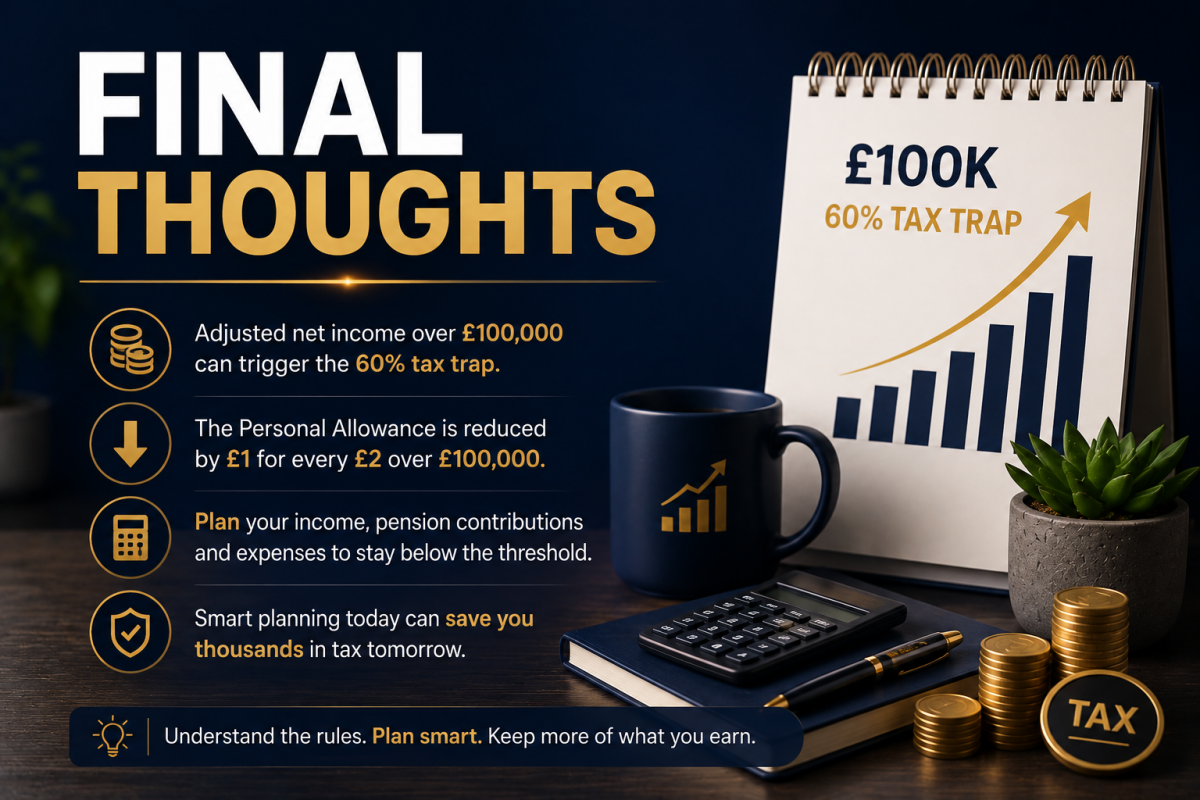
The £100k 60% Tax Trap is one of the most important quirks of the UK Income Tax system for higher earners. Once adjusted net income exceeds £100,000, the Personal Allowance starts disappearing at £1 for every £2 of additional income.
For taxpayers subject to the main UK rates, this produces an effective 60% marginal Income Tax rate on income within the Personal Allowance taper zone. By £125,140, the standard Personal Allowance has been completely removed.
The £100k 60% Tax Trap can significantly increase the tax cost for individuals whose adjusted net income exceeds £100,000. As the Personal Allowance is gradually withdrawn, the effective marginal Income Tax rate can reach 60% within the relevant income range.
Understanding your adjusted net income is therefore essential, particularly if you receive bonuses, dividends, rental profits or other income alongside your salary. Monitoring your total income before the end of the tax year can help prevent unexpected tax consequences.
With appropriate planning, pension contributions and Gift Aid donations may help reduce adjusted net income and restore some of your Personal Allowance. If you are approaching the £100k 60% Tax Trap, reviewing your tax position early can help you make more informed financial decisions.
For higher earners, the £100k 60% Tax Trap can make a pay rise, bonus or additional income less rewarding than expected. Knowing when the Personal Allowance begins to disappear and how adjusted net income is calculated can help you identify the tax impact early and consider appropriate planning before the end of the tax year.
The £100k 60% Tax Trap can affect employees, directors, landlords, consultants and investors, particularly where several sources of income combine to push adjusted net income above £100,000. Monitoring total income rather than salary alone is therefore essential.
Pension contributions and Gift Aid can sometimes reduce adjusted net income and help recover Personal Allowance. The right approach, however, depends on the individual’s wider tax and financial circumstances.
If you expect your adjusted net income to approach or exceed £100,000, reviewing your position before the end of the tax year can help you understand the £100k 60% Tax Trap, identify available planning opportunities and avoid an unexpected tax bill.
Need help deciding what’s best for your situation?
📞 Call 0161 710 1901
📧 Email Tax@TaxesDoneRight.co.uk
Visit www.taxesdoneright.co.uk