The Real Cost of Doing Your Own Taxes (It’s Not Just Time)
April 27, 2026
Limited Cost Trader Rules Explained And Why They Catch People Out
April 30, 2026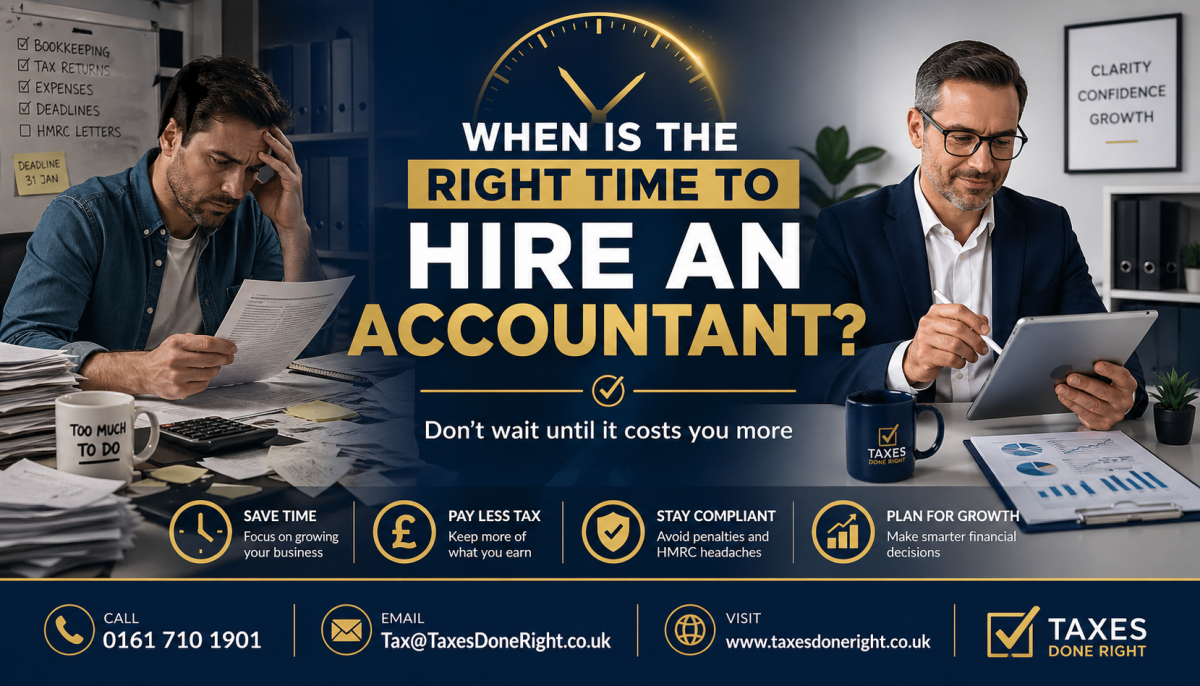
Starting a small business often means wearing multiple hats — sales, marketing, operations, and yes… finances. In the early days, many business owners try to manage everything themselves, including bookkeeping and taxes. But the real question is: when does it make sense to bring in an accountant?
The answer isn’t just about affordability — it’s about timing, growth, and avoiding costly mistakes.
1. When You’re Just Starting Out
Many assume you only need an accountant once you’re making “serious money.” In reality, getting advice early can set the foundation for everything that follows.
At the start, an accountant can help you:
- Choose the right structure (sole trader vs limited company)
- Register correctly with HMRC
- Set up bookkeeping systems properly
- Understand what expenses you can claim
Getting this wrong early on can lead to problems later — from overpaying tax to compliance issues.
2. When Your Income Starts Growing
Once your business begins generating consistent income, things get more complex.
This is usually the point where:
- Tax liabilities increase
- Cash flow becomes more important
- You need to plan ahead, not just react
An accountant doesn’t just “file your return” — they help you manage your tax position proactively, ensuring you’re not paying more than necessary.
3. When You’re Spending Too Much Time on Finances
Time is one of your most valuable resources as a business owner.
If you find yourself:
- Spending evenings doing bookkeeping
- Stressing over tax deadlines
- Unsure if your numbers are correct
Then it’s probably time to outsource.
The opportunity cost is huge — time spent on admin is time not spent growing your business.
4. When You’re Unsure About What You Can Claim
One of the biggest risks of DIY accounting is missing allowable expenses.
Many business owners either:
- Claim too little (and overpay tax), or
- Claim incorrectly (risking HMRC penalties)
An accountant ensures you claim correctly, confidently, and in line with current legislation.
5. When You’re Considering Going Limited
This is a key milestone.
Switching from sole trader to limited company can bring tax efficiencies — but only if done correctly and at the right time.
Factors to consider include:
- Profit levels
- How much you want to extract as salary/dividends
- IR35 (if you’re contracting)
- Administrative responsibilities
This decision should always be made with professional advice — not guesswork.
6. When HMRC Requirements Increase (MTD & Compliance)
With Making Tax Digital (MTD) coming into effect from April 2026 for many individuals, compliance is becoming more demanding.
If your income exceeds £50,000 from self-employment or property, you’ll need to:
- Keep digital records
- Submit quarterly updates
- Complete a final declaration
An accountant can help you stay compliant and avoid penalties while making the process seamless.
7. When You Want Peace of Mind
Perhaps the most overlooked reason is this:
Peace of mind.
Knowing that:
- Your accounts are accurate
- Your tax is calculated correctly
- Deadlines are met
- You’re not missing opportunities
…is often worth far more than the fee itself.
Final Thoughts
The right time to hire an accountant isn’t just when you “can afford one” — it’s when the cost of not having one becomes higher than the cost of hiring one.
For many small business owners, that point comes much earlier than expected.
If you’re unsure whether now is the right time, it probably is.
📞 Call: 0161 710 1901
📧 Email: Tax@TaxesDoneRight.co.uk
Dm Us:
www.taxesdoneright.co.uk