
Higher Rate Taxpayer? You Could Be Missing Pension Tax Relief
June 11, 2026
What Happens When Your Company Makes a Loss?
June 12, 2026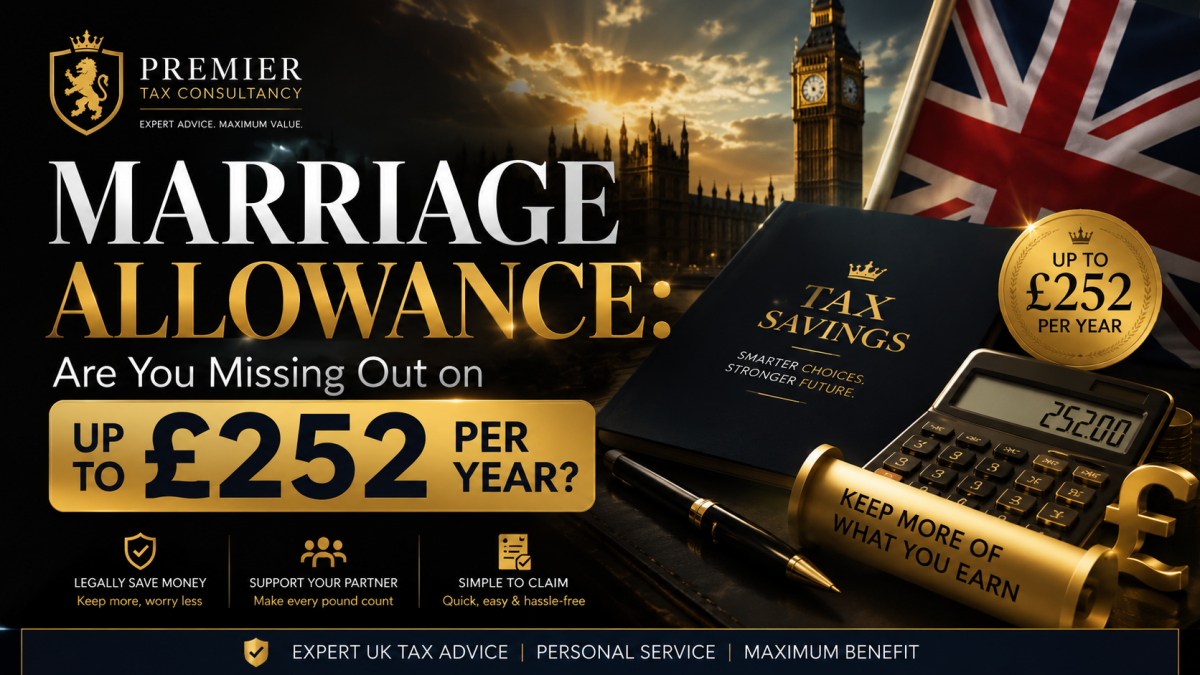
Marriage Allowance: Are You Missing Out on Up to £252 Per Year?
Marriage Allowance is one of the most overlooked tax reliefs available to couples in the UK. Every year, thousands of eligible married couples and civil partners fail to claim a tax saving that could be worth up to £252 annually.
If you are married or in a civil partnership and one partner earns less than the Personal Allowance threshold, you could be entitled to transfer part of that unused allowance to your spouse or civil partner. This simple tax relief can reduce the higher-earning partner’s tax bill and potentially result in a tax refund for previous years.
In this article, we explain how Marriage Allowance works, who qualifies, how much you could save, and how to make a claim.
What Is Marriage Allowance?
Marriage Allowance is a tax benefit that allows one spouse or civil partner to transfer a portion of their unused Personal Allowance to their partner.
The Personal Allowance is the amount of income you can earn before paying Income Tax. Where one partner does not use all of their Personal Allowance, a portion of it can be transferred to the other partner, provided certain conditions are met.
The transfer reduces the recipient’s Income Tax bill and can generate a useful annual tax saving.
Who Can Claim it?
To qualify for Marriage Allowance, all of the following conditions must be met:
The Transferor Must:
- Be married or in a registered civil partnership.
- Have income below the Personal Allowance threshold.
- Not pay Income Tax.
The Recipient Must:
- Be a basic rate taxpayer.
- Have income above the Personal Allowance but below the higher rate tax threshold.
Marriage Allowance is not available if the receiving partner is a higher rate or additional rate taxpayer.
How Much Can This Allowance Save?
For the current tax year, the lower-earning spouse or civil partner can transfer 10% of their Personal Allowance to their partner.
This can reduce the recipient’s Income Tax liability by up to £252 per year.
While £252 may not seem substantial, many couples have never claimed Marriage Allowance and may be entitled to backdate their claim for previous tax years.
This means some households could receive a refund worth over £1,000 depending on their circumstances.
Can Marriage Allowance Be Backdated?
One of the most attractive features of this allowance is that claims can often be backdated.
Eligible couples can generally backdate their claim for up to four previous tax years, provided they met the qualifying conditions during those years.
This can result in a significant tax refund being paid directly by HMRC.
Many couples discover they have been eligible for several years without realising it, making this allowance a valuable relief to investigate.
Examples of Marriage Allowance in Practice
Example 1: One Partner Does Not Work
Sarah earns £10,000 per year and therefore pays no Income Tax.
Her husband David earns £35,000 per year and pays tax at the basic rate.
Because Sarah’s income is below the Personal Allowance threshold, she may be able to transfer part of her unused allowance to David through Marriage Allowance.
David’s Income Tax bill is reduced, creating a tax saving for the household.
Example 2: Part-Time Employment
Emma works part-time and earns £11,500 annually.
Her civil partner James earns £42,000 per year and remains within the basic rate tax band.
Emma may be eligible to transfer part of her unused Personal Allowance through Marriage Allowance, reducing James’s tax bill.
Common Misunderstandings About Marriage Allowance
Many taxpayers incorrectly assume they automatically receive Marriage Allowance after getting married. This is not the case.
Some common misconceptions include:
- This Allowance is applied automatically.
- Only non-working spouses qualify.
- Couples cannot claim for previous years.
- Civil partners are excluded.
In reality, eligible married couples and civil partners must usually make a claim to benefit from Marriage Allowance.
How to Claim Marriage Allowance
Claiming Marriage Allowance is generally straightforward.
Applications can be made online through HMRC, and in most cases the process takes only a few minutes.
You will typically need:
- Both partners’ National Insurance numbers.
- Identification details.
- Information regarding your income levels.
Once approved, HMRC adjusts the recipient’s tax code to provide the tax relief.
Where previous years are included in the claim, HMRC may issue a refund for any overpaid tax.
When Marriage Allowance May Not Be Suitable
Although It is beneficial for many couples, it is not suitable in every situation.
You may not qualify if:
- The recipient pays higher rate tax.
- The transferor’s income exceeds the Personal Allowance.
- You are not married or in a civil partnership.
- Your circumstances have changed significantly during the tax year.
It is important to review eligibility before making a claim.
Marriage Allowance and Tax Planning
It is often overlooked as part of wider tax planning.
While the annual saving may appear modest, combining Marriage Allowance with other available reliefs can improve overall household tax efficiency.
Many families focus on larger tax-saving opportunities while unintentionally ignoring straightforward reliefs such as Marriage Allowance that can provide immediate benefits with minimal effort.
A periodic review of your tax position can help ensure that all available allowances and reliefs are being utilised effectively.
Final Thoughts
Marriage Allowance remains one of the simplest tax reliefs available to eligible couples, yet many households continue to miss out on valuable savings.
If you are married or in a civil partnership and one partner earns less than the Personal Allowance threshold, it is worth checking whether Marriage Allowance could reduce your tax bill.
With potential annual savings of up to £252 and the possibility of backdated refunds, a quick eligibility check could result in a welcome boost to your household finances.
If you are unsure whether you qualify for Marriage Allowance or need help reviewing your tax position, professional advice can help ensure you receive all the tax reliefs available to you.
Need help deciding what’s best for your situation?
📞 Call 0161 710 1901
📧 Email Tax@TaxesDoneRight.co.uk
Visit www.taxesdoneright.co.uk