Double Tax Relief: How Double Tax Relief Works for Foreign Income
July 21, 2026
UK Business Bank Account: Which UK Business Bank Account Is Right for Your Company?
July 23, 2026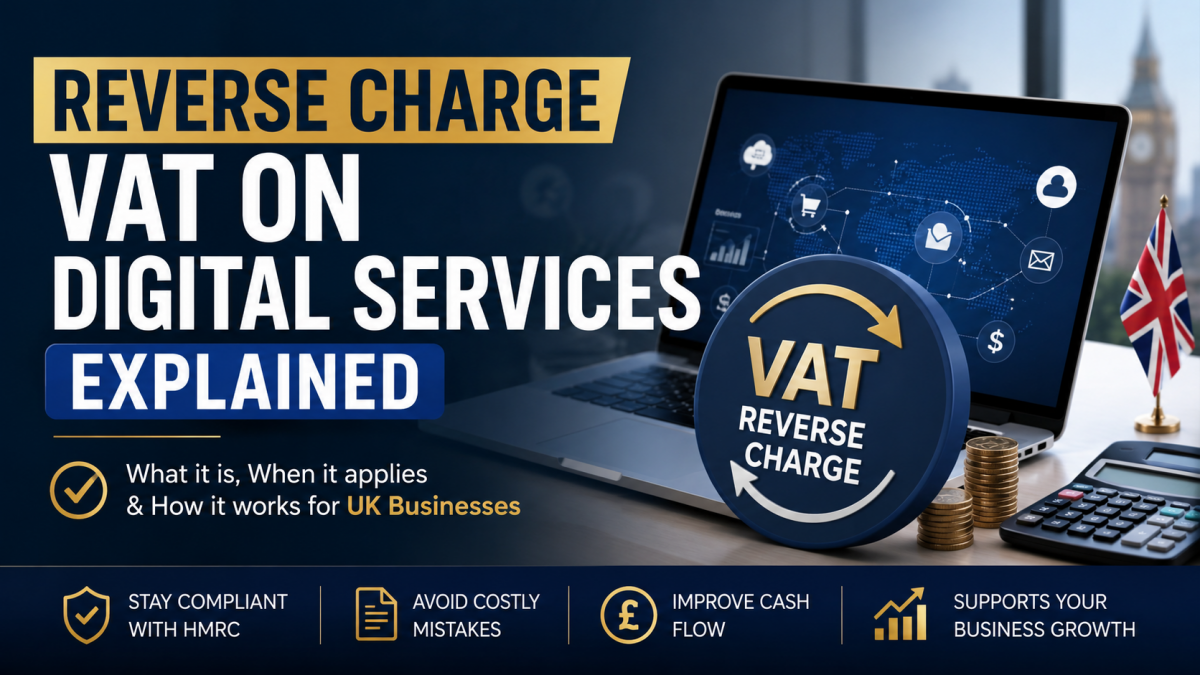
Reverse Charge VAT: Reverse Charge VAT on Digital Services Explained
Reverse Charge VAT is one of the most misunderstood areas of UK VAT, particularly when businesses purchase digital services from overseas suppliers. Many companies subscribe to software, cloud storage, online advertising, AI tools, website hosting, or digital subscriptions without realising they may need to account for UK VAT themselves.
Getting Reverse Charge VAT wrong can result in VAT errors, inaccurate returns, and unnecessary HMRC enquiries. Fortunately, once you understand how the rules work, applying them correctly becomes much simpler.
In this guide, we’ll explain what Reverse Charge VAT is, when it applies to digital services, how to record it correctly, and the common mistakes businesses should avoid.
What Is Reverse Charge VAT?
Reverse Charge VAT is a mechanism that transfers the responsibility for accounting for VAT from the overseas supplier to the UK customer.
Instead of the supplier charging UK VAT, the UK business receiving the service calculates the VAT itself and includes it on its VAT Return.
The purpose of Reverse Charge VAT is to ensure overseas suppliers and UK suppliers are treated equally while preventing VAT from being lost when services are purchased across borders.
For many UK businesses, Reverse Charge VAT commonly applies when purchasing digital services from companies established outside the UK.
Examples include:
- Cloud accounting software
- Website hosting
- Domain registration
- Online advertising
- AI subscriptions
- Graphic design platforms
- CRM software
- Email marketing services
- Project management software
- Video conferencing platforms
When Does Reverse Charge VAT Apply?
The Reverse Charge VAT rules generally apply when:
- You are VAT registered in the UK.
- The supplier is established outside the UK.
- The purchase is a business service.
- The place of supply rules determine the service belongs in the UK.
Many businesses mistakenly believe that if no VAT appears on an invoice, no VAT needs accounting for.
In reality, Reverse Charge VAT often means you must calculate the VAT yourself.
For example:
A UK limited company purchases:
- Microsoft Azure
- Google Workspace
- Adobe Creative Cloud
- ChatGPT Team
- Amazon Web Services
- Canva Pro
Depending on where the supplier belongs and how the service is supplied, Reverse Charge VAT may need to be applied.
How Reverse Charge VAT Works
Imagine a UK VAT-registered company purchases software from a company based in Ireland.
Invoice amount:
£500
No UK VAT is charged.
Instead, the UK business:
- Calculates 20% VAT (£100)
- Includes £100 as Output VAT
- Includes £100 as Input VAT (if fully recoverable)
The effect is usually VAT neutral for businesses entitled to full VAT recovery.
However, the transaction still needs reporting correctly on the VAT Return.
Why Reverse Charge VAT Exists
The aim of Reverse Charge VAT is to prevent overseas businesses gaining an unfair advantage over UK suppliers.
Without the reverse charge:
- Overseas suppliers may not charge UK VAT.
- UK suppliers would have to charge VAT.
- Businesses might favour overseas suppliers simply because invoices appear cheaper.
The reverse charge keeps the VAT system fair while ensuring tax is collected correctly.
Reverse Charge VAT on Digital Services
Digital services are one of the most common areas where Reverse Charge VAT applies.
Examples include:
Software as a Service (SaaS)
- Xero
- FreeAgent
- QuickBooks Online
- Salesforce
Cloud Computing
- AWS
- Microsoft Azure
- Google Cloud
AI Platforms
- OpenAI
- Claude
- Midjourney
Marketing Platforms
- Facebook Ads
- Google Ads
- LinkedIn Advertising
Website Services
- Hosting
- Domain registration
- CDN services
- SSL certificates
Whenever these services are purchased from suppliers outside the UK, businesses should consider whether Reverse Charge VAT applies.
Reverse Charge VAT and VAT Returns
Output VAT
You calculate the VAT that would have been charged if the supplier were UK based.
This amount is entered as Output VAT.
Input VAT
If the purchase relates to taxable business activities, the same VAT can usually be reclaimed as Input VAT.
This often creates a net VAT position of zero.
However, partially exempt businesses may not recover all of the VAT.
Who Cannot Recover All Reverse Charge VAT?
Although Reverse Charge VAT is often VAT neutral, not every business can recover all of it.
Examples include:
- Financial services
- Insurance businesses
- Healthcare providers
- Educational organisations
- Charities carrying out exempt activities
Where input VAT recovery is restricted, Reverse Charge VAT may create an actual VAT cost.
Common Reverse Charge VAT Mistakes
Many businesses make avoidable mistakes when dealing with this.
Common errors include:
Assuming No VAT Means No Action
An overseas invoice without VAT does not necessarily mean nothing needs recording.
The reverse charge may still apply.
Recording Only the Purchase Value
Some businesses record only the expense.
The VAT element also needs accounting for.
Ignoring Small Subscriptions
Businesses often overlook:
- AI subscriptions
- Online storage
- Monthly software
- Website hosting
These are still capable of triggering it.
Incorrect Software Settings
Accounting software usually contains specific settings for reverse charge purchases.
Using the wrong VAT code can produce inaccurate VAT Returns.
Reverse Charge VAT in Accounting Software
Most modern accounting software includes reverse charge VAT functionality.
Examples include:
- FreeAgent
- Xero
- QuickBooks
- Sage
When entering an overseas supplier invoice:
- Choose the correct reverse charge VAT code.
- Record the supplier country correctly.
- Ensure the transaction appears properly on the VAT Return.
Using the correct VAT code helps avoid manual adjustments later.
Evidence You Should Keep
HMRC expects businesses to retain evidence supporting reverse charge transactions.
Useful records include:
- Supplier invoices
- Subscription confirmations
- Payment confirmations
- Supplier VAT numbers (where applicable)
- Contracts
- Digital receipts
Keeping complete records makes VAT reviews much easier.
Reverse Charge VAT and Making Tax Digital
Businesses using Making Tax Digital should ensure Reverse Charge VAT transactions are recorded digitally.
Good bookkeeping includes:
- Recording invoices promptly.
- Using the correct VAT code.
- Reconciling bank transactions.
- Checking supplier locations.
- Reviewing VAT reports before submission.
Accurate digital records reduce the likelihood of VAT errors.
Does Reverse Charge VAT Always Apply?
No.
There are situations where it does not apply.
Examples include:
- UK suppliers charging UK VAT.
- Purchases that are outside the scope of VAT.
- Certain exempt supplies.
- Suppliers already registered and charging UK VAT where required.
Always check the supplier’s VAT treatment before assuming the reverse charge applies.
Practical Example
A UK marketing agency purchases:
- AI software: £120
- Cloud storage: £80
- Design platform: £50
Total purchases:
£250
No UK VAT appears on the invoices.
Using this, the business calculates:
VAT at 20% = £50
The VAT Return records:
- Output VAT: £50
- Input VAT: £50 (assuming full recovery)
Net VAT payable:
£0
Although no additional VAT is paid overall, the transaction must still appear correctly on the VAT Return.
Best Practices for Reverse Charge VAT Compliance
To reduce errors, businesses should:
- Review overseas supplier invoices regularly.
- Check whether suppliers are UK established.
- Use the correct VAT code in accounting software.
- Keep digital evidence.
- Reconcile VAT reports before submission.
- Train staff responsible for bookkeeping.
- Seek professional advice when uncertain.
A proactive approach helps maintain accurate VAT records and reduces the risk of future corrections.
Frequently Asked Questions
Do I pay VAT to the overseas supplier?
Usually not.
Instead, it requires you to account for UK VAT yourself.
Does it increase my VAT bill?
Not necessarily.
Businesses that can fully recover input VAT usually experience no overall VAT cost.
Does it apply to software subscriptions?
Yes, it frequently applies to software subscriptions purchased from overseas suppliers.
Does it apply if I’m not VAT registered?
Generally, the reverse charge rules discussed here apply to VAT-registered businesses. Different rules may apply for businesses that are not VAT registered, particularly if they receive services from overseas and exceed relevant registration thresholds.
Can accounting software handle Reverse Charge VAT?
Most modern accounting software includes dedicated VAT codes for reverse charge transactions.
Final Thoughts
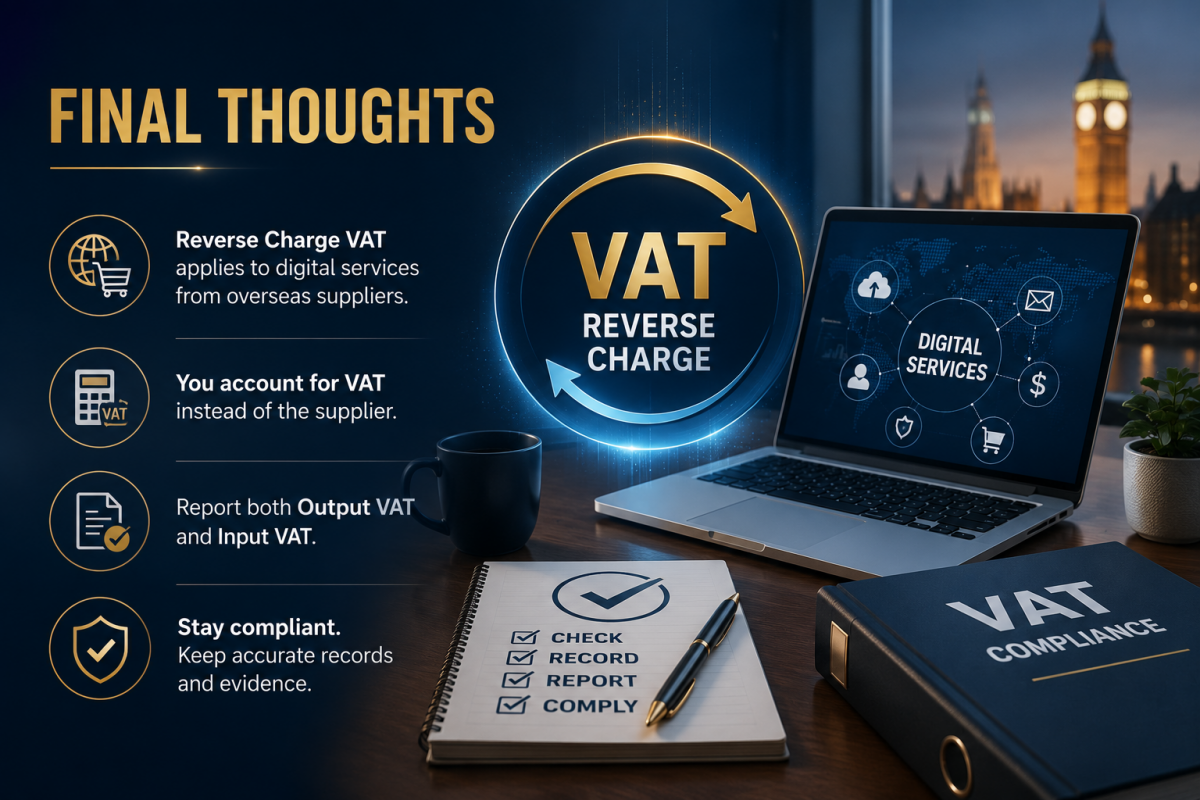
Reverse Charge VAT is an important part of the UK VAT system, particularly as businesses increasingly rely on overseas digital services such as cloud software, AI platforms, online advertising, and website hosting. While the process may seem technical at first, understanding when the reverse charge applies and ensuring transactions are recorded correctly can help avoid costly VAT mistakes and keep your VAT Returns accurate.
If your business regularly purchases digital services from overseas suppliers, reviewing your bookkeeping processes and VAT codes is essential. Accurate records, the correct software settings, and timely reconciliations will make VAT compliance far simpler and reduce the risk of HMRC enquiries. If you’re ever unsure whether Reverse Charge VAT applies to a particular transaction, seeking professional advice before submitting your VAT Return can save significant time, money, and potential penalties.
As more UK businesses rely on overseas software, cloud platforms, AI tools, and digital subscriptions, understanding the reverse charge rules is becoming increasingly important. Taking the time to identify qualifying purchases, apply the correct VAT treatment, and maintain accurate digital records will help ensure compliance with HMRC requirements while reducing the risk of costly mistakes. If you’re ever unsure whether Reverse Charge VAT applies to a transaction, obtaining professional advice before submitting your VAT Return can provide valuable peace of mind and help keep your business on the right track.
Need help deciding what’s best for your situation?
📞 Call 0161 710 1901
📧 Email Tax@TaxesDoneRight.co.uk
Visit www.taxesdoneright.co.uk