Why HMRC Can Amend Your Self-Assessment Without Asking You First
January 29, 2026
What HMRC Expects You to Keep Records Of (And For How Long)
February 2, 2026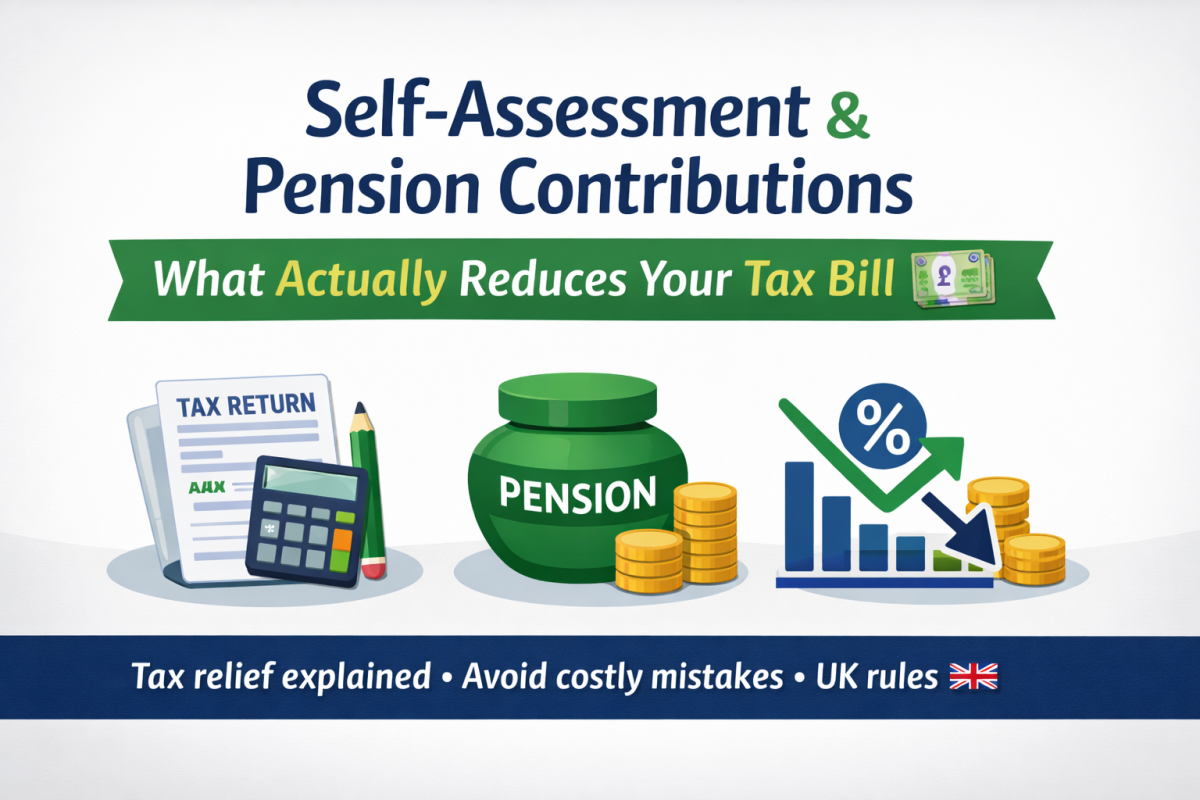
Pension contributions are one of the most effective and misunderstood ways of reducing your tax bill through Self-Assessment. Many taxpayers assume that simply paying into a pension automatically reduces the tax they owe, but the reality depends on how the contribution is made, the type of pension scheme, and your level of income.
Understanding what genuinely reduces your tax bill can help you avoid mistakes and make better planning decisions.
How pension tax relief actually works
Most personal pensions operate under relief at source. This means you pay pension contributions from your net income, and your pension provider claims basic rate tax relief from HM Revenue & Customs on your behalf.
For example, if you pay £8,000 into a pension, HMRC adds £2,000, making a total gross contribution of £10,000. This basic rate relief is automatic and does not reduce your Self-Assessment tax bill directly.
When Self-Assessment makes a difference
Self-Assessment becomes important if you are a higher-rate or additional-rate taxpayer. In these cases, you are entitled to extra tax relief above the basic rate, but HMRC will not give this automatically.
By declaring your gross pension contributions on your tax return, HMRC adjusts your tax calculation to give you the additional relief due. This can reduce your tax bill or create a refund, depending on your circumstances.
If you forget to include pension contributions on your Self-Assessment, you may be paying more tax than necessary.
Salary sacrifice vs personal contributions
Salary sacrifice arrangements work differently. Pension contributions made through salary sacrifice are taken before tax and National Insurance, meaning the tax saving happens immediately through payroll.
These contributions do not need to be reported on your Self-Assessment return and do not generate additional relief via HMRC, because the tax benefit has already been given.
Personal pension contributions, on the other hand, must be reported correctly to ensure higher-rate relief is applied.
Common mistakes that cost taxpayers money
A frequent error is entering the net contribution instead of the gross amount on the tax return. HMRC requires the gross figure, including basic rate tax relief.
Exceeding annual allowance limits or ignoring tapered allowances can also lead to unexpected tax charges, even when pension contributions are made with good intentions.
What actually reduces your tax bill
Pension contributions reduce your tax bill when they:
- Extend your basic rate band, lowering the rate of tax on part of your income
- Trigger higher-rate or additional-rate tax relief through Self-Assessment
- Reduce adjusted net income, which can protect personal allowances or child benefit
Simply paying into a pension is not enough. It must be done in the right way and reported correctly.
Final thought
Pensions are a powerful tax-planning tool, but only when used properly. Incorrect reporting or assumptions can mean missing out on relief you are entitled to, or worse, facing an unexpected HMRC adjustment later.
If you are unsure how your pension contributions affect your Self-Assessment, it is worth getting advice before filing to ensure your tax bill is calculated correctly.