
Self-Assessment 31 January 2026 It’s Not Just a Filing Deadline
January 9, 2026
Companies House ID Verification for Directors & PSCs : What You Need to Know
January 11, 2026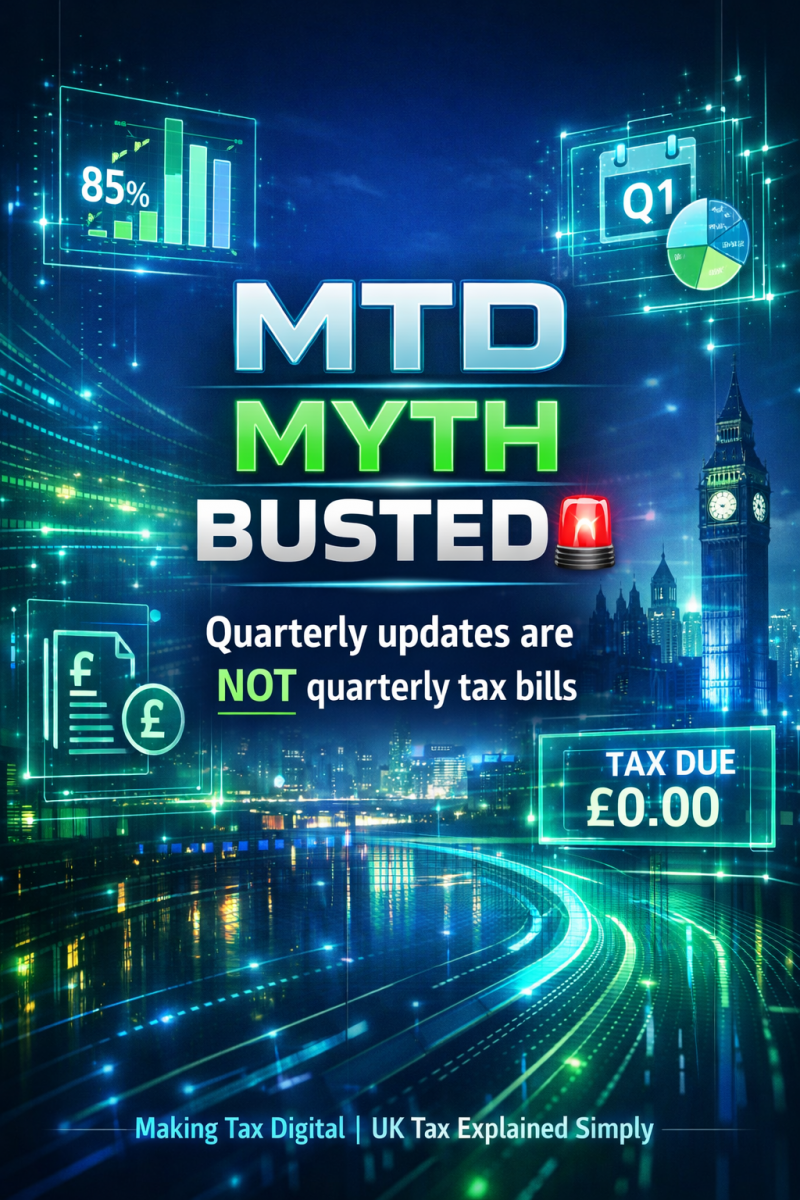
There has been a lot of confusion around Making Tax Digital (MTD), especially the idea that once it starts, people will suddenly have to pay tax four times a year. That is not true. Let’s break it down in plain English.
What Is Making Tax Digital (MTD)?
Making Tax Digital is a government initiative led by HM Revenue & Customs (HMRC) to modernise the UK tax system.
The aim is simple:
- Keep better digital records
- Reduce errors
- Give taxpayers a clearer picture of their finances during the year
MTD already applies to VAT-registered businesses. From April 2026, it will begin rolling out for Income Tax Self Assessment for landlords and sole traders above certain income thresholds.
What Are Quarterly Updates?
Under MTD for Income Tax, instead of submitting one tax return a year, you will send:
- 4 quarterly updates
- 1 end-of-period statement
- 1 final declaration
The key point is this:
Quarterly updates are information updates only.
They are not tax returns and not tax bills.
What You Do Not Pay Quarterly
Let’s clear this up clearly.
You do not:
- Pay tax every quarter
- Finalise your tax position every quarter
- Lose reliefs or allowances quarterly
- Get chased for payment after each update
Quarterly updates simply give HMRC an estimate of your income and expenses based on what you have entered so far.
When Do You Actually Pay Tax?
Your tax payment dates stay exactly the same as they are now:
- 31 January – balancing payment + first payment on account
- 31 July – second payment on account (if applicable)
So even under MTD:
- You still calculate your final tax once a year
- You still pay tax on the same dates
- There are no automatic quarterly tax demands
Why Is HMRC Doing This?
HMRC’s goal is:
- Fewer surprises at the end of the year
- Fewer mistakes caused by rushed returns
- Better visibility of your estimated tax position
Think of quarterly updates like bank statements, not bills.
They show where you are heading, not what you owe right now.
A Simple Example
A landlord earns rental income throughout the year.
Under MTD:
- April–June: submit a summary of income and expenses
- July–September: submit the next summary
- October–December: another update
- January–March: final update
None of these trigger a payment.
The actual tax bill is still calculated after the year ends and paid in January (and July if payments on account apply).
What This Means for You
MTD is mainly about process, not extra tax.
You will need:
- Digital records
- MTD-compatible software
- Regular bookkeeping (little and often)
You will not need:
- Quarterly tax payments
- Four times the tax stress
- Constant HMRC payments
Final Takeaway
Quarterly updates are not quarterly tax bills.
They are progress checks, not payment demands.
MTD changes how you report information, not when you pay tax.
If you prepare properly, MTD can actually make tax less stressful, not more.
If you want help getting MTD-ready or understanding how it affects your property or business income, getting advice from Taxes Done Right early makes all the difference.