MTD and Joint Property Income: How Couples Must Report
February 27, 2026
Can You Really “Backdate” Expenses Before Year End?
March 3, 2026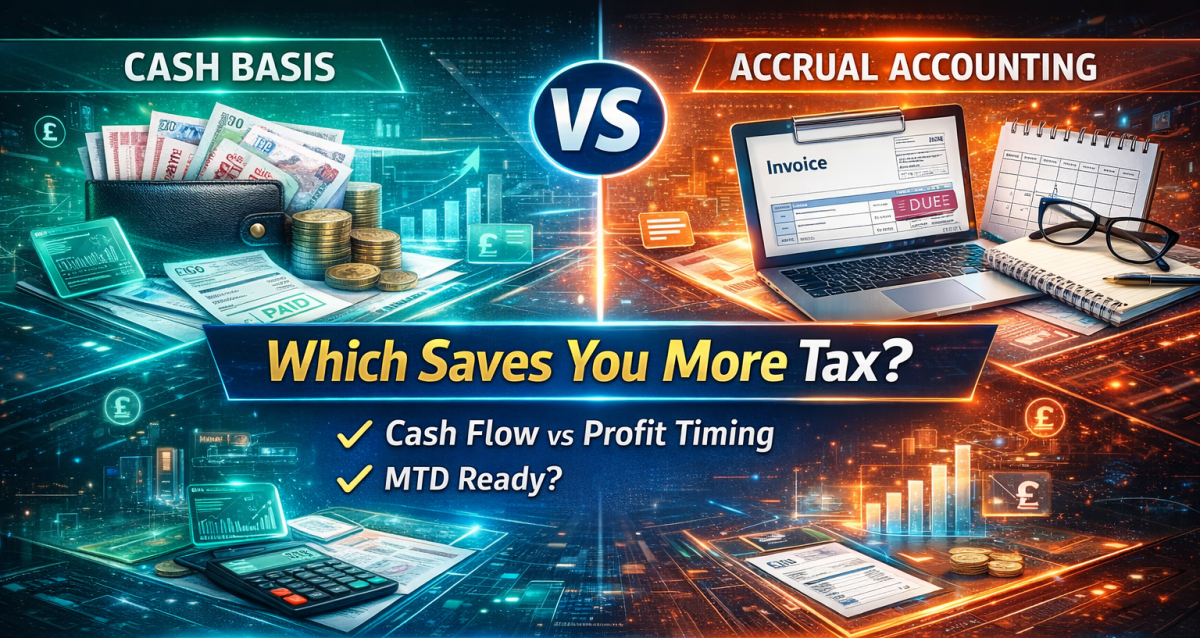
If you run a business in the UK, one of the first financial decisions you’ll make is how to record your income and expenses. The two main methods are cash accounting and accrual accounting.
It might sound like a technical choice, but it can directly affect your tax bill, your cash flow, and how clearly you understand your business performance.
Let’s break it down.
What Is Cash Accounting?
Under cash accounting, you:
- Record income when the money actually hits your bank account
- Record expenses when you physically pay them
If you issue an invoice in March but your customer pays in May, that income is taxed in May.
Many sole traders and small businesses can use the Cash Basis if turnover is below the HMRC threshold. It is popular because it is simple and closely matches real bank activity.
Why it can help with tax
Cash accounting can delay tax if customers are slow to pay. You are not taxed on unpaid invoices. This can be useful where cash flow is tight or payments are irregular.
You may also reduce profit in a particular tax year by paying allowable expenses before your year end.
What Is Accrual Accounting?
Accrual accounting works differently. You:
- Record income when you issue the invoice
- Record expenses when you receive the bill
It does not matter when the money moves. It is based on when income is earned and costs are incurred.
If you invoice in March, that income is included in that year’s accounts, even if the customer pays later.
Most limited companies are required to use accrual accounting under UK accounting standards.
Why it can help with tax
Accrual accounting allows you to include outstanding bills as expenses in the year they relate to. This can reduce taxable profit if you have unpaid costs at year end.
It also gives a more accurate picture of profitability, which is important for growing businesses, lenders, and investors.
So Which One Saves More Tax?
There is no universal answer. It depends on:
- Your business structure
- Your turnover
- Your payment patterns
- Your future plans
Cash accounting may benefit businesses with slow-paying customers. Accrual accounting may benefit businesses with significant unpaid expenses at year end.
However, the accounting method alone rarely creates major tax savings. The real savings usually come from proper tax planning.
Where the Real Tax Savings Come From
Significant tax savings often come from:
- Pension contributions
- Capital allowances
- Timing of income and expenditure
- Dividend planning for limited companies
- Director’s loan account management
Choosing the right accounting method is important, but it should form part of a wider tax strategy.
Final Thoughts
For sole traders and landlords, there may be flexibility. For limited companies, accrual accounting is usually mandatory.
With Making Tax Digital being introduced in stages, now is the right time to review your accounting system and ensure it supports both compliance and tax efficiency.
Need Help?
At Taxes Done Right Ltd, we help sole traders, landlords and limited companies structure their accounts in the most tax efficient way possible.