Flat Rate VAT Scheme: When It Works and When It Doesn’t
March 11, 2026
Should You Buy a Car Through Your Limited Company?
March 13, 2026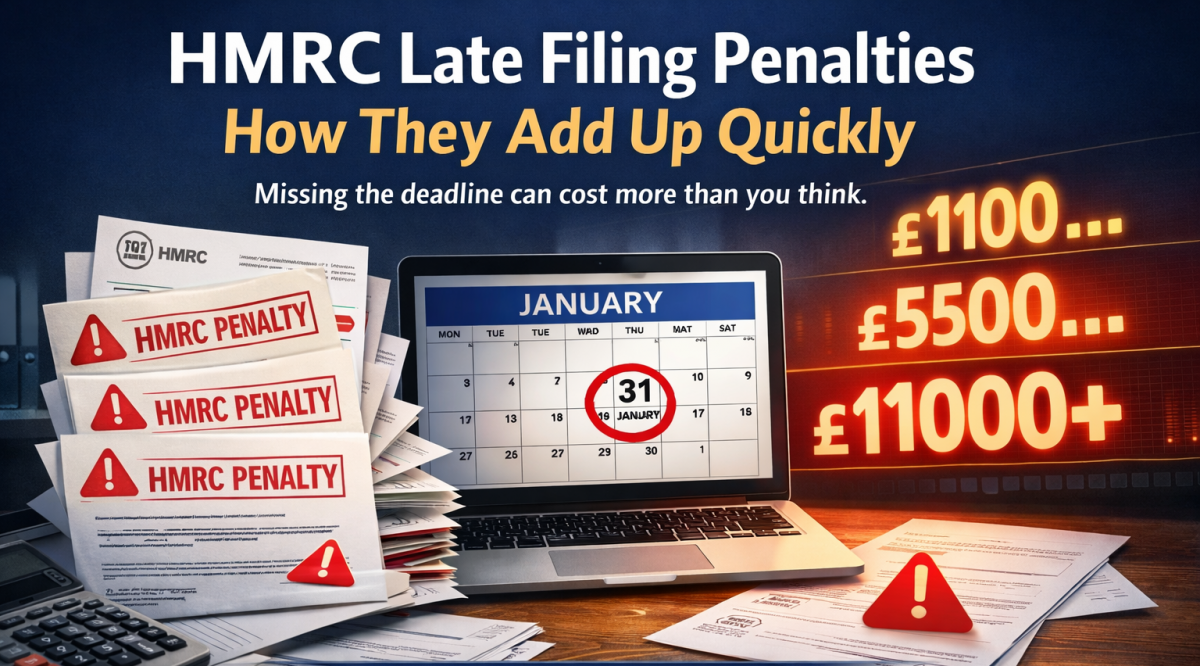
Missing a tax deadline with HMRC can quickly become expensive. Many people assume a small delay will only lead to a small penalty, but HMRC’s system is designed so that costs increase the longer a return remains outstanding. What starts as a small charge can rapidly grow into hundreds or even thousands of pounds.
The Initial Late Filing Penalty
For Self Assessment tax returns, HMRC applies an automatic £100 penalty as soon as the deadline is missed. This penalty applies even if there is no tax to pay or if the tax is paid on time. Many taxpayers are surprised by this because they believe paying the tax is enough. HMRC requires the return itself to be filed on time.
Daily Penalties After Three Months
If the return remains unfiled after three months, HMRC begins charging daily penalties of £10 per day, which can continue for up to 90 days. This means the penalty can increase by up to £900 on top of the original £100.
At this stage, someone who has not yet filed their return could already be facing penalties of £1,000.
Additional Penalties at Six Months
If the return is still outstanding after six months, HMRC applies a further penalty. This is usually £300 or 5% of the tax due, whichever is higher.
This means the total penalties can increase significantly even if the tax owed is relatively small.
Another Penalty at Twelve Months
If the return remains outstanding after twelve months, another penalty of £300 or 5% of the tax due can be added again. In cases where HMRC believes the delay is deliberate, penalties can be even higher.
Interest and Late Payment Penalties
In addition to late filing penalties, HMRC may also charge late payment penalties and interest if the tax itself is unpaid. These charges run separately, which means the total cost can escalate very quickly.
Why Deadlines Matter
Many penalties occur simply because taxpayers are unaware of deadlines or assume they can deal with it later. Once penalties start to accumulate, resolving the situation becomes more stressful and costly.
If you believe you may have missed a deadline or have outstanding returns, it is usually best to address the issue as soon as possible. HMRC penalties stop increasing once the return is filed.
Final Thought
Late filing penalties can escalate rapidly, even when the original tax bill is small. Acting early, filing on time, and keeping records organised can help avoid unnecessary costs.
If you need help catching up on overdue returns or dealing with HMRC penalties, professional advice can often resolve the situation more quickly.
📞 Call: 0161 710 1901
📧 Email: Tax@TaxesDoneRight.co.uk
Dm Us:
www.taxesdoneright.co.uk