Can You Still Claim Mortgage Interest? 2026 Update
April 14, 2026
Child Benefit Tax Trap: Are You Being Caught Without Knowing?
April 16, 2026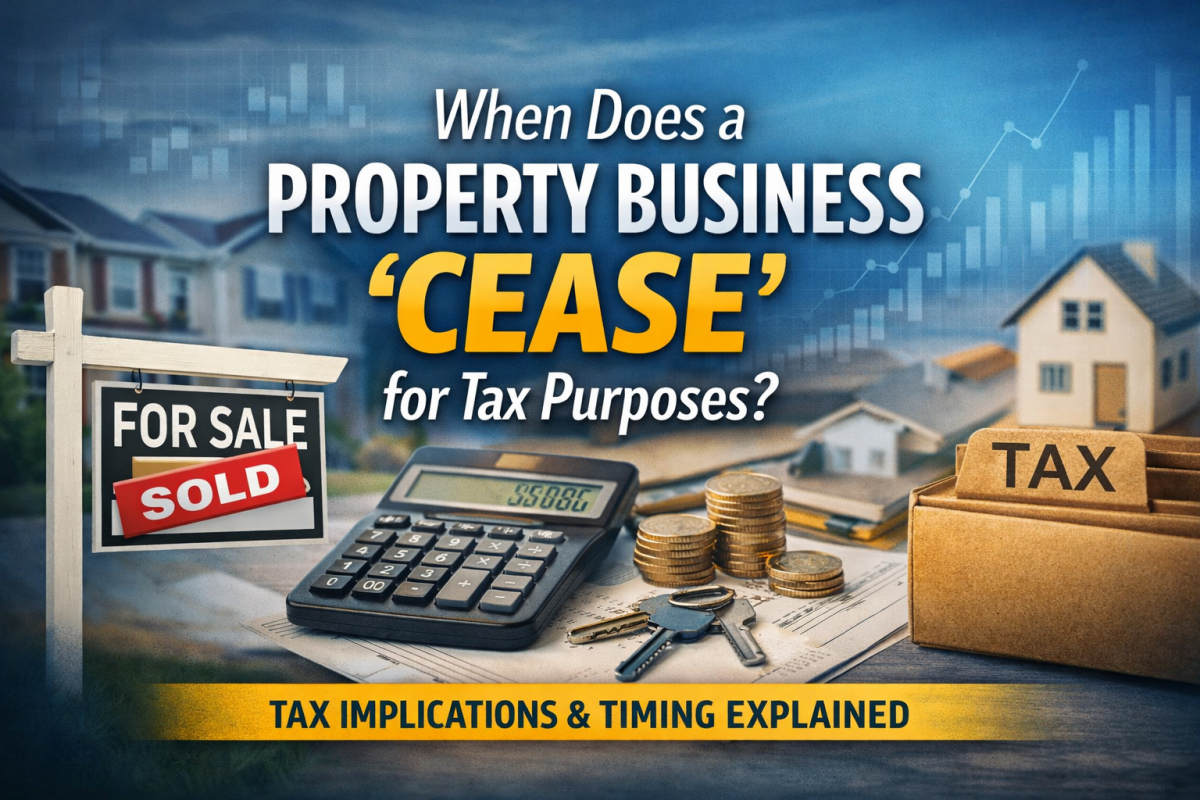
Understanding when a property business is treated as ceased for tax purposes is crucial, especially if you are planning to sell, transfer, or restructure your portfolio. Getting this wrong can affect your tax position, reliefs, and reporting obligations.
What is a Property Business?
For UK tax purposes, HMRC treats all your UK rental properties as one single property business. This means:
- Multiple properties = one combined business
- Profits and losses are pooled
- The business continues as long as at least one property is still being let
When Does a Property Business Cease?
A property business is considered to have ceased when:
- You stop letting all properties, and
- There is no intention to resume letting
This typically happens when:
- All properties are sold
- Properties are transferred (e.g. into a limited company)
If you still own properties but they are temporarily vacant and actively being marketed for rent, the business usually has not ceased.
Key Point: Intention Matters
HMRC looks at your intention as well as your actions.
- Temporary void periods → business continues
- Permanent withdrawal from letting → business ceases
Example:
If you renovate a property and plan to re-let it, the business continues.
If you stop renting and move into the property, the business ceases.
Why Does This Matter?
Knowing when your property business ceases affects:
1. Loss Relief
- Losses can only be carried forward while the business continues
- Once ceased, unused losses may be lost
2. Capital Gains Tax (CGT)
- Disposal of properties may trigger CGT
- Timing of cessation can impact planning opportunities
3. Incorporation Relief
- If transferring to a company, reliefs (e.g. incorporation relief) depend on whether a business is actively ongoing
4. Reporting Requirements
- Final accounts and tax return must reflect cessation correctly
Common Scenarios
Scenario 1: Selling one property
→ Business continues (if others remain)
Scenario 2: Selling entire portfolio
→ Business ceases
Scenario 3: Transferring to a limited company
→ Usually treated as cessation of the personal property business
Scenario 4: Property empty but being advertised
→ Business continues
Planning Opportunities
If you are considering stopping or restructuring your property business, timing is key:
- Use carried-forward losses before cessation
- Plan disposals across tax years
- Consider incorporation carefully (rules are changing from April 2026)
Final Thoughts
A property business does not cease just because income stops temporarily. It ceases when letting activity ends with no intention to continue.
Getting this right ensures you:
- Do not lose valuable tax reliefs
- Avoid incorrect tax reporting
- Maximise tax efficiency when exiting or restructuring
Need Advice?
If you are selling properties, incorporating, or unsure about your position, we can help you plan this properly.
Call: 0161 710 1901
Email: Tax@TaxesDoneRight.co.uk
Dm Us:
www.taxesdoneright.co.uk