10 Legal Ways to Reduce Your Corporation Tax Bill in 2026
March 31, 2026
Reasonable Excuse: How to Appeal HMRC Penalties Successfully
April 3, 2026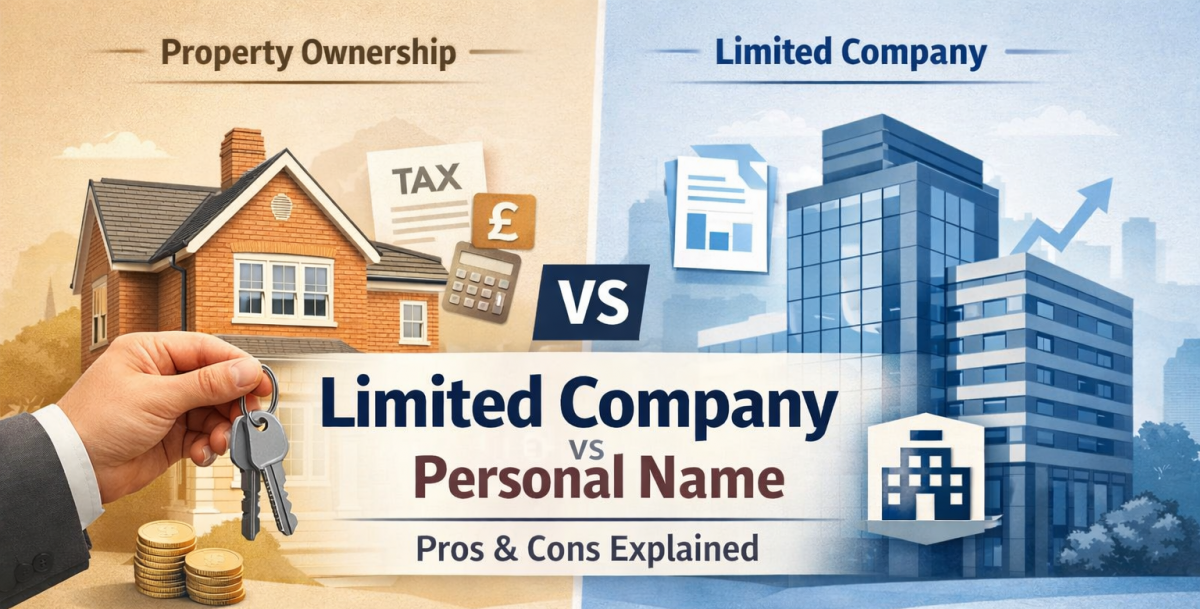
If you are investing in property in the UK, one of the biggest decisions you will face is whether to buy and hold property in your personal name or through a limited company. There is no one size fits all answer, but understanding the pros and cons can help you make the right decision.
What does it mean to hold property in a limited company?
This simply means the property is owned by a company rather than you personally. The company receives the rental income, pays the expenses, and is taxed under corporation tax rules instead of personal income tax.
Advantages of Holding Property in a Limited Company
1. Lower tax rates on profits
Companies pay corporation tax, which is often lower than higher or additional rate personal income tax. This can make a big difference if you are a higher earner.
2. Full mortgage interest relief
Unlike individual landlords, companies can deduct 100% of mortgage interest as an expense. This is one of the biggest advantages following the restriction of finance cost relief for individuals.
3. Easier profit retention and reinvestment
You can leave profits in the company and reinvest into more properties without immediately paying personal tax.
4. More flexible income planning
You can choose how and when to extract money, using a mix of salary and dividends, which can be more tax efficient.
5. Potential inheritance planning benefits
In some cases, holding property in a company can support long term estate planning, although specialist advice is essential here.
Disadvantages of Holding Property in a Limited Company
1. Higher mortgage costs
Limited company mortgages usually have higher interest rates and fewer lender options compared to personal buy to let mortgages.
2. Double taxation when extracting profits
The company pays corporation tax, and then you may pay dividend tax when taking money out. This can reduce the overall benefit.
3. More admin and compliance
Running a company comes with additional responsibilities such as annual accounts, corporation tax returns, and Companies House filings.
4. Costs of transferring existing properties
Moving a property into a company can trigger Stamp Duty Land Tax and Capital Gains Tax, which can be significant.
5. Limited personal allowance use
If all income sits within the company, you may not fully utilise your personal tax allowances unless structured carefully.
When might a limited company be suitable?
A company structure is often more beneficial if:
- You are a higher or additional rate taxpayer
- You plan to build a larger property portfolio
- You want to reinvest profits rather than draw them out
- You are purchasing new properties rather than transferring existing ones
When might personal ownership be better?
Holding property personally may suit you if:
- You are a basic rate taxpayer
- You want to access rental income regularly
- You only own one or two properties
- You want to avoid additional admin and costs
Final thoughts
Choosing whether to hold property in a limited company depends on your income, long term plans, and how you want to use your profits. What works for one landlord may not work for another.
Getting this decision wrong can be costly, especially if you already own property and are considering transferring it into a company.
📞 Call: 0161 710 1901
📧 Email: Tax@TaxesDoneRight.co.uk
Dm Us:
www.taxesdoneright.co.uk