Directors Owed an S455 Refund? HMRC Has Changed the Process
May 22, 2026
What Is the £100,000 Tax Trap and How Can You Avoid It?
May 26, 2026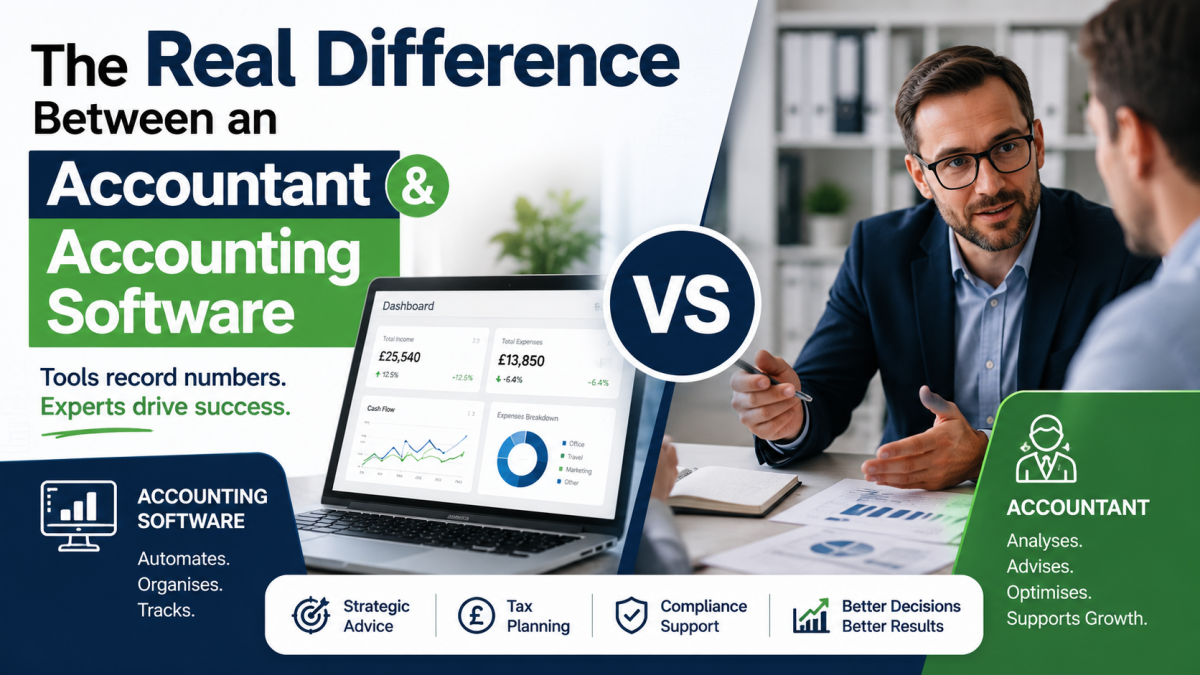
The Real Difference Between an Accountant and Accounting Software
Accountant support has become more valuable than ever as modern businesses increasingly rely on accounting software to manage their finances. While cloud accounting systems have improved bookkeeping and automation, many business owners still misunderstand the difference between software and professional financial advice.
Accounting software can certainly help businesses stay organised, automate invoices, and monitor transactions. However, software alone cannot fully replace the experience, judgement, and strategic guidance that a qualified Accountant provides.
Understanding the real difference between the two can help businesses avoid expensive mistakes and make better financial decisions.
Why Accounting Software Has Become So Popular
Over the last decade, accounting software has transformed the way businesses handle financial administration. Platforms such as Xero, QuickBooks, and FreeAgent allow businesses to:
- Send invoices quickly
- Track income and expenses
- Connect business bank accounts
- Generate reports
- Submit VAT returns
- Monitor cash flow in real time
For many small businesses, these systems save time and reduce paperwork. Automation also helps reduce manual errors when transactions are imported directly from bank feeds.
Because of these benefits, some business owners assume they no longer need an Accountant. In reality, this assumption can create significant financial and compliance risks.
An Accountant Provides Advice, Not Just Data
One of the biggest differences between an Accountant and accounting software is interpretation.
Software provides data. An Accountant explains what that data actually means.
For example, software may show that profits have increased, but it cannot properly assess:
- Whether the business is paying unnecessary tax
- Whether cash flow problems are developing
- If dividend payments are sustainable
- Whether expenses have been claimed correctly
- If the business structure remains tax efficient
An experienced Accountant reviews the wider financial picture and helps business owners make informed decisions rather than simply viewing numbers on a screen.
Accountant Knowledge Helps Prevent Costly Errors
Accounting software relies heavily on the user entering information correctly. If transactions are coded incorrectly, reports and tax calculations can quickly become inaccurate.
Common mistakes include:
- Incorrect VAT treatment
- Misclassified expenses
- Payroll errors
- Director’s loan account problems
- Duplicate transactions
- Incorrect CIS reporting
- Missing allowable expenses
Software may not recognise these problems automatically. In some cases, it may continue producing incorrect figures for months before the issue is discovered.
A qualified Accountant can identify errors early, correct problems properly, and help ensure compliance with HMRC requirements.
Tax Planning Is Where an Accountant Adds Major Value
Many businesses underestimate how much proactive tax planning can legally reduce tax liabilities.
Accounting software can calculate basic taxes based on entered figures, but it does not usually provide tailored advice specific to the business owner’s circumstances.
An Accountant may help with:
Accountant Support for Director Salary Planning
Directors often need guidance on the most tax-efficient mix of salary and dividends. The correct structure can change yearly depending on tax thresholds and legislation.
Accountant Guidance on Capital Allowances
Businesses purchasing equipment or vehicles may qualify for valuable tax reliefs. Understanding timing and eligibility is important to maximise claims correctly.
Accountant Advice for Property and Investment Income
Landlords and property investors frequently face complex rules around mortgage interest relief, capital gains tax, allowable expenses, and incorporation planning.
Accountant Support During HMRC Changes
UK tax legislation changes regularly. Businesses relying purely on software may not fully understand new reporting obligations, compliance risks, or planning opportunities.
Professional advice becomes especially important during periods of major HMRC reform.
Accounting Software Cannot Replace Human Judgement
Business decisions often involve factors that software simply cannot assess.
For example:
- Should a company register for VAT voluntarily?
- Is it time to incorporate a sole trade?
- Should profits be retained or extracted?
- Is a pension contribution worthwhile?
- Is the business financially ready to hire staff?
- Would a property purchase be tax efficient?
These are judgement-based decisions that depend on experience, forward planning, and understanding wider business goals.
An Accountant can consider both the numbers and the practical commercial realities behind them.
Accountant Support During HMRC Enquiries
Another major difference becomes clear when businesses face HMRC compliance checks or enquiries.
Software may store data, but it cannot represent a business during investigations or explain complex transactions to HMRC.
An Accountant can:
- Communicate directly with HMRC
- Prepare supporting evidence
- Correct historical errors
- Manage enquiry responses
- Reduce stress during investigations
- Help minimise penalties where appropriate
For many business owners, having professional representation provides reassurance and protection during difficult situations.
The Best Approach Often Combines Both
The reality is that accounting software and an Accountant often work best together rather than against each other.
Modern software improves efficiency and gives businesses better visibility over daily finances. Meanwhile, an Accountant provides strategic oversight, compliance support, and professional advice.
Businesses that combine both usually benefit from:
- Better financial accuracy
- Faster bookkeeping
- Improved tax efficiency
- Better cash flow management
- Reduced compliance risks
- Stronger financial planning
Technology has undoubtedly improved accounting processes, but professional expertise still plays a critical role in helping businesses grow safely and efficiently.
Final Thoughts on Accountant vs Accounting Software
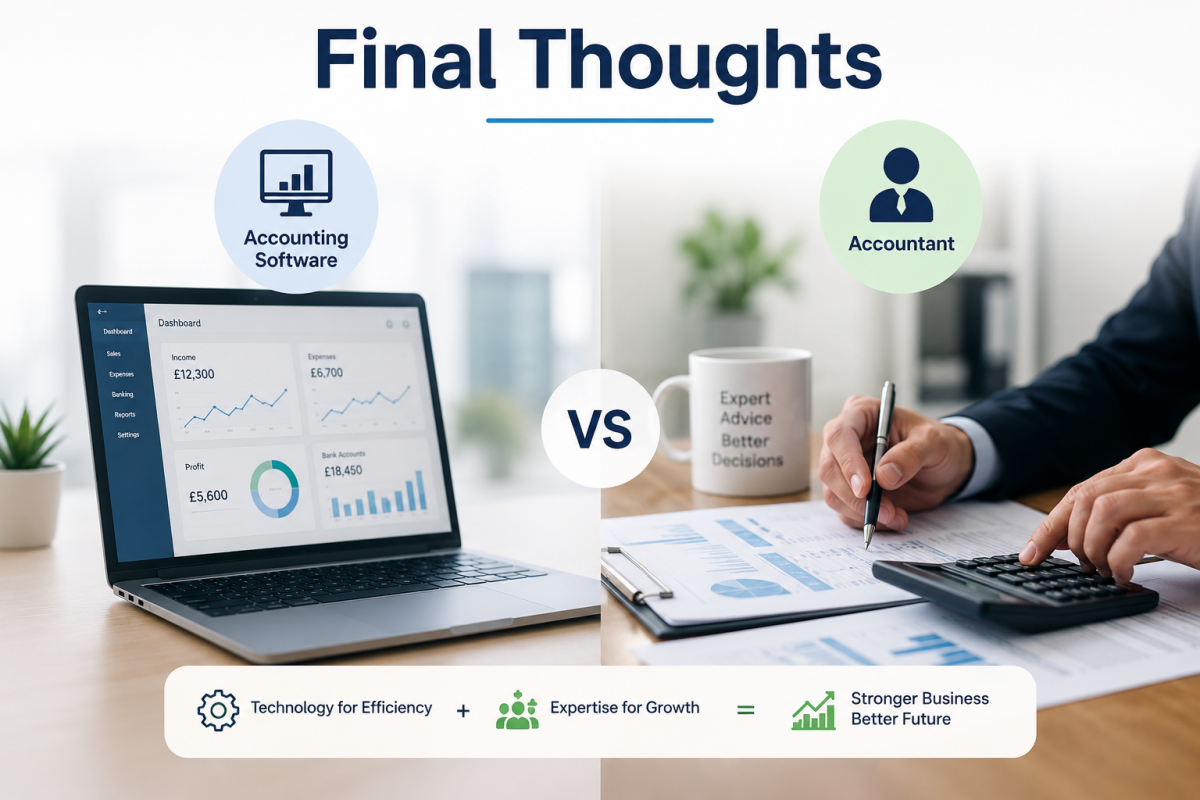
Accountant services involve far more than simply preparing accounts or submitting tax returns. While accounting software can automate many administrative tasks, it cannot fully replace professional judgement, tax planning, business advice, or compliance expertise.
Software is a tool. An Accountant is an adviser.
Businesses that rely solely on automation may save money initially, but incorrect decisions, missed tax opportunities, and compliance mistakes can often become far more expensive in the long run.
For most businesses, the strongest approach is not choosing between an Accountant and software, but using both together effectively to support long-term growth and financial stability.
Need help deciding what’s best for your situation?
📞 Call 0161 710 1901
📧 Email Tax@TaxesDoneRight.co.uk
🌐 Visit www.taxesdoneright.co.uk