Landlord Tax Section 24: Can Landlords Still Save Tax Despite Section 24?
July 30, 2026
Tax Free Room: Can You Earn £7,500 by Renting Tax-Free Room ?
August 3, 2026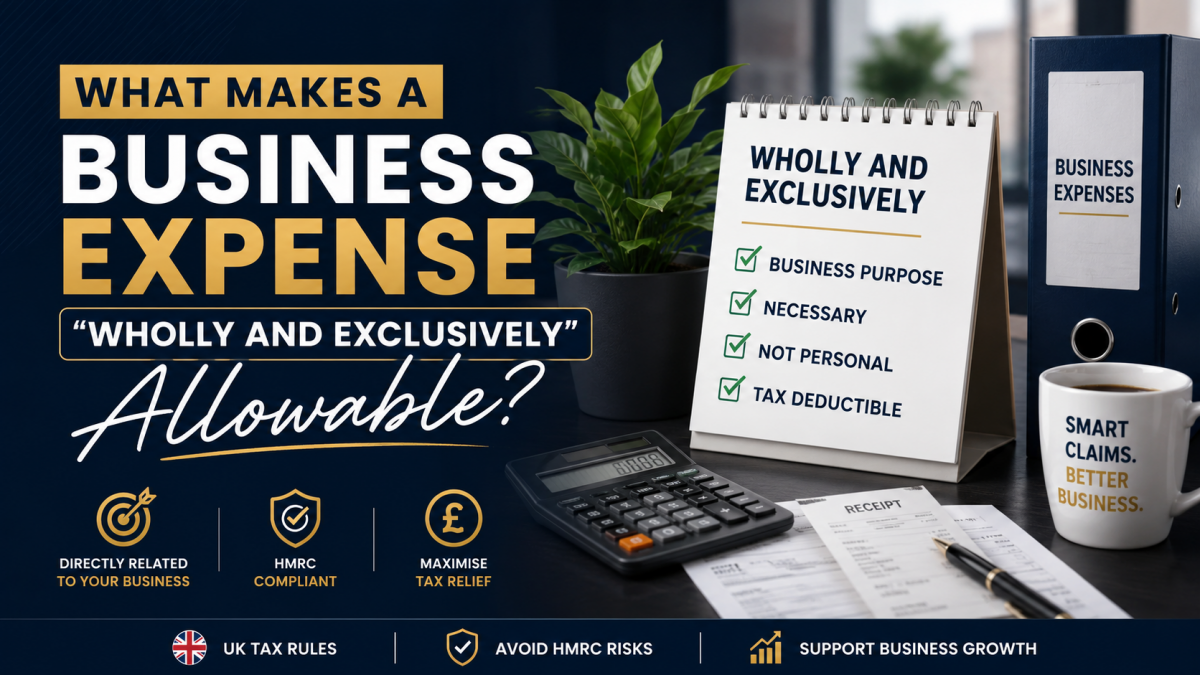
Wholly and Exclusively Allowable Business Expense: What Makes a Business Expense Tax Deductible?
When running a business, claiming expenses correctly can significantly reduce your tax bill. However, not every payment your business makes is automatically tax deductible. The golden rule used by HMRC is whether the cost was incurred wholly and exclusively allowable business expenses
Understanding this principle can help you maximise legitimate tax relief while avoiding costly mistakes, penalties, or enquiries. Whether you’re a sole trader, landlord, freelancer, or limited company director, knowing what qualifies as a Wholly and Exclusively Allowable Business Expense is essential.
Wholly and Exclusively Allowable Business Expense is one of the most important tax principles every business owner should understand. Knowing which costs qualify for tax relief can reduce your tax bill while ensuring you remain compliant with HMRC rules.
Whether you’re a sole trader, landlord, freelancer, or limited company director, understanding the Wholly and Exclusively Allowable Business Expense rule helps you claim genuine business expenses with confidence and avoid costly mistakes during an HMRC enquiry.
In this guide, we’ll explain what the rule means, provide practical examples, highlight common pitfalls, and share tips to keep your records HMRC-compliant and make you understand what makes your understand Wholly and Exclusively Allowable Business Expense.
What Does “Wholly and Exclusively” Mean?
A Wholly and Exclusively Allowable Business Expense is an expense incurred solely for the purpose of running your business.
HMRC generally allows a deduction if:
- The expense is entirely for business purposes.
- There is no personal benefit.
- It is necessary for carrying on the trade.
- Appropriate records and evidence are retained.
If an expense contains both business and personal use, only the business proportion may be allowable—or, in some cases, none of it may qualify at all.
The key question to ask yourself is:
“Would I have incurred this expense if I were not running my business?”
If the answer is no, there’s a good chance it may be allowable.
Why the Rule Matters
Claiming expenses correctly can reduce your taxable profits, meaning you pay less Income Tax or Corporation Tax.
Incorrect claims can result in:
- HMRC enquiries
- Interest on unpaid tax
- Financial penalties
- Amendments to previous tax returns
- Increased compliance checks
Understanding the Wholly and Exclusively Allowable Business Expense rule helps you remain compliant while claiming every deduction you’re entitled to.
Examples of a Wholly and Exclusively Allowable Business Expense
Many everyday business costs qualify under HMRC rules.
Examples include:
Office Costs
- Stationery
- Printer ink
- Paper
- Business software
- Postage
- Telephone bills (business element)
- Internet costs (business proportion)
Staff Costs
These may include:
- Salaries
- Employer National Insurance
- Pension contributions
- Staff training
- Uniforms
- Staff welfare
Professional Fees
Professional services that relate directly to your business usually qualify, including:
- Accountant fees
- Bookkeeping
- Legal advice
- Payroll services
- Company secretarial services
Marketing and Advertising
Promoting your business is generally allowable.
Examples include:
- Website development
- Google Ads
- Facebook advertising
- Business cards
- Flyers
- Branding
- SEO services
Business Insurance
Policies that protect your business often qualify, such as:
- Professional indemnity
- Public liability
- Employers’ liability
- Cyber insurance
- Office insurance
Equipment
Provided the relevant tax rules are met, items such as:
- Laptops
- Monitors
- Mobile phones
- Office furniture
- Specialist tools
- Cameras
may qualify through allowable deductions or capital allowances.
Expenses That Usually Are NOT Allowable
Some expenses are commonly claimed incorrectly.
Examples include:
Everyday Clothing
Normal clothing is generally not allowable, even if worn for work.
For example:
- Suits
- Dresses
- Shoes
- Smart office wear
However, protective clothing and branded uniforms usually qualify.
Personal Shopping
Items bought mainly for personal enjoyment rarely qualify.
Examples:
- Family groceries
- Personal subscriptions
- Home entertainment
- Children’s expenses
Fines and Penalties
HMRC does not normally allow deductions for:
- Parking fines
- Speeding fines
- Late filing penalties
- Tax penalties
Personal Holidays
Travelling abroad is not automatically deductible simply because you answer a few emails.
If the main purpose of the trip is personal, HMRC is unlikely to allow the expense.
Can Mixed Expenses Be Claimed?
Many business owners have expenses with both business and personal use.
Examples include:
- Mobile phone contracts
- Broadband
- Home electricity
- Business vehicle
- Home office
In these cases, only the genuine business proportion can usually be claimed.
For example:
If your phone bill is £80 per month and around 70% relates to business calls, you may generally claim £56 as the business expense.
Keeping a reasonable calculation helps support your claim if HMRC asks questions.
Home Office Expenses
Many self-employed individuals work from home.
Typical allowable costs may include:
- Heating
- Electricity
- Council Tax (business proportion where applicable)
- Mortgage interest or rent (subject to applicable rules)
- Water
- Internet
- Home insurance
Claims should reflect the business use of the property rather than the total household costs.
HMRC also offers simplified expenses in certain situations.
Travel Expenses
Business Travel
Usually allowable:
- Train fares
- Business flights
- Hotel accommodation
- Parking
- Taxis
- Mileage
- Toll charges
Ordinary Commuting
Travel between your home and your permanent workplace is generally not allowable.
This is one of the most misunderstood expense rules.
Meals and Subsistence
Business meals are sometimes allowable.
For example:
- Meals during qualifying business travel
- Overnight business trips
However, everyday lunches bought while working locally are normally regarded as personal expenses.
Client entertaining is another area where confusion often arises.
While it may be a legitimate business cost for accounting purposes, it is generally not deductible for Corporation Tax or Income Tax.
H2: Wholly and Exclusively Allowable Business Expense and Business Vehicles
Business vehicles often involve mixed use.
Examples of allowable costs may include:
- Fuel (business proportion)
- Insurance
- Repairs
- Servicing
- Road tax (where applicable)
- Business mileage
Good mileage records are essential to support your claim.
Where there is substantial personal use, only the business element is normally deductible.
Keeping Proper Records
Even if an expense qualifies, you still need evidence.
Good record keeping should include:
- Receipts
- Invoices
- Bank statements
- Mileage logs
- Digital accounting records
HMRC expects businesses to maintain accurate records for the required retention period.
Cloud accounting software makes this much easier and reduces errors.
H2: Common Mistakes When Claiming a Wholly and Exclusively Allowable Business Expense
Many HMRC enquiries arise because businesses misunderstand the rules.
Common mistakes include:
Claiming 100% of Mixed Costs
Business owners sometimes claim the full amount for expenses that also have personal use.
Always calculate a reasonable business proportion.
Poor Record Keeping
Without receipts, HMRC may refuse the deduction.
Digital copies are generally acceptable provided they are clear and complete.
Claiming Personal Purchases
Buying something through your business account does not automatically make it tax deductible.
The purpose of the expense matters—not the payment method.
Confusing Capital and Revenue Costs
Some purchases, such as equipment or machinery, may qualify under capital allowance rules rather than as day-to-day business expenses.
Understanding the difference ensures they are claimed correctly.
H2: How HMRC Assesses a Wholly and Exclusively Allowable Business Expense
When reviewing expenses, HMRC often considers:
- Why was the expense incurred?
- Was there any personal benefit?
- Was it necessary for the business?
- Is there supporting evidence?
- Is the claim reasonable?
If the expense has a dual purpose, HMRC may refuse all or part of the claim depending on the circumstances.
This is why documenting the business reason for larger or unusual purchases is good practice.
Tips for Staying HMRC Compliant
To reduce risk:
- Keep digital receipts.
- Separate business and personal spending.
- Use a dedicated business bank account.
- Review expenses regularly.
- Maintain mileage records.
- Keep supporting documentation.
- Ask your accountant before making unusual claims.
These habits can save time, reduce stress, and improve the accuracy of your tax returns.
Frequently Asked Questions
Can I claim coffee bought while working?
Usually no, unless it forms part of qualifying business travel or meets HMRC’s subsistence rules.
Can I claim my mobile phone?
Yes, but only the business element if there is personal use.
Can I claim clothes?
Normal everyday clothing is generally not allowable.
Protective clothing and branded uniforms usually are.
Can I claim home internet?
Yes, where there is business use. The amount claimed should reflect the business proportion.
Can HMRC ask for receipts?
Yes. HMRC can request evidence to support expense claims during compliance checks or enquiries.
Final Thoughts
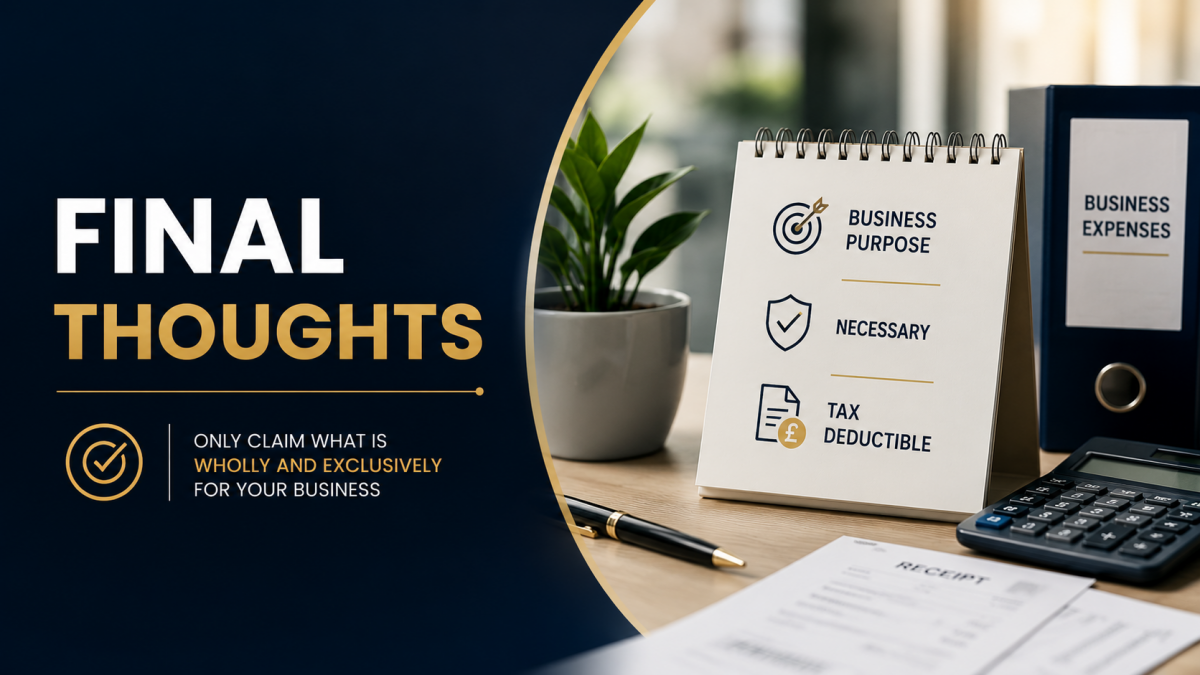
Understanding the Wholly and Exclusively Allowable Business Expense rule is one of the most important aspects of managing your business finances. While many costs are legitimately deductible, others may only qualify in part—or not at all—depending on how they are used.
By keeping accurate records, separating business from personal spending, and applying HMRC’s rules consistently, you can claim the tax relief you’re entitled to while reducing the risk of errors or enquiries. If you’re ever unsure whether an expense qualifies, professional advice can help you stay compliant and avoid costly mistakes.
Understanding the Wholly and Exclusively Allowable Business Expense rule helps you claim legitimate tax relief while remaining compliant with HMRC. Always consider the true purpose of every business cost before including it in your accounts.
Every Wholly and Exclusively Allowable Business Expense should be supported by clear records, receipts, and a genuine business reason. Good record-keeping makes tax returns easier and reduces the risk of HMRC challenges.
If you’re unsure whether a Wholly and Exclusively Allowable Business Expense qualifies, seek professional advice before making a claim. Getting it right can save tax, avoid penalties, and give you peace of mind.
Need help deciding what’s best for your situation?
📞 Call 0161 710 1901
📧 Email Tax@TaxesDoneRight.co.uk
Visit www.taxesdoneright.co.uk