Do You Pay Tax on Savings Interest? Personal Savings
September 28, 2026
Rental profit versus cash in the bank: Why are the figures different?
September 29, 2026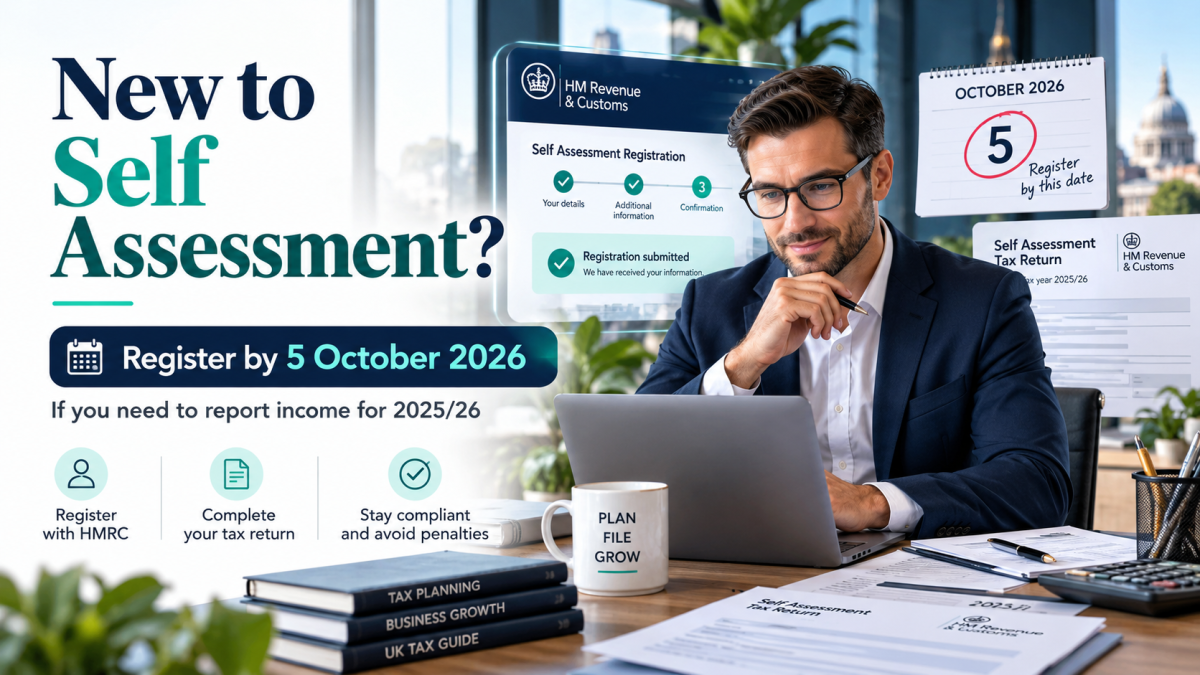
New to Self Assessment? Register by 5 October 2026 if you need to report income for 2025/26
New to Self Assessment and unsure whether the 5 October 2026 deadline applies to you? If you received income or gains during the 2025/26 tax year that need to be reported to HM Revenue and Customs, now is the time to check your position. The 2025/26 tax year ran from 6 April 2025 to 5 April 2026, and people who need to complete a tax return for that year may need to tell HMRC by 5 October 2026.
Being New to Self Assessment can feel confusing because there are several separate stages: deciding whether a return is required, registering, receiving a Unique Taxpayer Reference, preparing the figures, filing the return and paying any tax due. Missing one stage can create unnecessary pressure later.
This guide is designed for anyone New to Self Assessment who earned income outside normal PAYE, started self-employment, became a landlord, received foreign income, made taxable gains or otherwise entered the Self Assessment system during 2025/26. It explains the main rules, practical steps and deadlines in straightforward language.
What does Self Assessment mean?
If you are New to Self Assessment, it helps to understand what the system is actually for. Self Assessment is HMRC’s process for collecting tax where the full amount cannot simply be deducted automatically through PAYE or another withholding system. You report relevant income, gains, reliefs and other information on a tax return, and HMRC uses that information to establish your tax position.
Many first-time filers assume registration itself means tax is immediately payable. It does not. Registration tells HMRC that you may need to submit a return. The tax calculation comes later, once the return is completed using your actual figures.
For a first-time filer, the key point is that registration and filing are separate obligations. The 5 October 2026 date is about telling HMRC that you need to complete a return for 2025/26. The normal online filing deadline comes later, on 31 January 2027.
New to Self Assessment: why 5 October 2026 matters
If you are New to Self Assessment and need to complete a tax return for the 2025/26 tax year, HMRC says you must normally tell them by 5 October 2026 if you have not sent a tax return before. The same notification point can apply where you were registered in the past but did not need to send a return for 2024/25.
That makes 5 October especially important for anyone New to Self Assessment. It is not the deadline for submitting the 2025/26 online tax return, but it is the date by which HMRC should be told that you have entered Self Assessment where the notification requirement applies.
First-time taxpayers should avoid treating 5 October as an optional planning date. HMRC states that if you tell them after the deadline, you could face a penalty. Whether a penalty is actually charged can depend on the circumstances, including whether tax was unpaid and whether there was a reasonable excuse, but registering late is still a risk best avoided.
Registering earlier also gives first-time taxpayers more time to deal with a UTR, online access and records before the busy January filing period.
Who may need to register for 2025/26?
There is no single type of taxpayer who becomes New to Self Assessment. The system covers a wide range of circumstances, and your need to register depends on the income and gains you had during 2025/26.
You may be New to Self Assessment because you started trading as a sole trader and your gross self-employment income exceeded £1,000 before expenses. HMRC’s current guidance says a sole trader who earned more than £1,000 before deducting allowable expenses must send a return.
You may also be New to Self Assessment because you joined a business partnership. Partners generally have their own personal tax responsibilities alongside the partnership’s reporting obligations.
Landlords frequently become New to Self Assessment after receiving rental income. Property income can create a reporting requirement, although the £1,000 property allowance and other specific rules may affect whether you need to tell HMRC.
Another common reason for becoming New to Self Assessment is receiving untaxed income such as tips, commission, savings interest or dividends. The correct treatment depends on the amount, available allowances and your wider tax position, so do not assume that every amount automatically requires a return.
You may be New to Self Assessment because you received foreign income. This can include overseas rent, foreign investment income, overseas interest, dividends or other income that may need to be considered under UK tax rules. Residence status, remittance rules where relevant, double taxation arrangements and foreign tax credits can make international cases more complex.
Capital gains can also bring someone New to Self Assessment into the tax return system. HMRC lists paying Capital Gains Tax following the sale or disposal of an asset that increased in value as one of the reasons a return may be required.
Some parents become New to Self Assessment because of the High Income Child Benefit Charge where the charge is not being dealt with through PAYE. Other less common circumstances can also create filing obligations.
The safest approach if you are New to Self Assessment is to check your whole 2025/26 position rather than focusing on only one source of income.
How to register with HMRC
The practical registration route depends on why you are New to Self Assessment. HMRC’s online registration service asks questions about your circumstances and directs you through the appropriate process.
If you are New to Self Assessment because you became self-employed, you will generally register both for Self Assessment and as self-employed. Other taxpayers may register because of rental income, investment income, gains or another reason.
When registering as someone New to Self Assessment, make sure personal details are accurate. Your name, address, National Insurance number and contact details should match HMRC records as closely as possible to reduce delays or identity checks.
After registration, someone New to Self Assessment will normally need a Unique Taxpayer Reference, commonly called a UTR. Keep this number securely because it is used in communications and tax return administration.
If you were previously registered, do not automatically create a completely new record. Someone who feels New to Self Assessment again after a break may instead need to reactivate an existing account. HMRC specifically warns that filing without reactivating an existing Self Assessment account may delay the return.
New to Self Assessment: records to gather now
If you are New to Self Assessment, good record keeping is one of the best ways to reduce stress. HMRC expects taxpayers to keep records that support the figures entered on the return.
For a sole trader New to Self Assessment, start with sales invoices, bank statements, payment processor reports, expense receipts, mileage information, equipment purchases and details of any business use of home.
For a landlord New to Self Assessment, gather letting agent statements, rent schedules, mortgage interest certificates or statements, insurance, repairs, service charges, ground rent where relevant and professional fees.
For an employee New to Self Assessment, keep your P60, P45 where relevant, P11D, pension contribution evidence, Gift Aid records and details of employment expenses for which relief may be available.
For an investor New to Self Assessment, obtain dividend vouchers, platform tax reports, interest certificates, transaction histories and disposal calculations.
For anyone New to Self Assessment with foreign income, retain overseas tax statements, foreign payslips, property accounts, bank statements and evidence of foreign tax paid.
The earlier a person New to Self Assessment gathers these documents, the easier it is to spot missing information before the filing deadline.
The key dates after registration
Registering by 5 October is only the first step if you are New to Self Assessment. You should also know the later filing and payment dates.
For the 2025/26 tax year, a taxpayer New to Self Assessment can normally submit the return after the tax year has ended. HMRC confirms that the 2025/26 return can be submitted between 6 April 2026 and 31 January 2027 when filing online.
If you are New to Self Assessment and plan to file a paper tax return, remember that the paper deadline is earlier than the online deadline. Most taxpayers now choose online filing or use an accountant or tax software.
The normal online filing deadline for someone New to Self Assessment for 2025/26 is 31 January 2027. The balancing tax payment for 2025/26 is also normally due by 31 January 2027.
Some taxpayers New to Self Assessment may also have to make payments on account towards the following year. These are advance payments towards the next Self Assessment bill and are normally due on 31 January and 31 July, subject to the applicable rules and exceptions.
Why filing early can help
A taxpayer New to Self Assessment does not need to wait until January to file. Filing earlier can provide much more certainty.
If you are New to Self Assessment and submit the return well before the deadline, you can see the tax bill sooner and plan cash flow. Filing early does not normally mean the tax has to be paid immediately; the statutory payment deadline still applies.
For someone New to Self Assessment, early preparation also creates time to resolve missing UTR details, verify figures, obtain replacement documents or clarify technical issues.
HMRC also notes that filing earlier helps taxpayers understand what they owe and budget towards the 31 January payment. That can be particularly valuable where your first Self Assessment bill includes both a balancing payment and a first payment on account.
Payments on account can surprise first-time filers
One of the biggest surprises for someone New to Self Assessment is that the January payment can be higher than the tax relating purely to the year just ended.
Depending on the amount and type of tax due, a taxpayer New to Self Assessment may be required to make a first payment on account for the next tax year at the same time as paying the balancing liability for 2025/26.
A second payment on account may then be due on 31 July 2027. Someone New to Self Assessment should therefore avoid budgeting only for the headline tax calculation for 2025/26.
Payments on account do not apply in every case. If your tax position changes significantly, there may also be circumstances in which payments on account can be reduced, but reducing them too far can result in interest if the eventual liability is higher.
Common mistakes first-time taxpayers make
People New to Self Assessment often make avoidable mistakes because they focus only on the final filing deadline.
The first mistake is assuming that 31 January is the only important date. If you are New to Self Assessment and need to notify HMRC, 5 October 2026 is the registration deadline relevant to 2025/26.
The second mistake is registering but then assuming the return has been filed. For someone New to Self Assessment, registration creates or activates the tax record; it does not replace the tax return itself.
The third mistake is using net bank receipts rather than checking gross income. A taxpayer New to Self Assessment may have fees, deductions or withholding that need to be shown separately.
The fourth mistake is forgetting small or irregular income sources. If you are New to Self Assessment, review the entire tax year rather than only your main business or rental account.
The fifth mistake is claiming costs without considering whether they are allowable for tax. Someone New to Self Assessment should distinguish private expenditure, capital costs and allowable revenue expenses.
The sixth mistake is leaving records until January. A taxpayer New to Self Assessment who starts gathering information now has time to identify gaps and correct bookkeeping.
What happens if you miss 5 October?
If you are New to Self Assessment and realise after 5 October 2026 that you should have registered, do not ignore the problem. Register as soon as possible and then make sure the return and tax payment are dealt with correctly.
HMRC states that someone New to Self Assessment who tells them after the deadline could receive a penalty. The precise consequences depend on the facts, including the tax due and the reason for the delay.
Where a taxpayer New to Self Assessment has a reasonable excuse or unusual circumstances, the position may need to be explained to HMRC. Keep evidence supporting what happened.
Most importantly, being New to Self Assessment should not lead you to delay further because the original date has passed. Prompt action usually puts you in a better position than continuing to leave the matter unresolved.
What if you are unsure whether you need a return?
If you are New to Self Assessment but do not know whether your income requires registration, use HMRC’s online checker or obtain advice based on your full circumstances.
Someone New to Self Assessment should consider all income for 2025/26: employment, self-employment, property, savings, dividends, foreign income, partnership income, pensions and gains where relevant.
If HMRC has already written to you requiring a tax return, being New to Self Assessment does not remove that obligation. HMRC’s guidance says that if they have asked you to send a return, you must do so by the deadline stated.
On the other hand, someone New to Self Assessment should not register unnecessarily simply because they received a small amount of additional income. Allowances and alternative reporting methods can sometimes mean a tax return is not needed.
A simple checklist before 5 October 2026
If you are New to Self Assessment, work through the following points now:
- Confirm whether you had a reason to file for the 2025/26 tax year.
- Check whether you have filed a Self Assessment return before.
- If you are New to Self Assessment and registration is required, notify HMRC by 5 October 2026.
- Gather income and expense records covering 6 April 2025 to 5 April 2026.
- Locate your National Insurance number and any existing UTR.
- If you are New to Self Assessment after previously being registered, check whether the account needs reactivating.
- Review rental, foreign and investment income rather than looking only at employment or business income.
- Start estimating the tax bill and consider whether payments on account may apply.
- If you are New to Self Assessment, aim to complete the return well before January rather than treating 31 January 2027 as a target filing date.
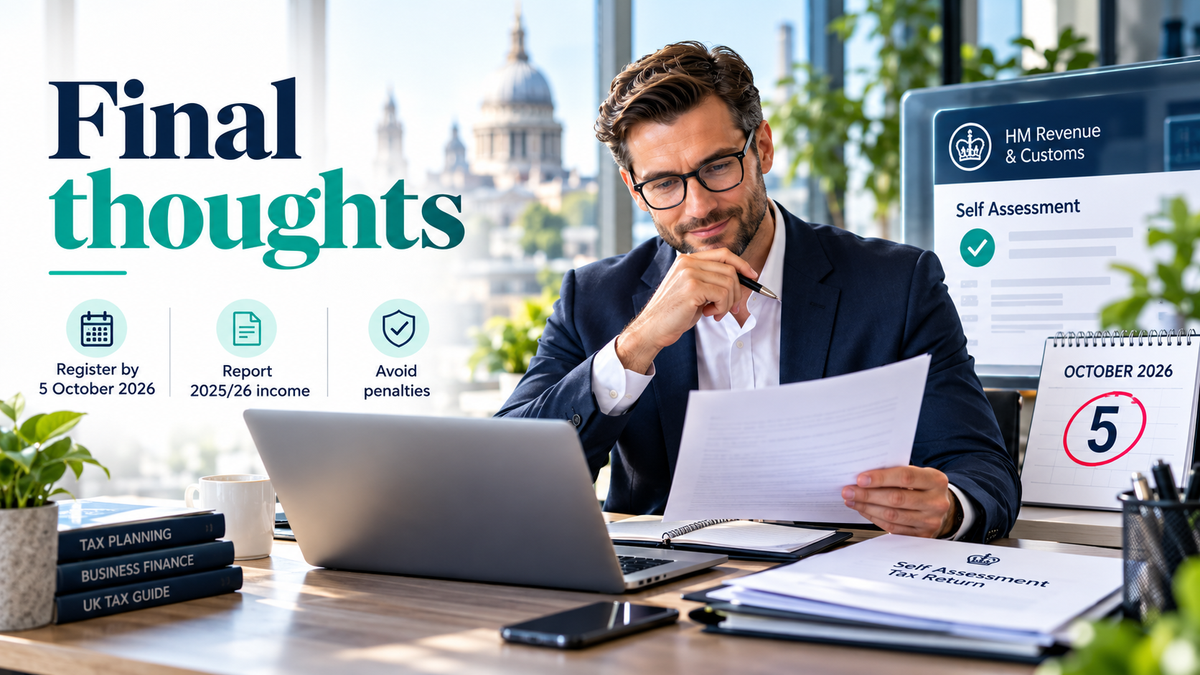
Final thoughts
Being New to Self Assessment is manageable when you separate the process into clear stages. First, decide whether a 2025/26 return is required. Second, register or reactivate your account where necessary. Third, organise the supporting records. Fourth, prepare and file the return. Finally, make sure any tax is paid by the correct deadline.
The most immediate date for anyone New to Self Assessment is 5 October 2026. If you need to report income for the tax year ended 5 April 2026 and have not sent a return before, check your registration position now.
If you are New to Self Assessment because of self-employment, property income, foreign income, investments or capital gains, early action gives you time to deal with questions before the
Need help deciding what’s best for your situation?
📞 Call 0161 710 1901
📧 Email Tax@TaxesDoneRight.co.uk
Visit www.taxesdoneright.co.uk