Capital Allowances Have Changed – Here’s What Businesses Need to Know (Main Rate Reduced to 14% from 1 April)
June 29, 2026
Paid Your Insurance Upfront? Here’s How Accountants Treat It
July 1, 2026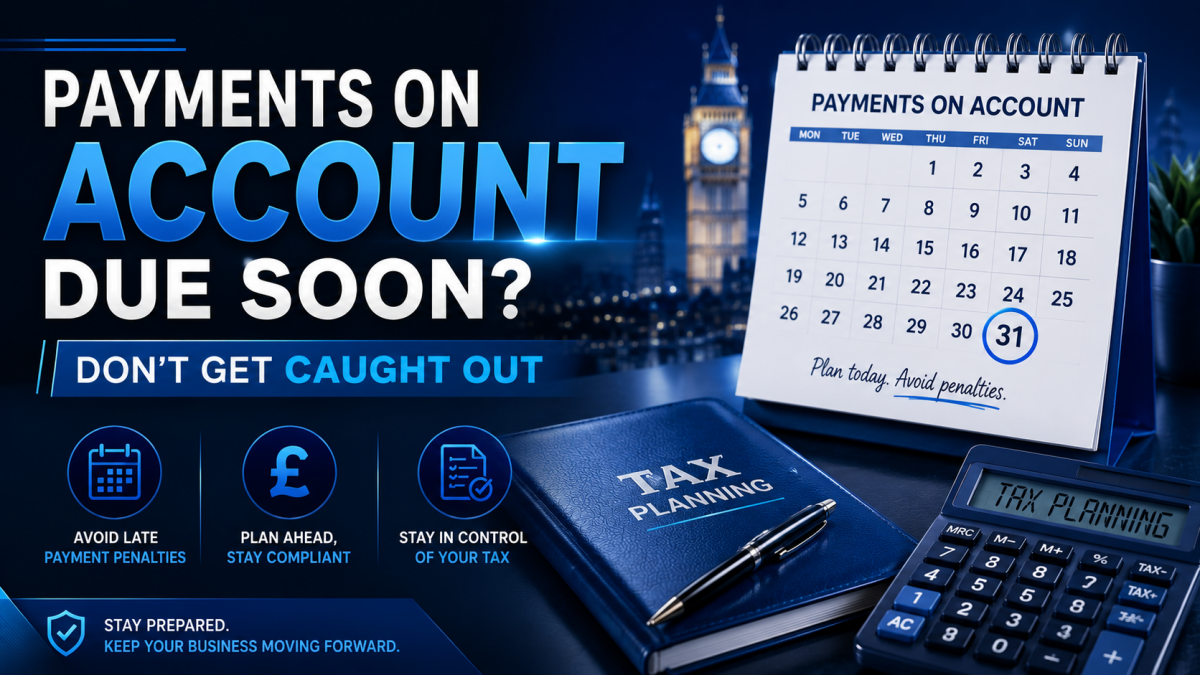
Payments on Account Due Soon? Don’t Get Caught Out
Payments on Account are one of the most misunderstood parts of the UK Self Assessment tax system. Every year, thousands of taxpayers receive a tax bill that is much higher than expected because they do not realise they are paying part of next year’s tax in advance as well as settling the current year’s liability.
If you are self-employed, a landlord, or receive other untaxed income, understanding how Payments on Account work is essential for avoiding cash flow problems, late payment interest and unexpected tax bills.
In this guide, we’ll explain what Payments on Account are, who has to make them, how they’re calculated and what you can do if your income has fallen.
What Are Payments on Account?
Payments on Account are advance payments towards your next Self Assessment tax bill.
Rather than paying all of your tax after the end of the tax year, HMRC requires many taxpayers to pay part of the following year’s expected Income Tax in advance.
Each Payment on Account is generally worth 50% of your previous year’s Income Tax and Class 4 National Insurance liability.
This system helps spread tax payments throughout the year, but it often surprises taxpayers who expect to pay only the amount shown on their latest tax return.
Who Has to Make Payments on Account?
You will usually need to make Payments on Account if:
- Your Self Assessment tax bill exceeds £1,000.
- Less than 80% of your tax has already been collected through PAYE.
This commonly applies to:
- Sole traders
- Self-employed professionals
- Property landlords
- Business partners
- Individuals with significant investment income
- People receiving untaxed income
If most of your tax is deducted through PAYE, you may not need to make Payments on Account.
How Payments on Account Are Calculated
Payments on Account are based on your previous year’s Income Tax and Class 4 National Insurance liability.
For example:
Your Income Tax and Class 4 NIC for 2025/26 totals £8,000.
HMRC will normally require:
- First Payment on Account (31 January): £4,000
- Second Payment on Account (31 July): £4,000
When your next tax return is submitted, HMRC compares what you’ve already paid with your actual tax liability.
If you’ve paid too much, you’ll normally receive a repayment or the excess will be offset against future liabilities.
If you’ve paid too little, you’ll simply pay the balance.
Payments on Account Deadlines
The key Self Assessment payment dates are:
- 31 January – Balance of tax for the previous tax year plus the first Payment on Account for the following year.
- 31 July – Second Payment on Account.
Missing either deadline can result in:
- Late payment interest
- Potential penalties where applicable
- Additional financial pressure
Planning ahead helps avoid unnecessary costs and stress.
Can You Reduce Payments on Account?
Yes—but only where appropriate.
If you genuinely expect your income or tax liability to be lower than the previous year, you can apply to reduce your Payments on Account.
Examples include:
- Reduced business profits
- Rental income decreasing
- Retirement
- Ceasing self-employment
- Significant reduction in taxable income
However, it’s important not to reduce Payments on Account without good reason.
If HMRC later determines you reduced them too much, you’ll still need to pay the outstanding tax together with late payment interest on the shortfall.
It’s therefore sensible to calculate your expected tax position carefully before making any claim.
Common Mistakes Taxpayers Make
Many taxpayers make avoidable errors that create unnecessary financial pressure.
Some of the most common include:
- Assuming the January tax bill relates only to the previous tax year.
- Forgetting about the July Payment on Account.
- Spending money that should have been set aside for tax.
- Reducing Payments on Account without proper calculations.
- Waiting until the deadline before checking what is due.
Forward planning can prevent all of these issues.
How to Prepare for Your Next Tax Bill
Managing your tax becomes much easier when you plan throughout the year.
Consider these practical steps:
- Keep accurate bookkeeping records.
- Estimate your tax liability regularly.
- Set aside money each month for tax.
- Review your income if it changes significantly.
- Seek professional advice before reducing Payments on Account.
Good tax planning reduces surprises and improves cash flow.
Why Professional Advice Can Save Money
Every taxpayer’s circumstances are different.
Changes in profits, rental income, allowable expenses or tax reliefs can all affect how much you should pay.
An accountant can help you:
- Estimate your upcoming tax bill.
- Check whether your Payments on Account are accurate.
- Assess whether a reduction claim is appropriate.
- Improve cash flow planning.
- Avoid unnecessary interest charges.
Obtaining advice before the payment deadline is often much less expensive than correcting problems later.
Final Thoughts
Payments on Account are designed to spread Income Tax payments across the year, but they often catch taxpayers off guard because many don’t realise they’re paying part of next year’s tax in advance.
Understanding how the system works allows you to budget effectively, avoid unexpected bills and reduce financial stress.
If your circumstances have changed or you’re unsure whether your Payments on Account are correct, reviewing your position before the payment deadline could save you both money and worry.
At Taxes Done Right Ltd, we help individuals, landlords and business owners understand their Self Assessment obligations, calculate tax liabilities accurately and plan ahead with confidence.
Need help deciding what’s best for your situation?
📞 Call 0161 710 1901
📧 Email Tax@TaxesDoneRight.co.uk
Visit www.taxesdoneright.co.uk