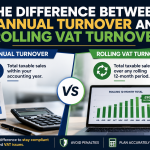
The Difference Between Annual Turnover and Rolling VAT Turnover
June 25, 2026
Payments on Account Due Soon? Don’t Get Caught Out
June 30, 2026
Capital Allowances Have Changed – Here’s What Businesses Need to Know (Main Rate Reduced to 14% from 1 April)
Capital Allowances remain one of the most valuable tax reliefs available to UK businesses investing in qualifying assets. From 1 April 2026, important changes have been introduced that affect how businesses claim tax relief on capital expenditure.
The most significant change is the reduction in the main rate writing down allowance (WDA) from 18% to 14%. While this means tax relief for certain assets will now be spread over a longer period, generous reliefs such as the Annual Investment Allowance (AIA), Full Expensing and the new 40% First-Year Allowance continue to provide valuable opportunities for businesses to claim tax relief sooner.
Understanding how these changes affect your investment decisions can help improve cash flow and ensure you’re claiming every pound of relief available.
What Are Capital Allowances?
Capital Allowances allow businesses to claim tax relief when purchasing qualifying capital assets used within the business.
Unlike everyday business expenses, capital expenditure cannot usually be deducted in full when calculating taxable profits. Instead, relief is given through the Capital Allowances system.
Qualifying assets commonly include:
- Plant and machinery
- Office furniture
- Computers and IT equipment
- Commercial vehicles
- Manufacturing equipment
- Tools
- Heating systems
- Electrical installations
- Air conditioning
- Water systems
- Long-life assets
The amount of tax relief depends on the type of asset purchased and which Capital Allowances regime applies.
Capital Allowances – What’s Changed From 1 April 2026?
From 1 April 2026 for Corporation Tax (and 6 April 2026 for Income Tax), the main rate writing down allowance has reduced from 18% to 14%.
The special rate writing down allowance remains unchanged at 6%.
Businesses that rely on writing down allowances for assets allocated to the main pool will therefore receive tax relief more slowly than under the previous rules.
For businesses with accounting periods spanning the change date, transitional rules apply, meaning the writing down allowance may need to be apportioned for that accounting period.
Which Assets Are Affected?
The reduced 14% writing down allowance applies to assets allocated to the main pool, including:
- Plant and machinery
- Office furniture
- Computers and IT equipment
- Tools and equipment
- Machinery used in manufacturing
- Commercial equipment
- Most business assets that do not qualify for special treatment
The special rate pool continues to receive a 6% writing down allowance and generally includes:
- Heating systems
- Electrical systems
- Air conditioning
- Water systems
- Thermal insulation
- Long-life assets
- Certain integral features of commercial buildings
Correctly identifying which pool an asset belongs to is essential for calculating the correct tax relief.
How Does This Affect Your Business?
The reduction from 18% to 14% means businesses claiming writing down allowances on main pool assets will recover the cost of those assets over a longer period.
For example, if a business purchases qualifying machinery costing £100,000 that falls into the main pool, the first year’s writing down allowance will now be £14,000 instead of £18,000 under the previous rules.
Although the total amount of tax relief available remains the same, the relief is spread over more years, meaning taxable profits may be slightly higher in the earlier years following the investment.
This makes careful tax planning more important than ever.
Other Capital Allowances Are Still Available
The writing down allowance is only one method of claiming tax relief.
Many businesses may instead qualify for faster relief through:
Annual Investment Allowance (AIA)
The Annual Investment Allowance allows businesses to deduct the full cost of qualifying plant and machinery up to the annual limit, providing immediate tax relief.
Full Expensing
Companies purchasing qualifying new plant and machinery may still benefit from Full Expensing, allowing 100% relief in the year of purchase.
First-Year Allowances
Certain assets continue to qualify for enhanced First-Year Allowances, enabling businesses to claim accelerated tax relief on eligible expenditure.
Choosing the correct allowance can significantly improve cash flow compared with relying solely on writing down allowances.
Common Capital Allowances Mistakes
Many businesses fail to claim all the Capital Allowances they are entitled to because they:
- Treat capital expenditure as repairs.
- Miss qualifying expenditure during office refurbishments.
- Fail to identify integral features within commercial buildings.
- Assume every invoice has already been reviewed.
- Forget to review historic expenditure for missed claims.
Even relatively small refurbishment projects can contain thousands of pounds of qualifying expenditure that could reduce your Corporation Tax bill.
Regular reviews help ensure valuable tax relief is not missed.
Should You Delay or Accelerate Investment?
Tax should never be the only reason for making commercial decisions, but understanding the new Capital Allowances rules allows businesses to plan more effectively.
Where possible, businesses should consider whether expenditure qualifies for:
- Annual Investment Allowance
- Full Expensing
- First-Year Allowances
These reliefs often provide significantly faster tax relief than the standard writing down allowance.
Keeping accurate records and retaining invoices will also make future claims much easier should HMRC request supporting evidence.
How Can Businesses Maximise Their Capital Allowances?
To maximise available tax relief, businesses should:
- Review planned capital expenditure before purchasing.
- Identify whether assets qualify for AIA or Full Expensing.
- Allocate expenditure to the correct Capital Allowances pool.
- Retain detailed invoices and supporting documentation.
- Carry out regular Capital Allowances reviews on refurbishment projects and commercial property purchases.
Professional advice can often identify qualifying expenditure that may otherwise be overlooked.
Final Thoughts

The reduction in the main rate writing down allowance from 18% to 14% is an important change for businesses investing in qualifying plant and machinery.
Although businesses claiming writing down allowances will now recover costs more slowly, generous reliefs such as the Annual Investment Allowance, Full Expensing and First-Year Allowances continue to provide valuable opportunities to accelerate tax relief.
Understanding which Capital Allowances apply to your expenditure is essential for minimising Corporation Tax liabilities and maximising cash flow.
If your business is planning significant capital expenditure or commercial property improvements, reviewing your Capital Allowances position before making the investment could result in substantial tax savings.