
Year End Tax Planning Checklist for UK Limited Companies
February 11, 2026
Incorporating Your Property Portfolio: When Does It Actually Save Tax?
February 13, 2026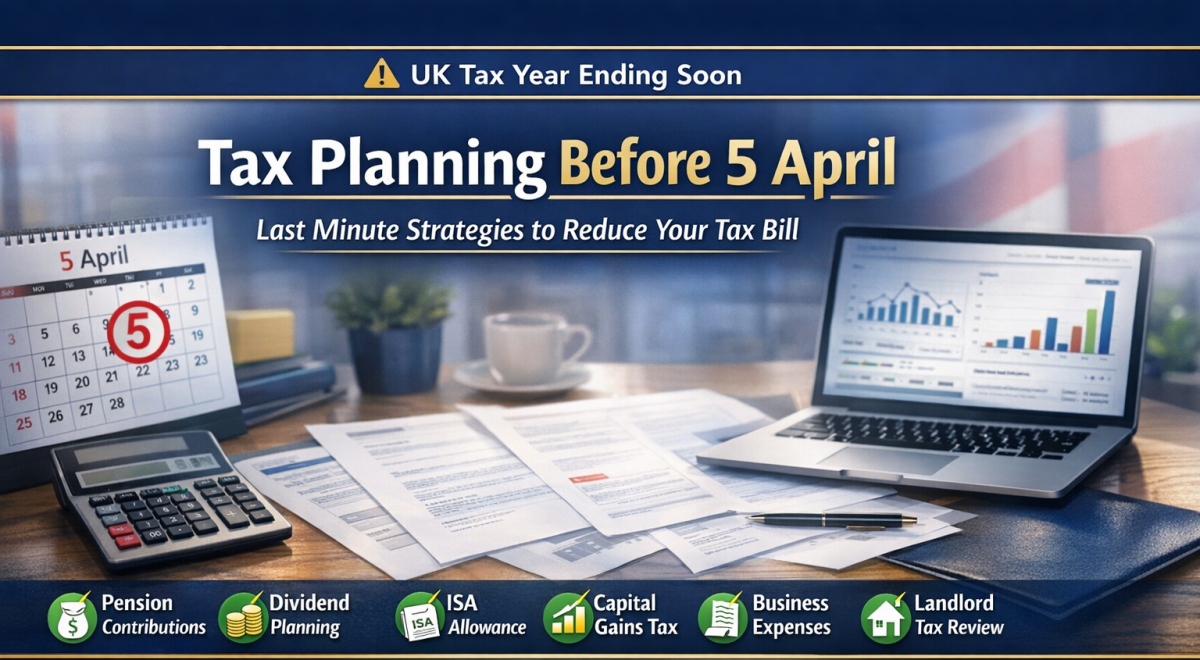
As the UK tax year ends on 5 April, many individuals and business owners still have time to take advantage of legitimate tax saving opportunities. Even though the deadline is close, there are several effective strategies that could help reduce your overall tax bill if action is taken quickly.
Tax planning is not about avoiding tax. It is about ensuring you are using the reliefs and allowances available to you under HMRC rules.
Use Your Personal Allowances
Every taxpayer has a Personal Allowance, which is the amount of income you can earn before paying Income Tax. If you have a spouse or civil partner who earns below their allowance, it may be possible to transfer income or use Marriage Allowance to reduce the household tax burden.
If you are a business owner, reviewing how income is split between partners or shareholders can often create tax efficiencies.
Maximise Pension Contributions
Making pension contributions before 5 April is one of the most effective ways to reduce taxable income. Pension contributions benefit from tax relief and can help higher rate taxpayers reduce their overall tax liability.
For company directors, employer pension contributions are usually an allowable business expense and can reduce Corporation Tax as well as personal tax exposure.
Use Your ISA Allowance
The annual ISA allowance allows individuals to invest tax efficiently. Any interest, dividends, or capital growth within an ISA is tax free. If you have unused allowance, funding your ISA before the tax year ends ensures you do not lose it.
Consider Capital Gains Tax Allowances
Individuals have an annual Capital Gains Tax exemption. If you are planning to sell investments, shares, or property assets, using your allowance before 5 April can reduce or eliminate CGT liabilities.
Review Dividend Payments
Company directors should review dividend planning before year end. Ensuring dividends are paid within available company profits and utilising dividend allowances can help reduce personal tax liabilities.
Careful planning is essential to avoid overpayment or compliance issues.
Claim All Allowable Expenses
Self-employed individuals and company owners should review business expenses to ensure everything allowable has been claimed. This can include professional subscriptions, training costs, travel expenses, software, and home office costs where applicable.
Missing legitimate expenses can result in paying more tax than necessary.
Use Gift Aid Donations
Charitable donations made under Gift Aid can extend your basic rate tax band and reduce higher rate tax exposure. Donations must be completed before 5 April to be included in the current tax year.
Check Loss Relief Opportunities
If you have made trading or investment losses, there may be opportunities to offset them against other income or future gains. Proper planning can significantly reduce tax liabilities.
Review Property Income Position
Landlords should review rental income, expenses, mortgage interest relief, and ownership structures. With ongoing tax changes affecting property investors, early planning can prevent unexpected liabilities.
Do Not Leave Planning Until the Last Minute
Many tax saving opportunities require action before 5 April. Waiting until after the tax year ends usually removes the opportunity to make changes.
Professional advice can help ensure strategies are applied correctly and compliantly.
Final Thoughts
Tax planning before the end of the tax year can make a significant difference to your finances. Whether you are self-employed, a landlord, company director, or employee with additional income, reviewing your tax position early helps you stay compliant and tax efficient.
Need Help With Tax Planning?
At Taxes Done Right Ltd, we help individuals and businesses plan ahead and reduce tax liabilities while staying fully compliant with HMRC.