
Company vs Sole Trader: Which One Actually Saves More Tax?
March 9, 2026
Flat Rate VAT Scheme: When It Works and When It Doesn’t
March 11, 2026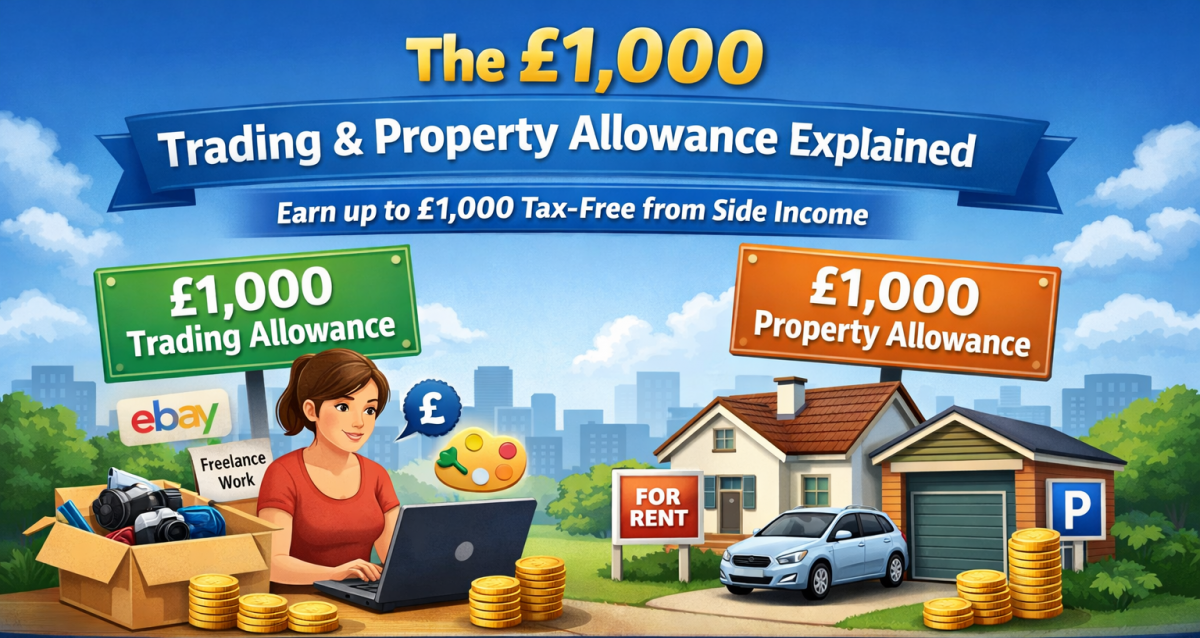
If you earn a small amount of extra income outside your normal job, you may not need to declare or pay tax on it. This is because HMRC provides two useful tax allowances called the Trading Allowance and the Property Allowance, each worth £1,000 per tax year.
These allowances are designed to simplify tax for people earning small amounts from side activities or property income.
What is the £1,000 Trading Allowance?
The Trading Allowance lets you earn up to £1,000 per tax year from trading or casual income without paying tax or reporting it to HMRC.
Examples of trading income include:
• Selling items online (eBay, Etsy, etc.)
• Freelance or side-hustle work
• Occasional services such as gardening, tutoring, or photography
• Small amounts of self-employed income
Example
If you make £850 selling crafts online, this falls below the £1,000 trading allowance. You do not need to register for Self Assessment or pay tax on it.
However, if you earn £1,500, you must declare it. In this case you can either:
• Deduct the £1,000 trading allowance, or
• Deduct your actual business expenses
You normally choose whichever gives you the lower taxable profit.
What is the £1,000 Property Allowance?
The Property Allowance allows individuals to earn up to £1,000 from property income tax-free each year.
This typically applies to:
• Renting out a garage or parking space
• Renting out a driveway
• Short-term letting of a room or storage space
• Small amounts of property income
Example
If you rent your driveway for £80 per month, you earn £960 per year. Because this is under £1,000, you do not need to report it to HMRC.
If your property income is £2,000, you can deduct the £1,000 allowance and only pay tax on £1,000.
Important Rules to Know
There are a few key points people often misunderstand.
You cannot claim expenses as well
If you use the £1,000 allowance, you cannot also claim expenses. It replaces expenses.
It applies per person
Each individual gets their own £1,000 allowance.
For example, if a couple jointly earns £1,800 from a driveway rental and the income is split equally, each receives £900, which is below the allowance.
It does not apply to companies
The allowance is only available to individuals, not limited companies.
When Do You Need to Declare the Income?
You must usually declare the income if:
• Your trading income exceeds £1,000
• Your property income exceeds £1,000
• You want to claim actual expenses instead of the allowance
This is normally done through a Self Assessment tax return.
Why This Allowance Exists
HMRC introduced these allowances to reduce unnecessary tax reporting for people earning small amounts from side income. Instead of forcing people to file tax returns for very small earnings, the allowance gives a simple tax-free buffer.
For many people with occasional income or small property earnings, this means less paperwork and no tax to pay.
Final Thoughts
The £1,000 Trading Allowance and £1,000 Property Allowance are simple but often overlooked tax reliefs.
If your side income or small property income falls below these limits, you may not need to report it at all. If it exceeds £1,000, you can still use the allowance to reduce your taxable profit.
Understanding these allowances can help you stay compliant while avoiding unnecessary tax.
Need Help?
If you are unsure whether your income needs to be declared, it is always better to check with a professional.
Taxes Done Right Ltd
📞 Call: 0161 710 1901
📧 Email: Tax@TaxesDoneRight.co.uk
Dm Us:
www.taxesdoneright.co.uk