
Director’s Loan Accounts Common Mistakes That Cause Tax Charges
January 1, 2026
Cash vs Accruals – Which One Should You Be Using?
January 5, 2026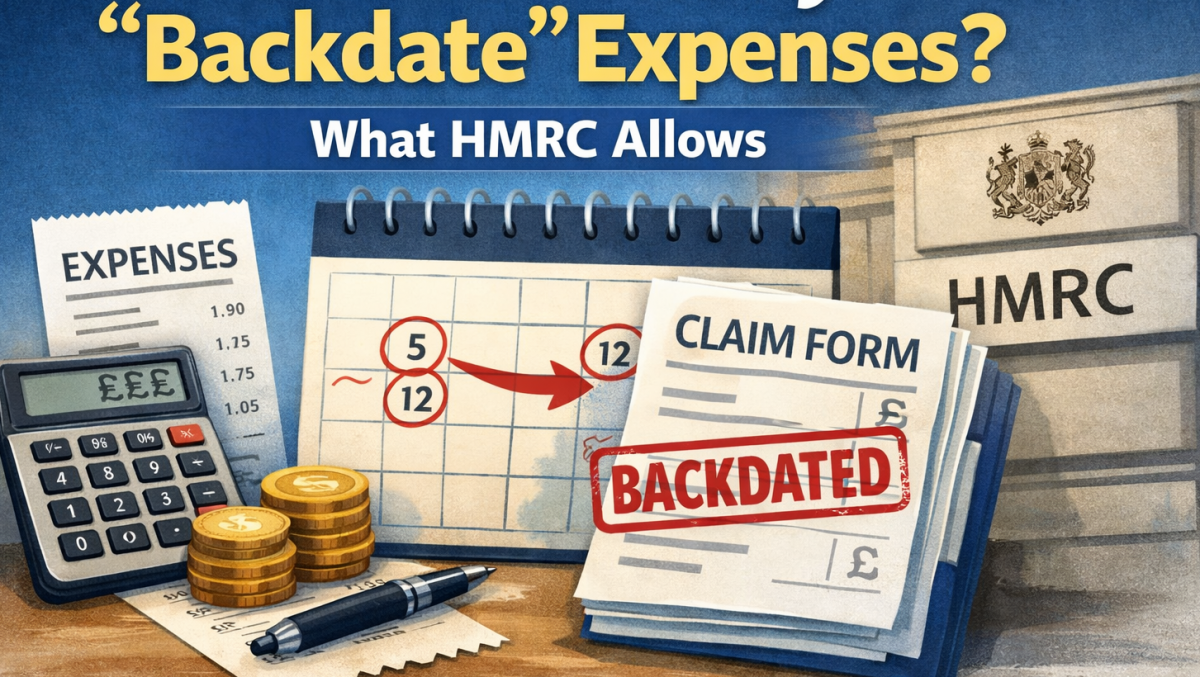
Many business owners, landlords, and self-employed individuals ask the same question every year: can I backdate expenses and reduce my tax bill now? The short answer is sometimes – but only within HMRC’s rules. Backdating expenses incorrectly can trigger enquiries, penalties, and rejected claims, so it is important to understand what is actually allowed.
What People Mean by “Backdating” Expenses
When people talk about backdating expenses, they usually mean one of three things. Claiming expenses incurred in a previous tax year but not claimed at the time. Claiming costs paid personally before a business started. Or moving expenses between tax years to reduce tax. HMRC treats each of these very differently.
Claiming Missed Expenses From Previous Tax Years
If you forgot to claim allowable expenses in a previous tax return, you may be able to amend the return. For Self Assessment, HMRC allows amendments within 12 months of the 31 January filing deadline. For example, a 2023/24 return can usually be amended until 31 January 2026.
If the amendment window has passed, you may still be able to submit an overpayment relief claim, but this must normally be done within four years of the end of the tax year. Evidence is essential, including receipts, invoices, and bank statements.
Pre-Trading Expenses – A Commonly Allowed Exception
HMRC does allow certain expenses incurred before a business officially starts to be claimed later. These are known as pre-trading expenses. If the cost was incurred wholly and exclusively for the business and would have been allowable if incurred after trading began, it can usually be claimed.
For sole traders and partnerships, HMRC generally allows pre-trading expenses incurred in the seven years before trading started. For limited companies, pre-incorporation expenses can also be claimed, provided the company reimburses the director and the expense was genuinely for company business.
Typical examples include professional fees, software subscriptions, training, stationery, and marketing costs.
Expenses Must Be Claimed in the Correct Tax Year
You cannot simply move expenses between tax years to suit your tax position. HMRC requires expenses to be claimed in the tax year they were incurred, not when they were paid or when it is most tax-efficient. Deliberately shifting expenses to reduce tax can be viewed as careless or deliberate behaviour.
There are limited exceptions, such as accruals for accounting purposes, but these must follow proper accounting rules and be applied consistently.
What You Cannot Backdate
You cannot create expenses that did not exist. You cannot claim estimates without evidence. You cannot backdate mileage logs, home office claims, or receipts if there is no reasonable basis or contemporaneous record. HMRC expects records to be accurate and justifiable.
Record Keeping Is Key
HMRC requires most taxpayers to keep records for at least five years after the 31 January submission deadline, and companies must usually keep records for six years. Without records, even a valid expense can be disallowed.
The Bottom Line
Yes, some expenses can effectively be claimed later, but only within strict HMRC rules. Missed claims may be recoverable through amendments or overpayment relief. Pre-trading expenses are often allowed. However, deliberately shifting or inventing expenses is not permitted and can be costly.
If you are unsure whether an expense can be claimed or amended, it is always safer to get professional advice from Taxes Done Right before submitting or changing a return.