Can You Really “Backdate” Expenses? What HMRC Allows
January 4, 2026
Things You Should Do Before Your Accountant Files Your Return
January 6, 2026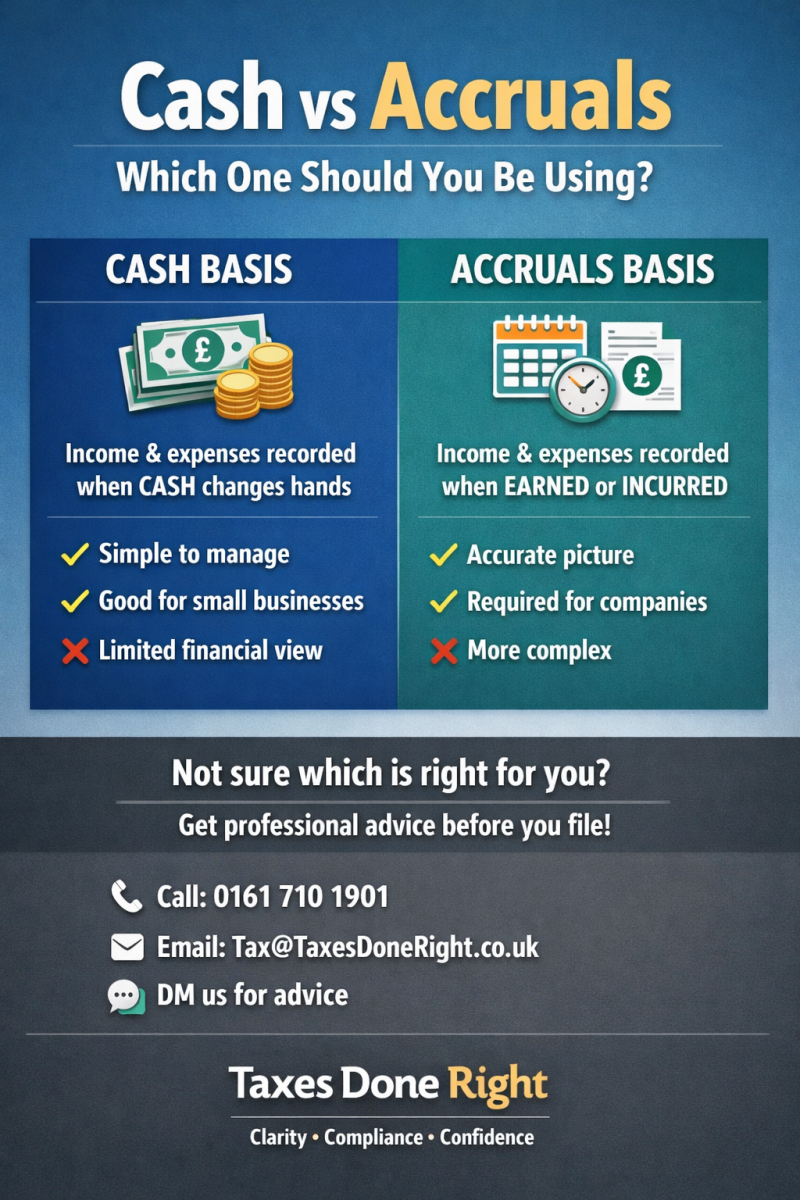
When preparing accounts or a tax return, one of the first decisions you need to make is whether to use the cash basis or accruals basis of accounting. Choosing the wrong method can lead to confusion, inaccurate figures, or missed tax planning opportunities. Understanding the difference is essential for staying compliant and making informed business decisions.
What Is the Cash Basis?
Under the cash basis, income and expenses are recorded only when money actually changes hands. You include income when you receive it and claim expenses when you pay them.
This method is popular with sole traders and small businesses because it is simple and easy to manage. You do not need to track unpaid invoices, bills, or accruals at the year end.
However, the cash basis can give a distorted view of how your business is really performing, especially if you issue invoices late or have significant unpaid costs at the year end.
What Is the Accruals Basis?
The accruals basis records income and expenses when they are earned or incurred, regardless of when the money is paid or received.
This means income is included when you raise an invoice and expenses are included when you receive a bill. Adjustments are made at the year end for debtors, creditors, prepayments, and accruals.
Accruals accounting gives a more accurate picture of profitability and is required for limited companies and many growing businesses.
Which Method Can You Use?
Most sole traders and partnerships can choose between cash and accruals, provided they meet HMRC’s eligibility rules. The cash basis is generally available if your turnover is £150,000 or less.
Limited companies must use the accruals basis. This is a legal requirement under UK accounting standards and Companies House rules.
Landlords can also use either method, but accruals often provide better long-term clarity, especially for those with multiple properties or finance costs.
Key Differences at a Glance
The cash basis is simpler and focuses on bank movements, while the accruals basis focuses on true income and costs for the period. Cash basis is easier for bookkeeping, but accruals are more accurate for understanding profits and planning tax.
Which One Is Right for You?
The right method depends on your circumstances. If your business is small, has straightforward income and expenses, and you want simplicity, the cash basis may be suitable. If you want clearer insight into performance, are growing, or operate through a limited company, accruals are usually the better choice.
Switching between methods is possible, but it must be done correctly to avoid errors or double counting.
Final Thoughts
Choosing between cash and accruals is not just an accounting preference. It affects how much tax you pay, how your profits look, and how confident you are in your figures. Getting it wrong can lead to poor decisions or HMRC issues later.
If you are unsure which method applies to you, or whether switching would save tax, Taxes Done Right advice is strongly recommended.