Should You Buy Property Through a Limited Company or Personally?
February 9, 2026
Year End Tax Planning Checklist for UK Limited Companies
February 11, 2026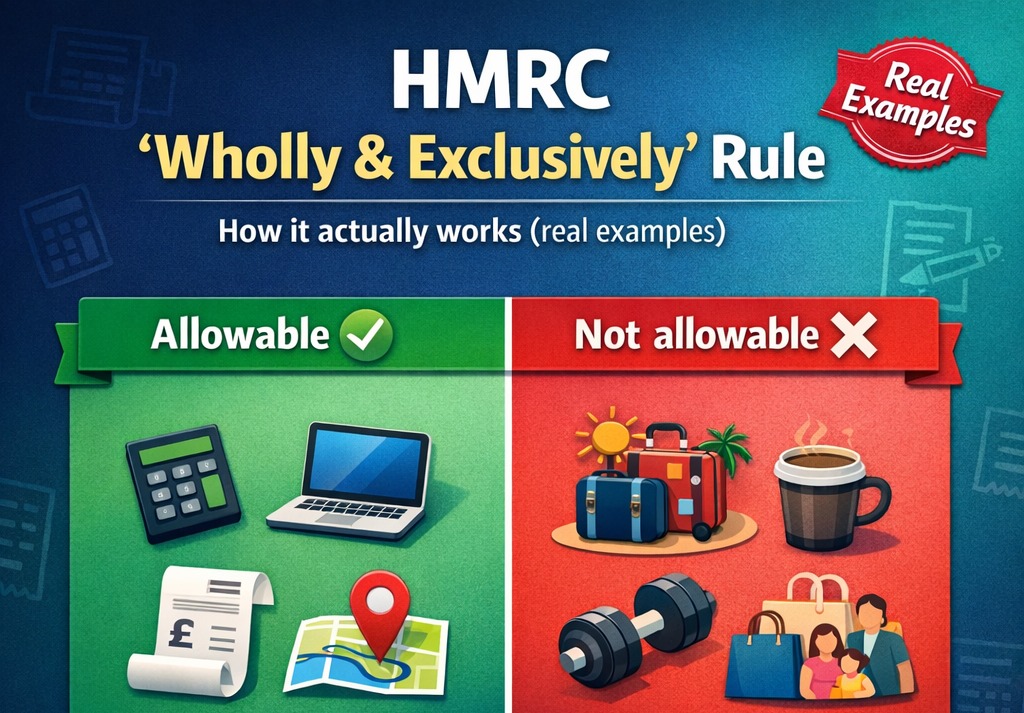
If you run a business in the UK, you have probably heard the phrase “wholly and exclusively for business purposes.” This is one of HMRC’s most important rules when deciding whether an expense is tax deductible. However, it is also one of the most misunderstood.
Many business owners assume that if something helps their work in any way, it must be allowable. Unfortunately, HMRC applies this rule much more strictly. Understanding how it actually works can help you avoid costly mistakes, enquiries, and unexpected tax bills.
What Does ‘Wholly and Exclusively’ Mean?
HMRC allows businesses to claim expenses only if they are incurred wholly and exclusively for business purposes. In simple terms, this means:
The expense must be entirely for business use
There must be no personal benefit attached
The main purpose must be business related
If an expense has both business and personal use, HMRC may either disallow it completely or allow only the business proportion.
This rule applies to:
Sole traders
Partnerships
Limited companies
Landlords and property businesses
Why This Rule Matters:
Claiming expenses reduces your taxable profit, which reduces the amount of tax you pay. However, if HMRC later decides an expense does not meet the rule, they can:
Remove the expense from your accounts
Charge additional tax
Issue penalties
This is why proper record keeping and understanding the rule is essential.
Real Examples of Allowable Expenses
Business Equipment
If you purchase equipment used solely for business, this is usually allowable.
Example:
A graphic designer buys a laptop used only for client work. This would normally be fully deductible because it is clearly for business use.
However, if the laptop is also used for personal streaming, gaming, or family use, HMRC may only allow the business proportion.
Example:
A self-employed plumber travels to customer properties daily. Mileage costs would normally be allowable.
However, travel between home and a permanent workplace is usually treated as personal commuting and not deductible.
Example:
Paying an accountant to prepare company accounts or tax returns would normally qualify as a business expense.
Example:
A builder buying steel toe boots would usually be allowable. A consultant buying a business suit would not be allowable because it can be worn outside work.
Example:
If your mobile phone is used 70 percent for business and 30 percent personal, you should normally only claim 70 percent of the cost.
HMRC expects a reasonable and justifiable split supported by evidence such as usage records or billing analysis.
Example:
Taking clients to dinner or sporting events is usually disallowed for corporation tax or income tax purposes.
Dual Purpose Expenses
If an expense has both personal and business purposes that cannot be separated, HMRC may reject the entire cost.
Example:
Booking a family holiday and attending a short business meeting during the trip would normally be disallowed because the main purpose is personal.
For landlords, the rule applies in exactly the same way.
Allowable:
-Repairs and maintenance
-Letting agent fees
-Mortgage interest (subject to tax credit rules for individuals)
-Safety certificates and compliance costs
Not Allowable:
-Improvements that increase property value rather than maintain it
-Personal travel not directly linked to property management
-Personal use of rental property
HMRC typically looks at:
-The purpose of the expense
-Supporting evidence and receipts
-Whether personal benefit exists
-Whether the cost is reasonable and commercially justified
Documentation is extremely important. Keeping invoices, mileage logs, and explanations for unusual expenses can significantly strengthen your position if HMRC asks questions.
Other not Allowable Example:
-Buying lunch during a normal working day is usually treated as personal expenditure.
-Expenses That Usually Fail the Test
-Entertaining Clients
-Business entertaining is generally not tax deductible, even though it is business related.
Practical Tips to Stay Compliant
-Keep business and personal finances separate
-Maintain clear records and receipts
-Apply reasonable apportionments for mixed use expenses
-Seek professional advice before claiming unusual or high value costs
-Review expenses regularly rather than waiting until year end
Common Mistake Business Owners Make
Many business owners assume that if an expense helps them run their business, it must be allowable. The reality is that HMRC focuses on purpose, not benefit.
An expense can benefit your business but still be disallowed if it also provides personal enjoyment or cannot be clearly separated.
Final Thoughts
HMRC’s wholly and exclusively rule is designed to ensure that only genuine business expenses reduce taxable profits. While the rule sounds simple, applying it correctly requires judgement, documentation, and sometimes professional advice.
Getting this wrong can be expensive, especially if HMRC reviews several years of accounts. Getting it right helps ensure you pay the correct tax while legitimately claiming everything you are entitled to.
If you are unsure whether an expense qualifies, it is always better to check before submitting your accounts or tax return. Proper planning and record keeping can prevent problems later and help your business remain fully compliant.
Need Clarity on Your Expenses?
If you are unsure whether an expense is genuinely allowable under HMRC’s wholly and exclusively rule, getting it wrong can cost far more than getting advice upfront.
At Taxes Done Right, we help business owners and landlords:
- Identify what you can and cannot claim
- Structure expenses correctly to reduce risk
- Stay compliant while paying no more tax than necessary
If something feels like a grey area, it probably is. Speak to us before HMRC does.