
60-Day CGT Reporting: The Mistake That’s Costing Property Sellers Thousands
February 16, 2026
Director’s Loan Account – Associated Companies – Why It Could Increase Your Corporation Tax
February 18, 2026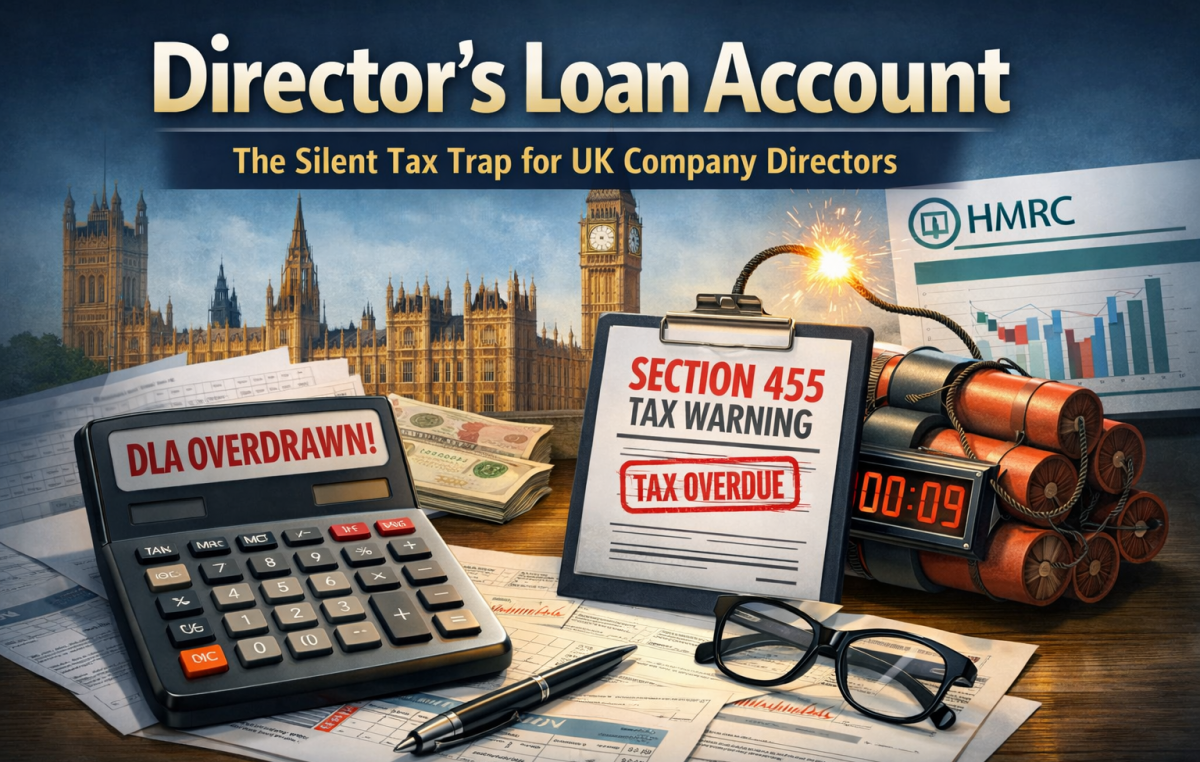
If you run a UK limited company, your Director’s Loan Account (DLA) can quietly become one of the biggest tax traps in your business.
It often starts innocently. You take some money out for personal use and plan to adjust it later. Months pass. The balance grows. Then, when the accounts are prepared, you discover unexpected tax charges.
Let’s break it down properly.
What Is a Director’s Loan Account?
A Director’s Loan Account records money moving between you and your company that is not salary or dividends.
It shows either money the company owes you, or money you owe the company.
The real issue begins when the account becomes overdrawn, meaning you have taken more out than you have put in or formally declared as salary or dividends.
When It Becomes a Problem
If your DLA is overdrawn at the company’s year end and remains unpaid nine months and one day later, the company faces a Section 455 tax charge.
Section 455 Corporation Tax Charge
The company must pay 33.75 percent tax on the outstanding loan balance.
This is not a permanent tax, but it creates a significant cashflow impact. The company can only reclaim it after the loan is fully repaid.
In practice, this means your company is effectively funding your personal withdrawal and paying tax on top.
Benefit in Kind Issues
If your loan exceeds £10,000 at any time during the tax year and no interest is charged at HMRC’s official rate, it may create a taxable Benefit in Kind.
This can result in a P11D filing requirement, additional personal income tax, and Class 1A National Insurance for the company.
A short term loan can quickly become a compliance issue.
Illegal Dividends Risk
Sometimes directors assume withdrawals are dividends. However, dividends must be supported by sufficient retained profits and proper paperwork.
If there are not enough profits, or no dividend minutes and vouchers exist, the withdrawal cannot legally be treated as a dividend. In that case, the amount remains a loan and may need to be repaid.
This can create both accounting and legal complications.
Why It Is Called the Silent Tax Trap
Director’s Loan Accounts rarely cause problems immediately. They build quietly in the background.
There are no automatic alerts. No reminder letters. The issue usually appears when year end accounts are prepared, Corporation Tax is calculated, or your accountant reviews the balance.
By that stage, the options to fix it may be limited.
How to Avoid the Trap
The key is proactive management.
Review your Director’s Loan Account regularly.
Run quarterly management accounts.
Declare dividends correctly and only from available profits.
Keep payroll structured properly.
Clear overdrawn balances before the nine month deadline.
Leaving it until year end increases the risk of avoidable tax charges.
Strategic Planning Is Essential
A Director’s Loan Account is not inherently bad. It can be used strategically if managed correctly.
Planning withdrawals through structured dividends, bonuses, salary adjustments, or pension contributions can prevent unexpected tax consequences.
The problem arises when withdrawals are unplanned and undocumented.
Final Thoughts
Your Director’s Loan Account is not just an accounting balance. It represents real tax risk if ignored.
Many unexpected tax bills for limited company directors stem from unmanaged Director’s Loan Accounts.
Review it early. Review it regularly. Plan withdrawals properly.
If you are unsure about your Director’s Loan Account position, now is the time to review it.
At Taxes Done Right Ltd, we help limited company directors structure salary, dividends and withdrawals properly to avoid unnecessary tax charges and cashflow shocks.