Cash vs Accrual Accounting – Which One Saves You More Tax?
March 2, 2026
Associated Companies: Why Your Corporation Tax Just Increased
March 4, 2026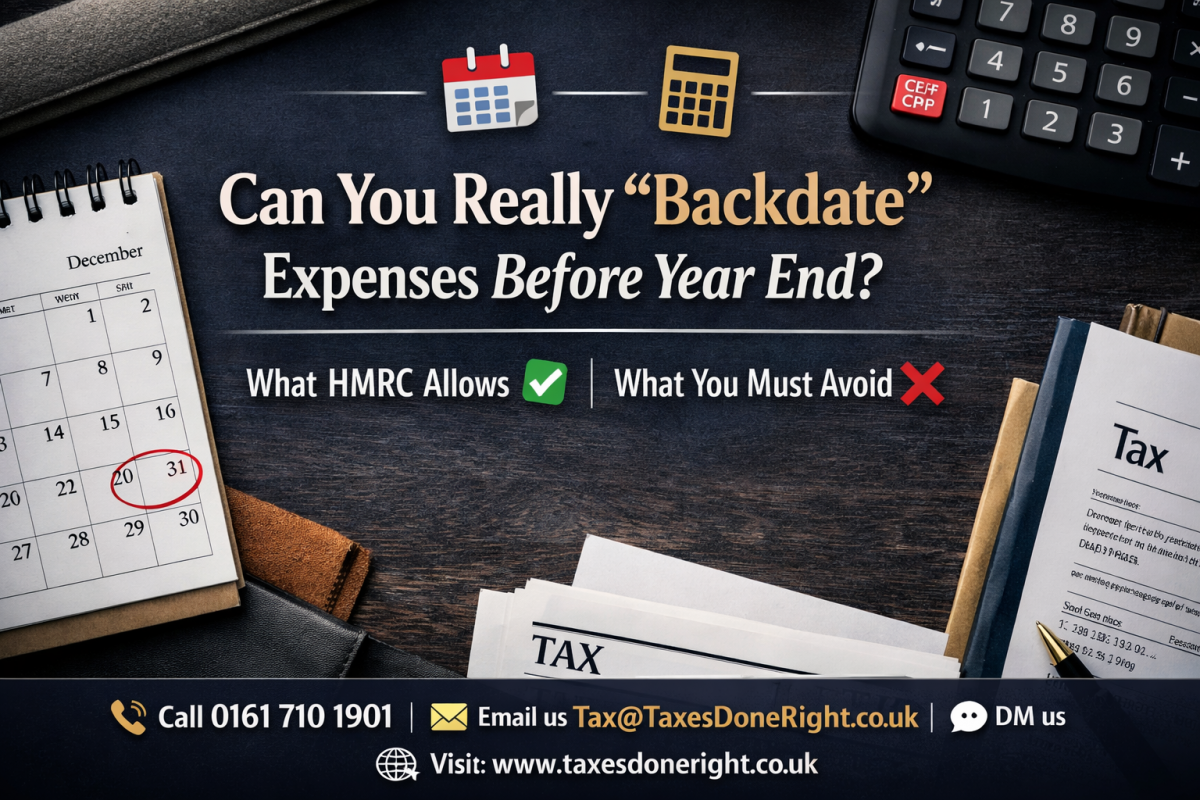
As your financial year end approaches, many business owners ask the same question: can I backdate expenses to reduce my tax bill?
The honest answer is no, not in the way many people think. You cannot simply create or move expenses into an earlier period to lower your tax. HMRC rules are clear. Expenses must be recorded in the correct accounting period and must be wholly and exclusively for business purposes.
However, there are legitimate planning steps you can take before year end.
1. Paying genuine business expenses early
If you know you have an upcoming business cost, such as software subscriptions, insurance, professional fees or stock purchases, paying for them before your year end may bring the expense into the current accounting period. This can reduce this year’s taxable profit. The key is that the expense must be real, commercial, and genuinely incurred.
2. Accruals and prepayments
If you use accrual accounting, you may be able to include expenses that relate to the current year even if the invoice has not yet been paid, provided the cost has been incurred. Similarly, some costs paid in advance may need to be spread over the correct period. Getting this wrong can distort your profits.
3. Capital expenditure timing
Large purchases such as equipment, tools, or machinery may qualify for capital allowances, including the Annual Investment Allowance. Bringing forward planned purchases before year end can sometimes reduce corporation tax. However, the asset must be in use or ready for use by the year end.
4. Director’s expenses and reimbursements
If you have personally paid for business expenses, ensure these are properly recorded and reimbursed through the company before year end where appropriate. Failing to claim legitimate expenses means paying more tax than necessary.
What you cannot do
You cannot:
- Create fake invoices
- Alter invoice dates
- Move personal costs into the business
- Shift income into a later period without justification
Doing so risks penalties, interest, and potential HMRC enquiry.
The difference between planning and manipulation
Good tax planning is about timing genuine transactions within the rules. Manipulating accounts or inventing costs is not planning, it is non-compliance.
Every business is different. Sole traders, landlords, and limited companies all have different rules, especially with Making Tax Digital and changes to reporting requirements. What works for one business may not work for another
Need Help?
Before making any last-minute decisions, it is always better to review your position properly. A short conversation before year end can often save far more than a rushed decision afterwards.
If you would like a year end review to ensure you are claiming everything correctly and not paying more tax than necessary, get in touch.