
Inside vs Outside IR35: What Is the Real Difference
June 8, 2026
Higher Rate Taxpayer? You Could Be Missing Pension Tax Relief
June 11, 2026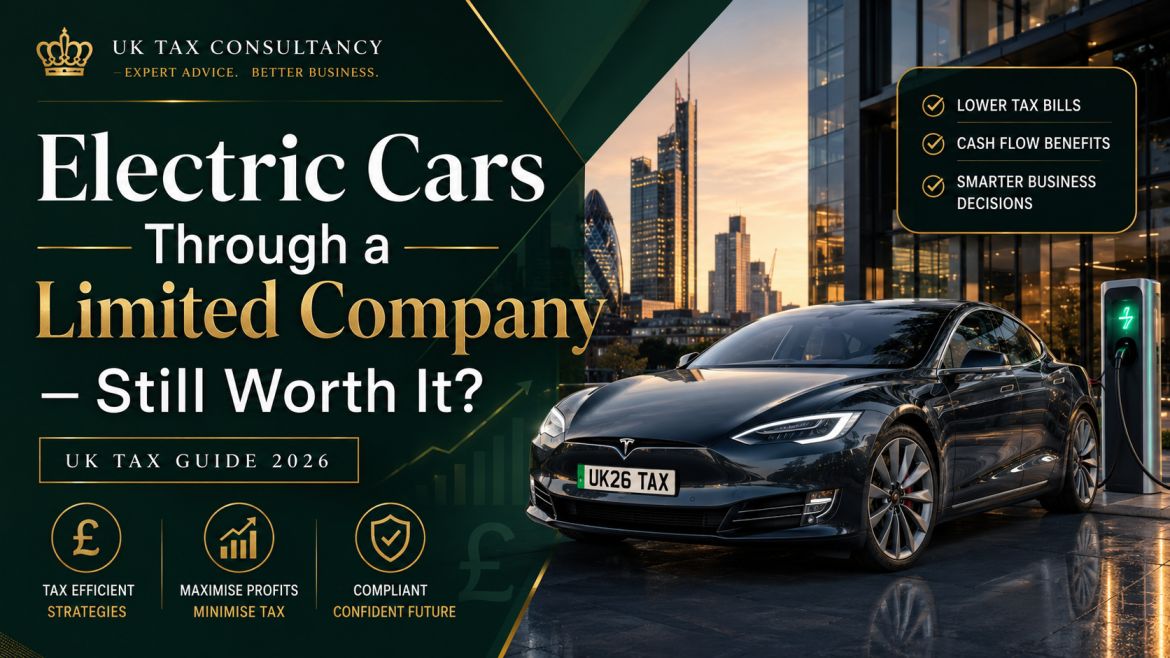
Electric Cars Through a Limited Company – Still Worth It?
Electric Cars Through a Limited Company – Still Worth It?
Electric Cars continue to be one of the most attractive tax-saving opportunities available to limited company directors and business owners. While many traditional tax reliefs have been reduced over the years, electric vehicles still benefit from favourable tax treatment, making them a popular choice for company owners looking to combine business needs with tax efficiency.
However, tax rules evolve regularly, and many directors are asking whether Electric Cars purchased through a limited company still represent good value in 2026 and beyond.
In this article, we explore the tax advantages, potential drawbacks, and key considerations before buying an electric vehicle through your company.
Why Are Electric Cars Popular With Limited Companies?
The main reason Electric Cars remain attractive is the combination of low Benefit in Kind (BIK) tax rates and generous corporation tax relief.
When a company purchases a vehicle for business use, the tax treatment depends heavily on whether the vehicle is electric, hybrid, or petrol/diesel.
For many years, HMRC has encouraged the adoption of low-emission vehicles by offering significant tax incentives. As a result, Electric Cars often provide a much lower overall tax cost compared to traditional company cars.
Electric Cars and Benefit in Kind Tax
One of the biggest advantages of Electric Cars is the low Benefit in Kind charge.
Benefit in Kind tax applies when an employee or director receives a company benefit that can also be used personally. Company cars are one of the most common examples.
For petrol and diesel vehicles, Benefit in Kind percentages can often exceed 30%, creating substantial tax bills for both the driver and the company.
By contrast, EVs continue to benefit from significantly lower Benefit in Kind rates. This means directors can drive a high-value vehicle while paying considerably less personal tax than they would on an equivalent petrol or diesel model.
For many business owners, this tax saving alone makes electric vehicles an attractive proposition.
Corporation Tax Relief on Electric Cars
Another major advantage of Electric Cars is the corporation tax relief available to limited companies.
Where a company purchases a new fully electric vehicle, it may qualify for 100% first-year capital allowances. This means the company can potentially deduct the full cost of the vehicle against taxable profits in the year of purchase, subject to the relevant conditions being met.
For example, if a company purchases a qualifying electric vehicle costing £40,000, it may be able to claim the entire amount as a deduction for corporation tax purposes.
This can generate a significant corporation tax saving and improve cash flow compared to purchasing a vehicle personally.
Can the Company Pay for Charging Costs?
Electric Cars also offer additional tax advantages when it comes to charging.
Where a company provides charging facilities at its business premises, employees and directors can generally charge their vehicles without creating a taxable benefit.
If the company installs charging infrastructure, this expenditure may also qualify for tax relief depending on the circumstances.
Business mileage undertaken in company-owned EVs can also be reimbursed using HMRC-approved rates.
These additional savings can further improve the overall tax efficiency of owning an electric vehicle through a company.
What About Leasing Electric Cars?
Many businesses choose to lease rather than purchase Electric Cars.
Leasing can provide lower upfront costs and predictable monthly payments. In many cases, lease payments may be deductible for corporation tax purposes.
Unlike higher-emission vehicles, fully electric cars generally avoid the lease restriction rules that can apply to certain petrol and diesel vehicles.
This means leasing EVs can remain a highly tax-efficient option for companies seeking flexibility and lower capital expenditure.
Are There Any Disadvantages?
Although EVs offer considerable tax benefits, there are still factors to consider.
The initial purchase price can often be higher than an equivalent petrol or diesel vehicle. While running costs may be lower, businesses should evaluate the overall financial impact rather than focusing solely on tax savings.
Battery range, charging infrastructure, and vehicle suitability should also be considered. A tax-efficient vehicle that does not meet operational requirements may not represent the best business decision.
In addition, Benefit in Kind rates for Electric Cars are scheduled to increase gradually over future tax years. Although these increases remain relatively modest, they should be considered when assessing long-term affordability.
Electric Cars for Sole Directors
Electric Cars can be particularly beneficial for owner-managed businesses.
Many directors previously extracted profits through dividends and then purchased vehicles personally. While this approach remains possible, it often requires profits to be taxed before being used to fund the vehicle purchase.
When the company purchases the vehicle directly, corporation tax relief may be available and the Benefit in Kind charge can remain comparatively low.
This combination often produces a more favourable overall tax outcome than purchasing the vehicle personally.
However, every situation is different, and calculations should be performed based on individual income levels, company profits, and expected vehicle usage.
Should You Buy or Lease?
There is no universal answer.
Buying Electric Cars may provide access to capital allowances and ownership of the vehicle at the end of the financing period.
Leasing Electric Vehicles may reduce upfront costs and simplify budgeting through fixed monthly payments.
The most suitable option will depend on cash flow requirements, expected mileage, vehicle replacement cycles, and broader business objectives.
Many businesses benefit from obtaining professional advice before committing to either route.
Final Thoughts on Electric Cars Through a Limited Company
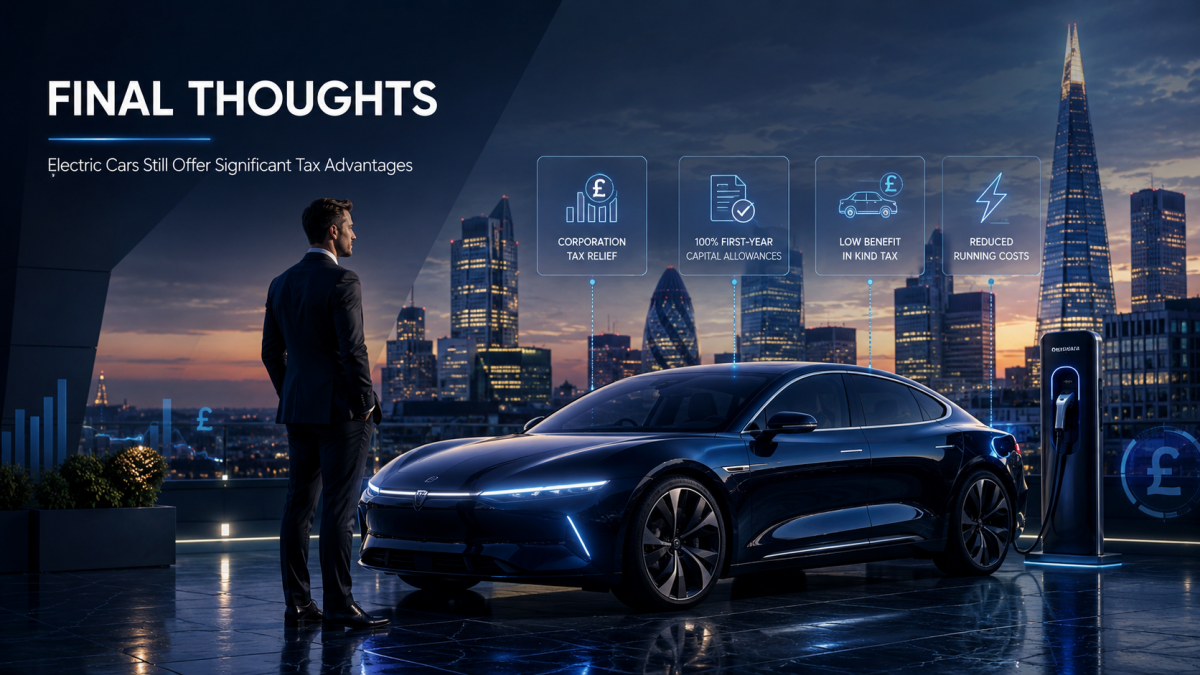
Electric Cars remain one of the most tax-efficient benefits available to limited company directors and business owners. Low Benefit in Kind rates, potential 100% first-year capital allowances, corporation tax relief, and reduced running costs can create substantial savings when compared to traditional vehicles.
While Benefit in Kind rates are gradually increasing, Electric Cars continue to offer attractive tax advantages in 2026 and beyond. Whether purchasing or leasing, the overall tax position can often be significantly more favourable than acquiring a vehicle personally.
Before making a decision, it is important to consider both the tax implications and the practical needs of your business. With the right planning, Electric Cars can still represent excellent value for many limited company owners.
Need help deciding what’s best for your situation?
📞 Call 0161 710 1901
📧 Email Tax@TaxesDoneRight.co.uk
Visit www.taxesdoneright.co.uk