
Payments on Account Due Soon? Don’t Get Caught Out
June 30, 2026
Selling a Property? Don’t Forget the 60-Day Reporting Deadline
July 2, 2026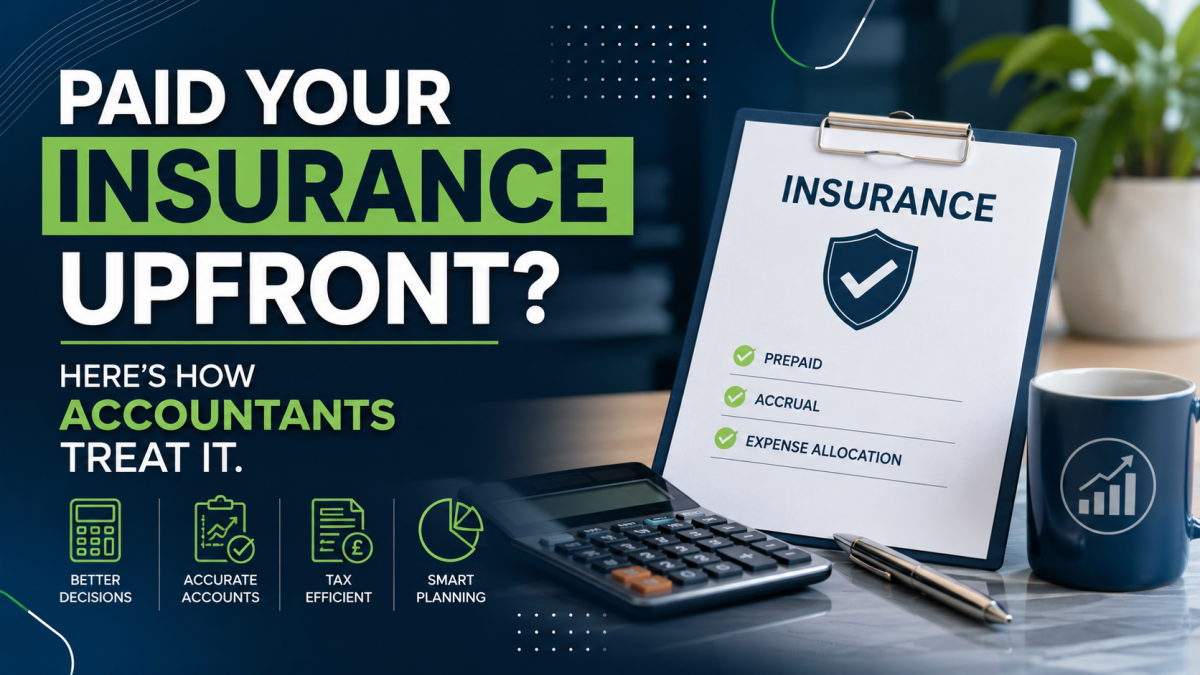
Paid your insurance upfront? Here’s how accountants treat it
Insurance upfront payments are common for businesses across the UK. Many insurers offer discounts for paying an annual premium in one lump sum rather than spreading the cost monthly. While this can save money and improve cash flow planning, it often raises an important accounting question: can you claim the entire expense immediately?
The answer depends on the accounting period the insurance relates to.
In many cases, accountants do not simply record the whole payment as an expense on the day it is paid. Instead, part of the payment may be treated as a prepayment so that the expense is recognised over the period the insurance policy provides cover.
Understanding this treatment helps ensure your accounts are accurate, compliant with accounting standards and correctly reflect your business’s financial performance.
What Does Insurance Upfront Mean?
An insurance upfront payment simply means paying the full insurance premium before or at the start of the policy period.
Examples include:
- Public liability insurance
- Professional indemnity insurance
- Employers’ liability insurance
- Commercial vehicle insurance
- Office and business premises insurance
- Cyber insurance
- Contents insurance
Many businesses choose to pay annually because it often works out cheaper than paying monthly.
However, from an accounting perspective, paying cash today does not necessarily mean the whole amount belongs as an expense in today’s accounts.
Why Insurance Upfront Is Often Treated as a Prepayment
The matching principle in accounting requires expenses to be recognised in the accounting period in which they relate, rather than simply when they are paid.
If your insurance policy extends beyond your accounting year end, part of the payment relates to a future accounting period.
Rather than charging the entire premium to the Profit and Loss Account immediately, accountants split the expense between:
- The portion relating to the current accounting period
- The portion relating to future accounting periods
The future element is recorded as a prepayment on the Balance Sheet until the relevant accounting period arrives.
This ensures that each year’s accounts include only the insurance costs that genuinely relate to that year.
Insurance Upfront and Year-End Accounts
The treatment of insurance upfront payments becomes particularly important around the financial year end.
For example:
- Accounting year end: 31 December
- Annual insurance policy purchased: 1 October
- Premium paid: £1,200
- Policy covers: 1 October to 30 September
By 31 December, only three months of insurance have been used.
This means:
- Insurance expense recognised: £300
- Prepayment recorded: £900
The remaining £900 is recognised gradually over the following accounting period as the insurance cover is received.
Without this adjustment, profits for the first year would appear lower than they should, while the following year’s profits would be overstated.
Does Insurance Upfront Affect Your Tax?
Generally, insurance premiums that are wholly and exclusively incurred for business purposes are allowable business expenses.
However, where a prepayment adjustment is required for accounting purposes, the expense is usually recognised in line with the accounting treatment.
This ensures taxable profits are calculated correctly and fairly across accounting periods.
Businesses should also ensure that the insurance relates to business activities rather than private expenditure, as personal insurance is generally not tax deductible.
Common Examples of Insurance Upfront Payments
Many businesses encounter insurance upfront transactions every year.
Typical examples include:
- Annual fleet insurance
- Shop insurance
- Office insurance
- Landlord insurance
- Professional indemnity cover
- Directors’ and officers’ insurance
- Equipment insurance
- Business interruption insurance
Each of these may require a prepayment adjustment if the policy extends beyond the accounting year end.
Why Accurate Accounting Matters
Although insurance premiums may seem like relatively small expenses, accurate treatment can make a noticeable difference to your financial statements.
Correctly accounting for insurance upfront payments helps:
- Produce accurate management accounts
- Avoid overstating expenses
- Present realistic business profits
- Improve financial reporting
- Ensure compliance with accounting standards
- Reduce year-end adjustments
- Give lenders and investors more reliable financial information
It also makes comparing one accounting year with another much more meaningful.
Common Mistakes Businesses Make
Business owners sometimes make avoidable errors when recording insurance payments.
Some of the most common include:
- Expensing the entire annual premium immediately
- Forgetting to calculate year-end prepayments
- Recording insurance based only on bank transactions
- Ignoring policies that span multiple accounting periods
- Assuming every payment can be claimed in full immediately
These mistakes can distort profits and create unnecessary work during the year-end accounts preparation process.
Professional bookkeeping and regular reviews help identify these issues before they become larger problems.
How Your Accountant Can Help
Your accountant will usually review all significant payments made before the year end to determine whether any should be treated as prepayments.
This includes insurance, rent, software subscriptions, maintenance contracts and other advance payments.
By making the appropriate accounting adjustments, they ensure your accounts accurately reflect your business’s financial position and comply with UK accounting principles.
For businesses using cloud accounting software, many of these adjustments can also be scheduled and managed efficiently throughout the year.
Final Thoughts

Insurance upfront payments can offer cost savings and simplify budgeting, but they also require the correct accounting treatment.
Rather than claiming the entire cost immediately, accountants often allocate the expense over the period of insurance cover through a prepayment adjustment where appropriate.
This approach produces more accurate financial statements, ensures compliance with accounting standards and provides a clearer picture of your business’s profitability.
If you’re unsure whether your insurance payments or other advance expenses have been treated correctly, obtaining professional advice can help keep your bookkeeping accurate and your year-end accounts running smoothly.
At Taxes Done Right Ltd, we help businesses prepare accurate accounts, maintain compliant bookkeeping and ensure expenses are recognised in the correct accounting periods. Whether you’re preparing year-end accounts or simply want confidence that your bookkeeping is correct, we’re here to help.
Need help deciding what’s best for your situation?
📞 Call 0161 710 1901
📧 Email Tax@TaxesDoneRight.co.uk
Visit www.taxesdoneright.co.uk