
Director Salary Sacrifice Pension: Should Company Directors Use It in 2026?
July 24, 2026
Can You Employ Your Spouse or Children in Your Business? A UK Tax Guide 2026 To Avoid Costly Mistakes
July 28, 2026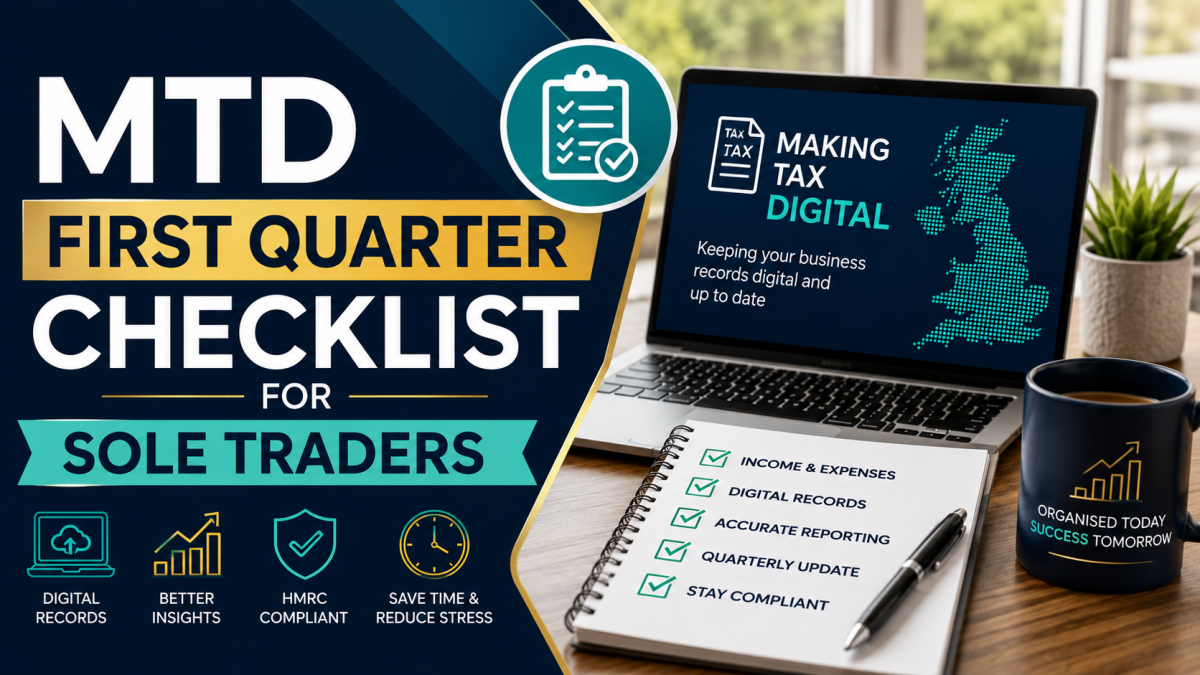
MTD First Quarter Checklist for Sole Traders
MTD First Quarter is one of the most important milestones for sole traders under Making Tax Digital (MTD) for Income Tax. While quarterly reporting may seem like another administrative task, it provides an excellent opportunity to review your business finances, identify errors early, and avoid a stressful rush at the end of the tax year.
Many sole traders leave bookkeeping until the last minute, which often results in missing expenses, inaccurate records, and unnecessary tax bills. Completing your first quarterly review properly sets the standard for the rest of the year and makes future submissions significantly easier.
For many sole traders, the introduction of Making Tax Digital represents one of the biggest changes to tax reporting in recent years. Instead of leaving bookkeeping until the end of the tax year, you’ll now be expected to maintain accurate digital records and provide regular quarterly updates. While this may seem like extra work initially, it encourages better financial management and helps reduce the risk of costly errors and missed tax-saving opportunities.
The key to a successful MTD First Quarter is preparation. By reviewing your income, expenses, bank transactions, and supporting records before submitting your quarterly update, you can ensure your figures are accurate and compliant with HMRC requirements. This checklist has been designed to guide you through the essential steps, helping you stay organised, avoid common mistakes, and make your quarterly submissions as straightforward as possible.
In this guide, we’ll walk through a practical checklist that every sole trader should complete before submitting their first quarterly update.
Why Your First Quarter Matters
Your first quarterly submission establishes your bookkeeping habits for the remainder of the tax year. Good records now will save hours later.
Rather than viewing quarterly updates as an inconvenience, think of them as a financial health check for your business. Regular reviews help you understand profitability, cash flow, and upcoming tax liabilities long before the year ends.
Completing each quarter accurately also reduces the likelihood of costly corrections later in the year.
What is Making Tax Digital?
Making Tax Digital (MTD) for Income Tax requires many sole traders and landlords to maintain digital records and submit quarterly income and expense updates to HMRC using compatible software.
Instead of preparing everything once a year, businesses update their financial information throughout the year before completing a final declaration after the tax year ends.
This system aims to improve record keeping, reduce errors, and provide a more accurate picture of business income throughout the year.
MTD First Quarter Checklist
Below is a practical checklist to complete before submitting your quarterly update.
1. Ensure Every Business Bank Transaction Has Been Recorded
Begin by reviewing your business bank account.
Every payment received and every business expense should appear in your accounting software.
Look for:
- Missing customer payments
- Duplicate transactions
- Unexplained transfers
- Bank charges
- Interest received
Reconciling your bank account is one of the most important parts of preparing your quarterly update.
2. Record Every Sales Invoice
Check that every invoice issued during the quarter has been entered correctly.
Compare:
- Invoice numbers
- Customer names
- Dates
- Amounts received
Missing sales invoices can lead to incorrect taxable income and inaccurate quarterly submissions.
3. Enter Every Allowable Business Expense
Many sole traders accidentally pay more tax simply because they forget to claim allowable expenses.
Review whether you’ve included:
- Office expenses
- Telephone and internet costs
- Software subscriptions
- Professional fees
- Insurance
- Advertising
- Marketing
- Business travel
- Parking
- Stationery
- Equipment purchases
- Bank charges
Small expenses quickly add up over an entire tax year.
4. Upload Missing Receipts
Having a bank transaction alone isn’t always enough.
Whenever possible, keep digital copies of receipts and invoices to support your bookkeeping records.
Most cloud accounting software allows receipts to be uploaded directly from your phone.
This makes future HMRC enquiries much easier to deal with.
5. Review Cash Expenses
Did you purchase anything using cash or your personal card?
Many sole traders forget to record expenses paid personally for business purposes.
Examples include:
- Parking
- Business refreshments
- Office supplies
- Emergency purchases
Record these so you receive the tax relief you’re entitled to.
6. Check Business Mileage
If you use your personal vehicle for business journeys, ensure your mileage records are up to date.
Maintain details including:
- Date
- Journey
- Business purpose
- Miles travelled
Without proper records, mileage claims may be difficult to justify.
7. Separate Business and Personal Transactions
One of the biggest bookkeeping mistakes is mixing personal and business spending.
Review your transactions carefully.
Remove:
- Personal shopping
- Household expenses
- Family purchases
- Personal subscriptions
Likewise, ensure genuine business expenses haven’t been incorrectly treated as personal.
8. Review Capital Purchases
Did you buy equipment during the quarter?
Examples include:
- Computers
- Laptops
- Office furniture
- Machinery
- Tools
- Cameras
- Printers
Some purchases receive capital allowance treatment rather than being claimed as everyday expenses.
Correct classification helps produce accurate figures.
9. Verify VAT (If Registered)
If your business is VAT registered, ensure:
- VAT has been coded correctly
- Sales VAT is accurate
- Purchase VAT is correct
- Reverse charge transactions have been handled properly where applicable
Errors here may affect both your VAT Return and quarterly figures.
10. Reconcile Payment Platforms
Many sole traders receive income through:
- PayPal
- Stripe
- SumUp
- Square
- Card terminals
Don’t forget to reconcile these accounts separately.
Platform fees should also be recorded correctly and do the MTD First Quarter check.
11. Review Outstanding Debtors and Creditors
Although quarterly updates focus primarily on income and expenses, reviewing outstanding invoices helps monitor cash flow.
Ask yourself:
- Which customers still owe money?
- Which suppliers haven’t yet been paid?
- Are there overdue invoices requiring follow-up?
Strong cash flow management supports healthier business finances.
12. Perform a Final Sense Check
Before submitting your MTD First quarter update, take one final look at your reports.
Review:
- Total turnover
- Total expenses
- Profit for the quarter
- Large unusual transactions
- Duplicate entries
- Negative balances
- Missing income
If something looks unusual, investigate before submission.
A five-minute review can prevent hours of corrections later.
Common Mistakes Sole Traders Make
Some mistakes appear repeatedly during quarterly reporting.
These include:
- Forgetting business expenses
- Missing invoices
- Duplicate bank imports
- Incorrect VAT coding
- Mixing business and personal spending
- Not reconciling bank accounts
- Failing to keep receipts
- Ignoring mileage records
- Leaving bookkeeping until the deadline
Avoiding these simple errors will make every MTD first quarter update smoother.
Benefits of Completing Your Quarterly Checklist
Completing your records each quarter offers benefits beyond compliance.
You’ll enjoy:
- More accurate bookkeeping
- Better cash flow visibility
- Easier budgeting
- Reduced year-end workload
- Faster accountant reviews
- Lower risk of HMRC errors
- Greater confidence in your business figures
Regular bookkeeping also helps identify financial problems before they become serious.
How Cloud Accounting Software Can Help
Modern accounting software automates much of the quarterly process.
Features often include:
- Automatic bank feeds
- Receipt scanning
- Invoice creation
- Mileage tracking
- Digital record keeping
- Quarterly submission functionality
Using compatible software significantly reduces manual work while improving accuracy.
When Should You Start Preparing?
Don’t wait until the submission deadline.
A good habit is to update your bookkeeping every week or at least every month.
Regular maintenance means your quarterly review becomes a simple check rather than a major bookkeeping exercise.
You’ll also have a clearer understanding of your business performance throughout the year.
Final Thoughts

Your MTD First Quarter isn’t simply about meeting an HMRC requirement. It’s an opportunity to establish strong financial habits that will benefit your business throughout the year. Accurate records, regular bookkeeping, and timely reviews can reduce stress, improve cash flow management, and help you make better business decisions.
Whether you’re a new sole trader or have been running your business for years, following a structured quarterly checklist ensures nothing important is overlooked. By keeping your records up to date and reviewing them regularly, you’ll spend less time correcting mistakes and more time focusing on growing your business.
If you’re unsure whether your records are complete or you’re preparing for your first quarterly submission, seeking professional advice can provide reassurance and help ensure everything is reported correctly. A little preparation today can save significant time, money, and unnecessary headaches later in the tax year.
Ultimately, preparing for your MTD First Quarter is about far more than meeting an HMRC deadline. By keeping your bookkeeping up to date throughout the quarter, you gain a clearer picture of your business’s financial performance, improve cash flow planning, and reduce the likelihood of unexpected tax liabilities. Small, consistent bookkeeping habits can save countless hours at year end and help you make informed decisions that support long-term business growth.
If you’re unsure whether your records are complete or you’re finding Making Tax Digital confusing, seeking professional guidance can make the process much simpler. At Taxes Done Right Ltd, we help sole traders maintain accurate digital records, maximise allowable expenses, and submit their quarterly updates with confidence. With the right support and a proactive approach, your MTD First Quarter can become the foundation for stress-free tax compliance throughout the entire year.
Completing your MTD First Quarter accurately is the first step towards better bookkeeping and stress-free tax compliance. A well-prepared MTD First Quarter helps reduce errors, improve financial visibility, and make every future MTD First Quarter easier. By treating every MTD First Quarter as an opportunity to review your business records, you’ll stay organised and better prepared throughout the tax year.
Every MTD First Quarter deserves careful attention to ensure your records remain accurate and HMRC compliant. Whether it’s your first MTD First Quarter or a future MTD First Quarter, maintaining good habits will make each MTD First Quarter quicker and simpler. If you need support with your MTD First Quarter, Taxes Done Right Ltd is here to help you complete every MTD First Quarter with confidence.
Need help deciding what’s best for your situation?
📞 Call 0161 710 1901
📧 Email Tax@TaxesDoneRight.co.uk
Visit www.taxesdoneright.co.uk