Quarterly Submissions Under MTD: What Actually Gets Reported
February 24, 2026
Can You Still Use Spreadsheets Under Making Tax Digital (MTD)?
February 26, 2026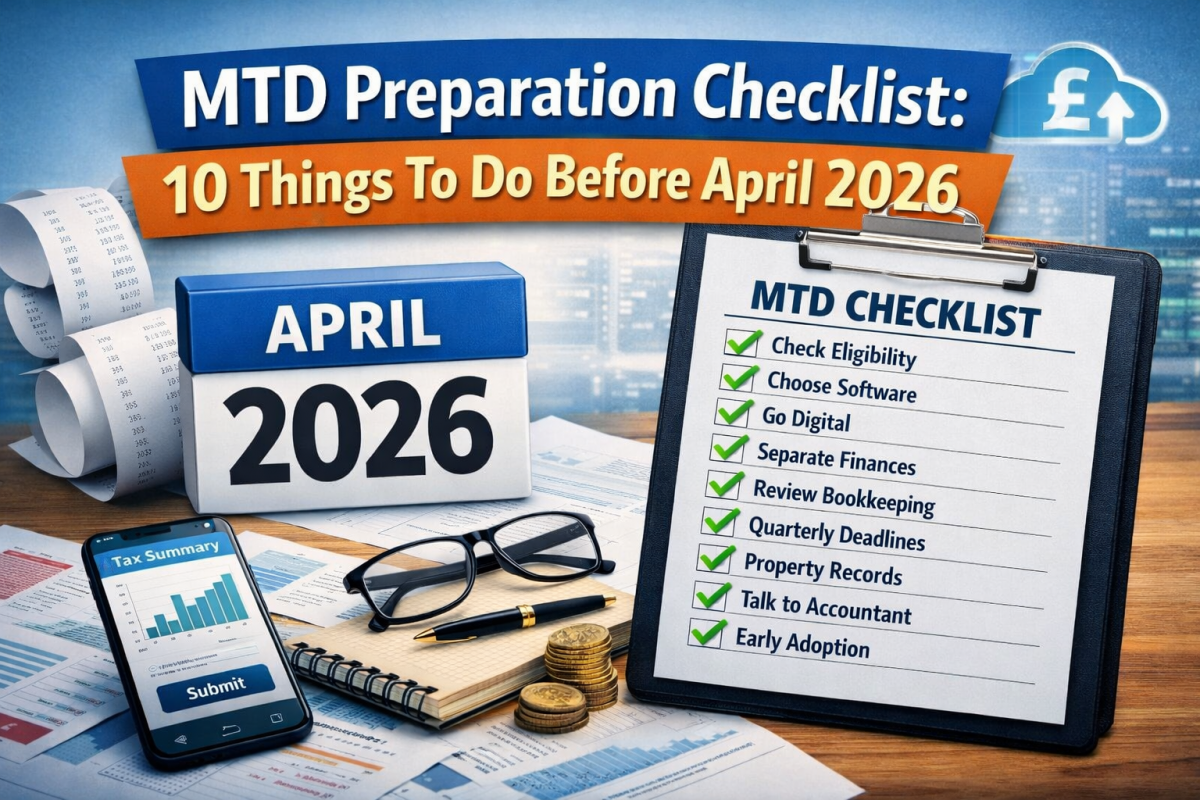
Making Tax Digital for Income Tax Self Assessment is approaching fast, with mandatory implementation starting from April 2026 for many self-employed individuals and landlords. The move from annual tax returns to digital record keeping and quarterly submissions means early preparation is essential to avoid disruption, penalties, and unnecessary stress.
To help you get ready, here is a practical checklist of 10 key actions you should complete before April 2026.
1. Confirm If MTD Applies To You
MTD for ITSA will initially apply to individuals with gross income over £50,000 from self-employment and/or property. If your income is close to this threshold, start preparing now as expansion to lower thresholds is planned.
2. Understand What Changes Under MTD
Under MTD, you will no longer submit just one annual return. Instead, you will:
- Keep digital records
- Submit quarterly updates
- Complete an end-of-period statement
- Submit a final declaration
Understanding this new workflow early prevents confusion later.
3. Choose MTD-Compatible Software
Spreadsheets alone will not be sufficient unless connected via bridging software. Selecting compliant accounting software now allows time for training and system setup.
Look for software that supports:
- Digital record keeping
- Quarterly submissions
- Property income tracking
- Bank feeds and automation
4. Move Away From Paper Records
If you currently rely on notebooks, folders, or manual receipts, begin transitioning to digital records. Photograph receipts, use expense capture apps, and ensure everything is stored electronically.
5. Separate Business and Personal Finances
A dedicated business bank account simplifies digital record keeping, improves accuracy, and reduces reconciliation time. This is particularly important for landlords managing multiple properties.
6. Review Your Bookkeeping Process
Ask yourself:
- Are transactions recorded regularly?
- Are expenses categorised correctly?
- Are property and business income separated?
Quarterly reporting means bookkeeping must become routine rather than annual.
7. Check Property Portfolio Structures
If you own property personally, jointly, or through a company, review how income is split and reported. Declaration of Trust arrangements and beneficial ownership percentages should be clearly documented before MTD begins.
8. Prepare For Quarterly Deadlines
MTD introduces multiple deadlines each year. Setting reminders, calendar alerts, or engaging an accountant to manage submissions will help avoid missed deadlines and penalties.
9. Speak To Your Accountant Early
Your accountant can:
- Confirm eligibility
- Recommend software
- Assist with digital migration
- Provide training
- Manage submissions
Early engagement ensures a smooth transition rather than a last-minute rush.
10. Consider Voluntary Early Adoption
HMRC offers pilot participation for MTD. Joining early allows you to test systems, identify issues, and gain confidence before compliance becomes mandatory.
Final Thoughts
MTD is more than a compliance change — it represents a shift towards real-time financial management. Those who prepare early will benefit from better visibility, improved cash flow awareness, and reduced year-end pressure.
April 2026 may seem distant, but implementing systems, processes, and habits takes time. Starting now will make the transition straightforward and stress-free.
Need Help Preparing For MTD?
If you are unsure where to start, professional guidance can make all the difference.
Taxes Done Right Ltd supports landlords and self-employed individuals with:
- MTD readiness reviews
- Software setup
- Quarterly submission management
- Property tax planning