Cash vs Accruals – Which One Should You Be Using?
January 5, 2026
31 January 2026 Self-Assessment Deadline. What Happens If You Miss It?
January 8, 2026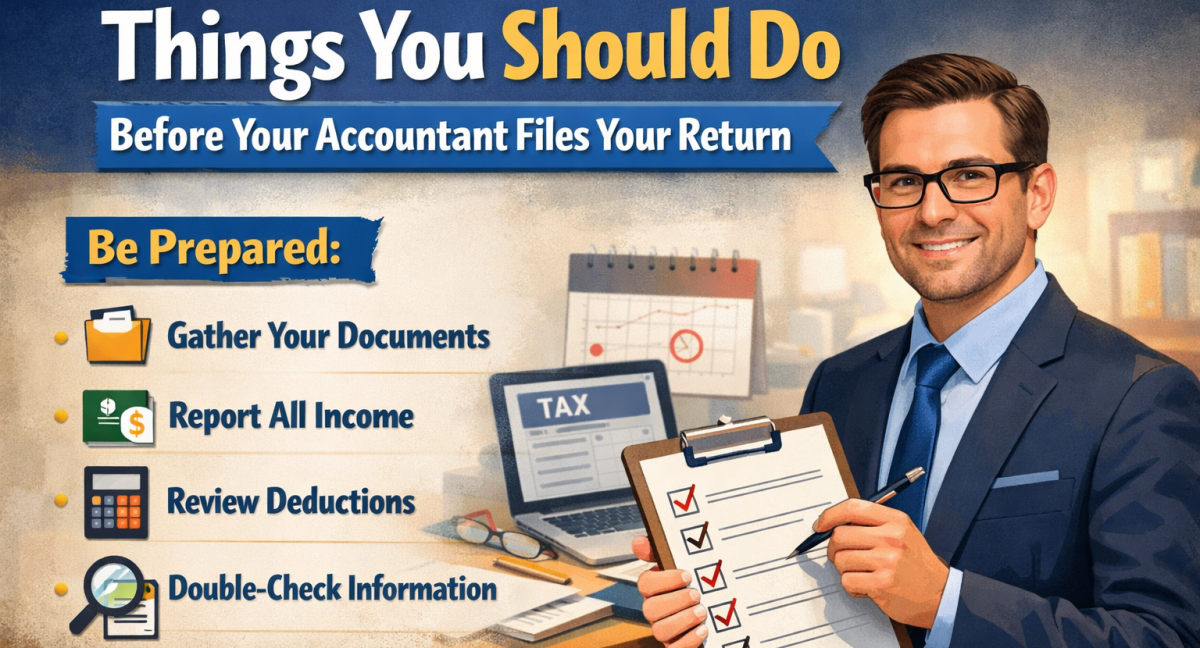
Before your accountant submits your tax return, a little preparation on your part can make a big difference. Providing clear, complete, and accurate information helps ensure your return is correct, compliant, and filed on time. It can also reduce the risk of HMRC queries and unexpected tax bills later on. Below are the key steps you should take before your accountant files your return.
Gather all sources of income
Make sure you disclose every source of income for the tax year. This includes employment income, self‑employment or freelance earnings, rental income, dividends, savings interest, pension income, and any foreign income. HMRC often already has this information from third parties, so missing income can easily be flagged.
Provide employment paperwork
If you are employed, supply your P60 and any P45s if you changed jobs during the year. If you received benefits such as a company car, fuel, or private medical insurance, include your P11D. Redundancy or termination payments should also be highlighted, as different tax rules may apply.
Prepare a clear expenses summary
For self‑employed individuals and landlords, prepare a clear breakdown of expenses. These should be categorised and relate only to business or rental activity. Personal expenses are not allowable, and unclear records can lead to disallowed claims or delays in filing.
Share bank statements and records
Bank statements are often needed to verify income and expenses. Provide statements for business and rental accounts covering the full tax year. If you use bookkeeping or accounting software, ensure everything is up to date and reconciled before sending it to your accountant.
Declare asset sales and capital gains
If you sold property, shares, cryptocurrency, or other assets during the year, tell your accountant. Provide details such as purchase and sale dates, costs, selling prices, and related fees. Capital gains are a common area of error if not disclosed early.
Confirm pension contributions and Gift Aid
Personal pension contributions and Gift Aid donations can reduce your tax liability or extend your basic rate band. Provide confirmation of amounts paid during the tax year, even if contributions were made irregularly or near the year end.
Inform your accountant about student loans and Child Benefit
Let your accountant know if you have a student loan and which plan you are on, as repayments are calculated through your tax return. If you or your partner received Child Benefit and your income is above the threshold, this must also be reported.
Flag HMRC letters or prior issues
If you have received letters from HMRC, had amendments to previous returns, or are under any form of enquiry, share this information. Background context helps your accountant prepare your return accurately and consistently.
Check personal details and changes
Confirm your address, marital status, and residency position. Changes such as marriage, separation, starting or stopping rental activity, or spending time abroad can all affect your tax position and allowances.
Review the draft return carefully
Once your accountant sends you a draft return, review it thoroughly. Check income figures, expenses, reliefs, and personal details. Ask questions if something looks wrong or unclear. Although your accountant prepares the return, you are legally responsible for its accuracy.
Final thoughts
Being organised before your accountant files your return leads to a smoother process, fewer last‑minute issues, and better peace of mind. Early preparation helps ensure your tax return is accurate, compliant, and submitted well before the deadline, avoiding penalties and unnecessary stress.
If you are unsure what information you need to provide, it is always best to speak to Taxes Done Right early rather than waiting until the filing deadline approaches.