
Why Good Bookkeeping Saves Businesses More Than Just Time
May 19, 2026
PAYE Explained for Small Business Owners: Common Payroll Errors to Avoid
May 21, 2026
MTD Deadlines Explained: What You Need to Know for 2026
MTD Deadlines are becoming one of the biggest tax changes affecting UK sole traders and landlords from April 2026. HMRC’s Making Tax Digital for Income Tax system will require many taxpayers to keep digital records and submit updates to HMRC every quarter instead of relying solely on a traditional annual tax return.
If you are self-employed, receive rental income, or run a side business, understanding the upcoming deadlines is essential. Missing submissions could lead to penalties, unnecessary stress, and compliance issues with HMRC.
In this guide, we explain how the new system works, who will be affected, and the key MTD Deadlines you need to prepare for in 2026 and beyond.
What Is Making Tax Digital?
Making Tax Digital, often shortened to MTD, is HMRC’s initiative to modernise the UK tax system. The goal is to move taxpayers away from paper records and manual submissions by introducing digital bookkeeping and more frequent reporting.
Under the new rules, affected taxpayers must:
- Keep digital accounting records
- Use compatible MTD software
- Send quarterly updates to HMRC
- Complete a final end-of-year declaration
The changes apply to Income Tax Self Assessment rather than Corporation Tax at this stage.
Who Needs to Follow the 2026 MTD Deadlines?
From 6 April 2026, MTD for Income Tax will apply to individuals with qualifying income over £50,000 from:
- Self-employment
- Landlords
HMRC looks at your gross income rather than profit when determining whether you fall within the rules.
For example:
- Sole trader turnover of £55,000 = included
- Rental income of £52,000 before expenses = included
- Combined self-employment and rental income above £50,000 = included
Employment income under PAYE does not itself fall under MTD reporting, but it can still count towards the threshold calculation.
Key MTD Deadlines for 2026
One of the most important things businesses need to understand is the quarterly reporting schedule.
The quarterly MTD Deadlines expected for taxpayers joining from April 2026 are:
| Quarter | Period Covered | Submission Deadline |
|---|---|---|
| Quarter 1 | 6 April to 5 July | 7 August 2026 |
| Quarter 2 | 6 July to 5 October | 7 November 2026 |
| Quarter 3 | 6 October to 5 January | 7 February 2027 |
| Quarter 4 | 6 January to 5 April | 7 May 2027 |
These quarterly updates are designed to give HMRC a more up-to-date estimate of your tax position throughout the year.
Is the Annual Tax Return Being Removed?
This is one area that causes confusion.
While quarterly updates are replacing part of the traditional reporting process, the annual tax return is not disappearing completely.
Under MTD, taxpayers will still need to complete a final end-of-year submission. This is where adjustments, allowances, and confirmations are made before the tax position is finalised.
So in practice, taxpayers may have:
- Four quarterly updates
- One final declaration each year
This means businesses should prepare for more regular compliance responsibilities rather than a single yearly filing.
Why the New MTD Deadlines Matter
Many businesses currently leave bookkeeping until close to the Self Assessment deadline in January. Under the new system, that approach may create serious problems.
Missing MTD Deadlines could potentially result in:
- Late submission penalties
- Interest charges
- Incorrect tax estimates
- Increased admin pressure
Businesses that already maintain accurate digital records will likely find the transition easier. Those relying on spreadsheets, paper records, or manual bookkeeping may need additional support.
What Software Will Be Needed?
HMRC requires taxpayers to use compatible software for Making Tax Digital submissions.
Popular accounting platforms are expected to support MTD reporting, including:
- Xero
- QuickBooks
- FreeAgent
- Sage
The software will usually allow users to:
- Record income and expenses digitally
- Track quarterly obligations
- Submit updates directly to HMRC
- Monitor estimated tax liabilities
Choosing the right software early can make compliance far smoother once the rules begin.
How to Prepare for MTD Deadlines Now
Even though April 2026 may seem far away, preparing early can save significant stress later.
1. Review Your Income Levels
Check whether your combined self-employment and rental income exceeds the £50,000 threshold.
Remember this is based on gross income, not profit.
2. Move to Digital Bookkeeping
If you still rely on paper records or manual spreadsheets, now is a good time to transition to cloud accounting software.
3. Improve Record Keeping
Accurate bookkeeping throughout the year will become increasingly important. Keeping receipts, invoices, and expense records organised will reduce errors and missed deadlines.
4. Understand Your Quarterly Workflow
Businesses should get comfortable with the idea of submitting information every three months instead of once a year.
5. Speak to an Accountant
An accountant can help determine whether you fall within MTD rules and recommend the most suitable bookkeeping system for your business.
Will MTD Expand Further?
Yes, HMRC plans to widen the rollout in future years.
Current expectations are:
- From April 2027: income above £30,000
- From April 2028: income above £20,000
Further expansion may follow later.
This means even smaller landlords and sole traders may eventually need to comply with MTD requirements.
Final Thoughts on MTD Deadlines
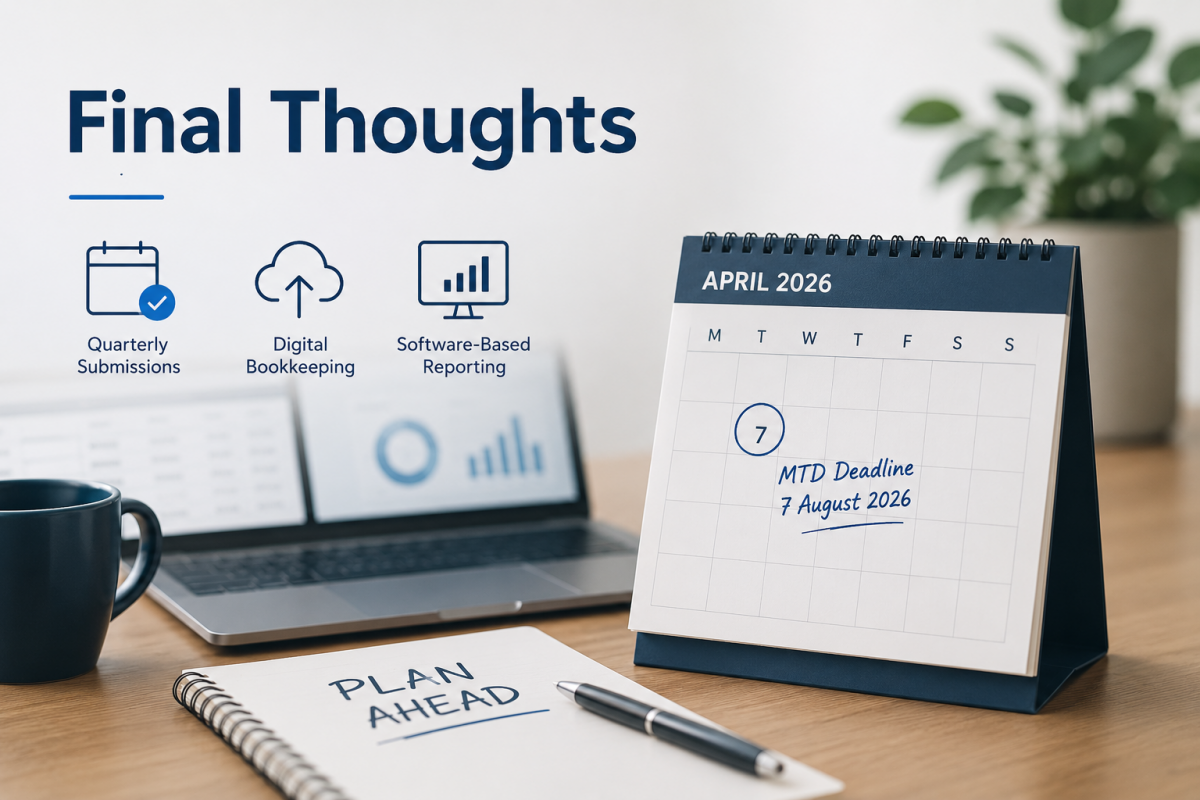
MTD Deadlines will become a major compliance responsibility for many UK taxpayers from April 2026. Quarterly submissions, digital bookkeeping, and software-based reporting will become part of normal tax administration for sole traders and landlords above the income threshold.
The businesses that prepare early are likely to experience a smoother transition and avoid last-minute panic. Reviewing your bookkeeping processes now, understanding the quarterly submission dates, and adopting suitable software can make a significant difference once the rules go live.
With the first submission deadline expected on 7 August 2026, now is the ideal time to start planning ahead.
Need help deciding what’s best for your situation?
📞 Call 0161 710 1901
📧 Email Tax@TaxesDoneRight.co.uk
Visit www.taxesdoneright.co.uk