MTD Deadlines Explained: What You Need to Know for 2026
May 20, 2026
Directors Owed an S455 Refund? HMRC Has Changed the Process
May 22, 2026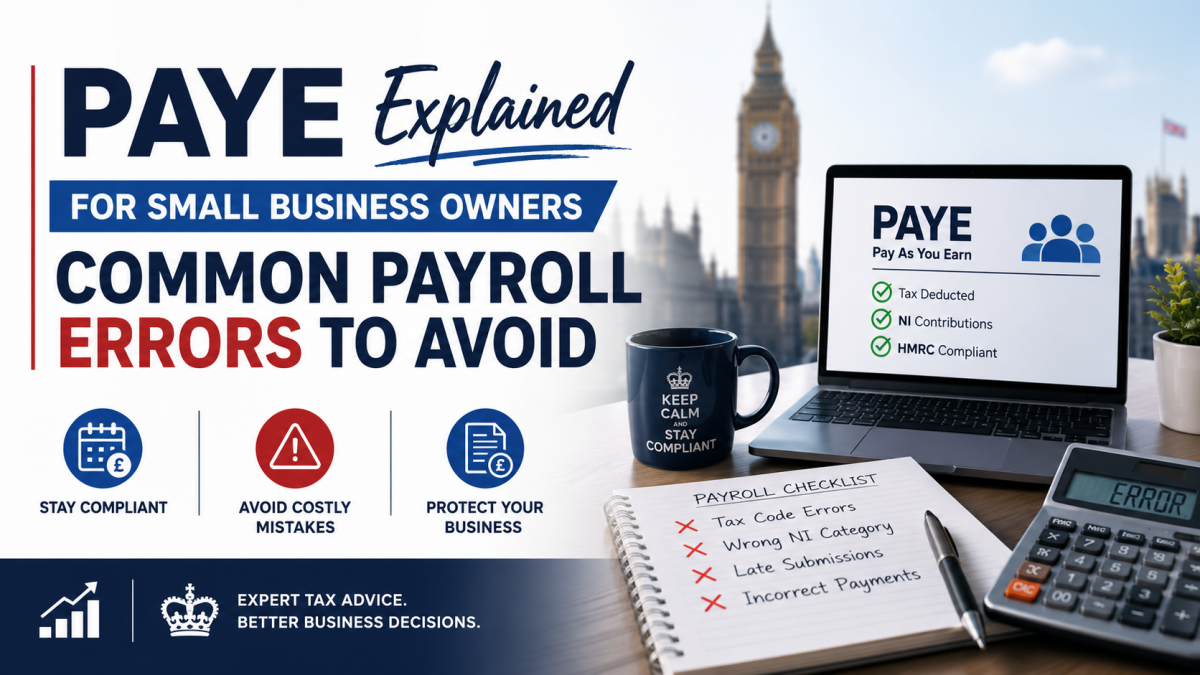
PAYE Explained for Small Business Owners: Common Payroll Errors to Avoid
PAYE is one of the most important responsibilities for small business owners who employ staff or pay directors through a limited company. While payroll may appear straightforward on the surface, even small mistakes can lead to HMRC penalties, unhappy employees, incorrect tax records, and unnecessary stress for business owners.
Understanding how Pay As You Earn works and identifying common payroll errors early can help businesses remain compliant and avoid costly issues. Whether you are running payroll yourself or using payroll software, having a clear understanding of the basics is essential.
What Is PAYE?
PAYE stands for Pay As You Earn. It is the system used by HMRC to collect Income Tax and National Insurance contributions directly from employees’ wages before they receive their pay.
Under PAYE, employers are responsible for:
- Calculating tax and National Insurance correctly
- Deducting the appropriate amounts from wages
- Reporting payroll information to HMRC
- Paying deductions to HMRC on time
- Maintaining accurate payroll records
Pay As You Earn applies to employees, directors, and in many cases business owners who pay themselves a salary through their company.
Why PAYE Matters for Small Businesses
PAYE compliance is not just about paying staff correctly. It also helps businesses:
- Avoid HMRC penalties and interest
- Maintain accurate employee tax records
- Ensure pension obligations are met
- Build trust with employees
- Prevent future payroll investigations
Many payroll problems arise because small businesses assume payroll is simple or only focus on paying wages without understanding reporting obligations.
Common PAYE Errors Small Businesses Make
PAYE Error 1: Missing Payroll Deadlines
One of the most common mistakes is missing payroll submission deadlines. Employers must submit payroll information to HMRC using Real Time Information reporting on or before the date employees are paid.
Late submissions can result in:
- HMRC penalties
- Interest charges
- Employee tax issues
- Incorrect payroll records
Businesses should ensure payroll is processed before payday and that submissions are made on time every pay period.
PAYE Error 2: Using Incorrect Tax Codes
Incorrect tax codes can lead to employees paying too much or too little tax. This often happens when businesses:
- Ignore HMRC coding notices
- Use emergency tax codes incorrectly
- Fail to update payroll software
- Enter employee details inaccurately
Employers should always use the latest HMRC tax code notices and regularly check payroll records for accuracy.
PAYE Error 3: Paying Directors Incorrectly
Many small company owners pay themselves through a combination of salary and dividends. Problems arise when directors:
- Take salary without running payroll
- Fail to register for Pay As You Earn
- Pay themselves irregularly without proper reporting
- Forget National Insurance thresholds
Even if a director takes a small salary below tax thresholds, payroll reporting obligations may still apply.
PAYE Error 4: Incorrect Employee Classification
Some businesses incorrectly treat workers as self-employed contractors when they should legally be employees. This can create significant tax risks.
Incorrect classification may result in:
- Backdated PAYE liabilities
- National Insurance penalties
- Interest charges
- Employment disputes
Employers should carefully assess employment status rather than assuming someone is self-employed simply because they invoice the business.
PAYE Error 5: Forgetting Workplace Pension Duties
Automatic enrolment pension rules work alongside Pay As You Earn obligations. Employers must assess eligible employees and make pension contributions where required.
Common pension-related payroll mistakes include:
- Failing to enrol eligible staff
- Missing pension contribution deadlines
- Incorrect pension deductions
- Not keeping proper records
Even small employers with only one or two employees may still have pension responsibilities.
PAYE Error 6: Poor Payroll Record Keeping
HMRC requires businesses to maintain accurate payroll records for several years. Poor record keeping can cause serious issues during inspections or disputes.
Businesses should keep records of:
- Employee pay
- Tax deductions
- National Insurance contributions
- Pension contributions
- Payroll reports
- Employee starter and leaver details
Cloud payroll software can help simplify payroll record management and reduce manual errors.
PAYE Error 7: Incorrect Benefits Reporting
Many business owners forget that employee benefits may need to be reported separately to HMRC.
Examples include:
- Medical insurance
- Company cars
- Interest-free loans
- Gym memberships
- Fuel benefits
Some benefits require P11D reporting, while others may be processed through payroll directly. Incorrect reporting can trigger HMRC penalties and employee tax adjustments.
PAYE Error 8: Not Budgeting for PAYE Liabilities
Some businesses focus only on employees’ net wages and forget that PAYE creates additional employer costs.
These may include:
- Employer National Insurance
- Pension contributions
- Apprenticeship Levy (where applicable)
Poor budgeting can create cash flow problems, particularly for growing businesses taking on new staff.
How Small Businesses Can Avoid PAYE Problems
Use Reliable Payroll Software
Modern payroll software can automate many PAYE calculations and submissions. It can help reduce errors involving:
- Tax calculations
- Pension deductions
- Submission deadlines
- Payslip generation
Using recognised payroll software also helps businesses stay updated when tax rules change.
Keep Employee Information Updated
Incorrect employee information often leads to payroll problems. Employers should regularly review:
- Addresses
- National Insurance numbers
- Tax codes
- Student loan status
- Pension status
Accurate information improves payroll accuracy and reduces HMRC queries.
Review Payroll Regularly
Regular payroll reviews can help identify mistakes before they become larger problems. Businesses should periodically check:
- Payroll reports
- HMRC liabilities
- Pension submissions
- Employee tax deductions
Early correction is usually easier and cheaper than resolving long-term payroll errors later.
Work With a Payroll Professional
Many small businesses choose to outsource PAYE responsibilities to accountants or payroll specialists. This can save time and reduce compliance risks.
A payroll professional can help with:
- PAYE registration
- Payroll processing
- Pension compliance
- HMRC correspondence
- Payroll error corrections
Professional support is especially useful when businesses begin employing staff for the first time.
Final Thoughts on PAYE
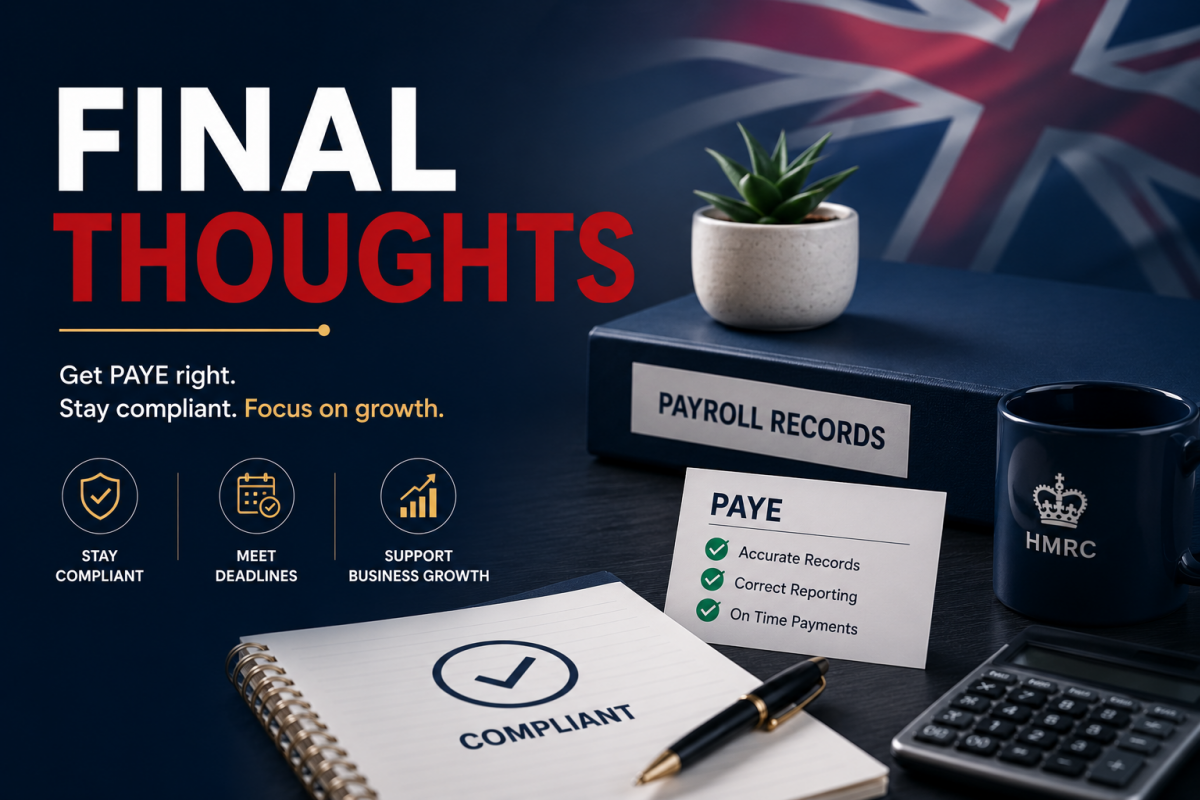
PAYE is a vital part of running a compliant business in the UK. While payroll obligations may seem administrative, mistakes can quickly become expensive if ignored. Missing deadlines, using incorrect tax codes, or failing to report payroll properly can lead to penalties and unnecessary complications with HMRC.
Small business owners who understand their PAYE responsibilities early are usually in a much stronger position to manage payroll efficiently and confidently. Keeping accurate records, using suitable payroll systems, and seeking professional advice when needed can significantly reduce payroll risks and help businesses focus on growth rather than compliance problems.
Need help deciding what’s best for your situation?
📞 Call 0161 710 1901
📧 Email Tax@TaxesDoneRight.co.uk
🌐 Visit www.taxesdoneright.co.uk