
Property Let Campaign Explained for UK Landlords
May 18, 2026
MTD Deadlines Explained: What You Need to Know for 2026
May 20, 2026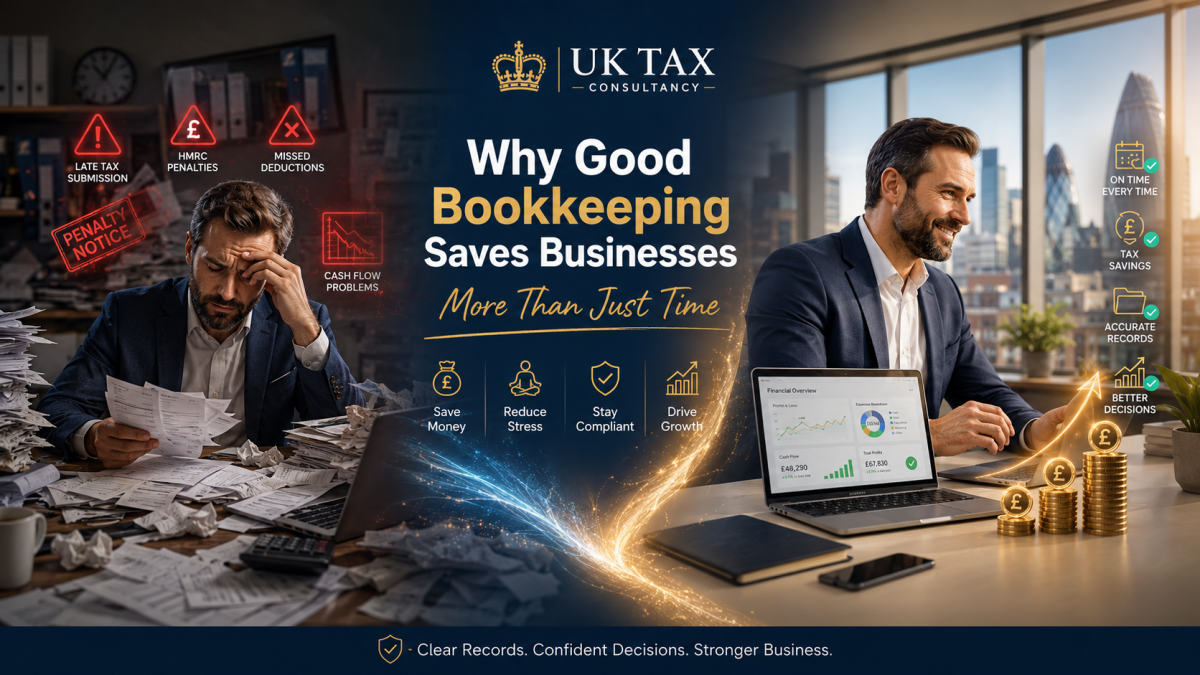
Why Good Bookkeeping Saves Businesses More Than Just Time
Bookkeeping is one of the most important foundations of any successful business. Many business owners initially view bookkeeping as simply an administrative task that keeps financial records organised. However, good bookkeeping delivers far greater benefits than just saving time. It can improve cash flow, reduce stress, support business growth, prevent costly mistakes, and help businesses make smarter financial decisions.
Whether you are a sole trader, landlord, startup, or limited company director, maintaining accurate bookkeeping records can significantly impact the long-term success of your business.
Why Bookkeeping Matters for Every Business
Bookkeeping involves recording, organising, and managing financial transactions within a business. This includes sales invoices, expenses, bank transactions, payroll, VAT records, and supplier payments.
Without proper bookkeeping, businesses often struggle to understand their true financial position. Many business owners only realise problems exist when they face unexpected tax bills, cash shortages, or HMRC enquiries.
Good bookkeeping helps businesses stay financially organised and provides clarity over income, expenses, profitability, and liabilities. Instead of guessing how the business is performing, owners can make informed decisions based on accurate financial information.
Bookkeeping Helps Improve Cash Flow Management
One of the biggest reasons businesses fail is poor cash flow management rather than lack of profit. A business may appear successful on paper but still experience financial difficulties if cash is not managed properly.
Accurate bookkeeping allows businesses to:
- Track unpaid invoices
- Monitor outgoing expenses
- Identify unnecessary spending
- Forecast upcoming liabilities
- Prepare for VAT and tax payments
When bookkeeping records are updated regularly, businesses gain a clearer understanding of available cash and future obligations. This reduces the risk of unexpected financial pressure and helps owners plan ahead with confidence.
Bookkeeping Reduces Tax Errors and Penalties
Poor bookkeeping often leads to inaccurate tax returns. Missing expense records, duplicated transactions, or incorrect figures can result in underpaid or overpaid tax.
Good bookkeeping supports accurate reporting for:
- Self Assessment tax returns
- Corporation Tax returns
- VAT returns
- Payroll reporting
- Making Tax Digital requirements
Businesses with organised bookkeeping records are also far better prepared if HMRC requests supporting documentation or opens a compliance check.
Late submissions and inaccurate returns can lead to penalties and interest charges. Maintaining strong bookkeeping processes helps reduce these risks significantly.
Bookkeeping Supports Better Business Decisions
Many business owners make decisions based on assumptions rather than real financial data. This can lead to overspending, poor pricing strategies, or expansion at the wrong time.
Reliable bookkeeping provides valuable insights into:
Business Profitability
Bookkeeping helps identify which products, services, or areas of the business generate the strongest profits. This allows businesses to focus on what works best.
Expense Control
Regular bookkeeping highlights spending patterns and areas where costs may be reduced without affecting operations.
Growth Planning
Businesses considering hiring staff, purchasing equipment, or expanding premises need accurate financial information before making commitments. Good bookkeeping provides the confidence needed to make strategic decisions.
Bookkeeping Makes Tax Planning Easier
Tax planning becomes much more effective when bookkeeping records are accurate and up to date.
Business owners can identify opportunities such as:
- Pension contributions
- Allowable business expenses
- Dividend planning
- Capital allowance claims
- Timing of purchases and investments
Without proper bookkeeping, these opportunities are often missed because the financial information is incomplete or unclear.
Good bookkeeping also helps accountants provide more proactive advice throughout the year rather than simply preparing accounts after year end.
Bookkeeping Saves Money on Accounting Costs
Many business owners believe bookkeeping is only important for accountants. In reality, poor bookkeeping often increases accounting fees because additional time is required to correct errors, organise records, and reconcile missing information.
When bookkeeping is maintained properly throughout the year:
- Year-end accounts are prepared faster
- Fewer corrections are required
- Queries are reduced
- Tax returns become more efficient to complete
This creates a smoother process for both the business owner and accountant while potentially reducing professional fees.
Digital Bookkeeping Is Becoming Essential
Bookkeeping is becoming increasingly important as HMRC continues expanding digital reporting requirements.
Making Tax Digital (MTD) is already mandatory for many VAT-registered businesses and will continue expanding to more taxpayers over the coming years.
Digital bookkeeping software allows businesses to:
- Automate transaction recording
- Connect bank feeds
- Store digital receipts
- Generate financial reports
- Submit tax information electronically
Businesses that delay improving their bookkeeping systems may face difficulties adapting to future compliance requirements.
Bookkeeping Helps Reduce Stress
Financial uncertainty is one of the biggest causes of stress for business owners. Falling behind on bookkeeping often creates anxiety because owners are unsure about tax liabilities, cash flow, or financial performance.
Good bookkeeping provides peace of mind by ensuring financial records remain organised and accessible throughout the year.
Instead of rushing to gather paperwork before deadlines, businesses with strong bookkeeping systems stay prepared continuously. This reduces pressure and allows owners to focus more on running and growing the business.
Common Bookkeeping Mistakes Businesses Make
Many businesses unintentionally create bookkeeping problems through simple mistakes such as:
- Mixing personal and business transactions
- Failing to keep receipts
- Ignoring bank reconciliations
- Delaying bookkeeping updates for months
- Misclassifying expenses
- Not reviewing financial reports regularly
These issues can quickly escalate into larger financial and tax problems if left unresolved.
Developing consistent bookkeeping habits early can prevent many of these common mistakes.
How Businesses Can Improve Their Bookkeeping
Improving bookkeeping does not necessarily require complicated systems. Small changes can make a significant difference.
Businesses should consider:
- Using cloud bookkeeping software
- Separating personal and business finances
- Updating records regularly
- Keeping digital copies of receipts
- Reviewing financial reports monthly
- Working with an accountant or bookkeeper for guidance
Consistent bookkeeping practices create stronger financial control and improve overall business efficiency.
Final Thoughts on Bookkeeping
Bookkeeping is far more than an administrative task. Good bookkeeping supports better decision-making, improves cash flow management, reduces tax risks, strengthens compliance, and helps businesses operate with greater confidence.
Businesses that prioritise bookkeeping are often better prepared for growth, more financially organised, and less likely to encounter unexpected problems.
Rather than viewing bookkeeping as simply saving time, businesses should recognise it as an essential part of building long-term financial success and stability.
Need help deciding what’s best for your situation?
Call 0161 710 1901
Email Tax@TaxesDoneRight.co.uk
Visit www.taxesdoneright.co.uk