HMRC Enquiry: What Really Happens?
February 20, 2026
Quarterly Submissions Under MTD: What Actually Gets Reported
February 24, 2026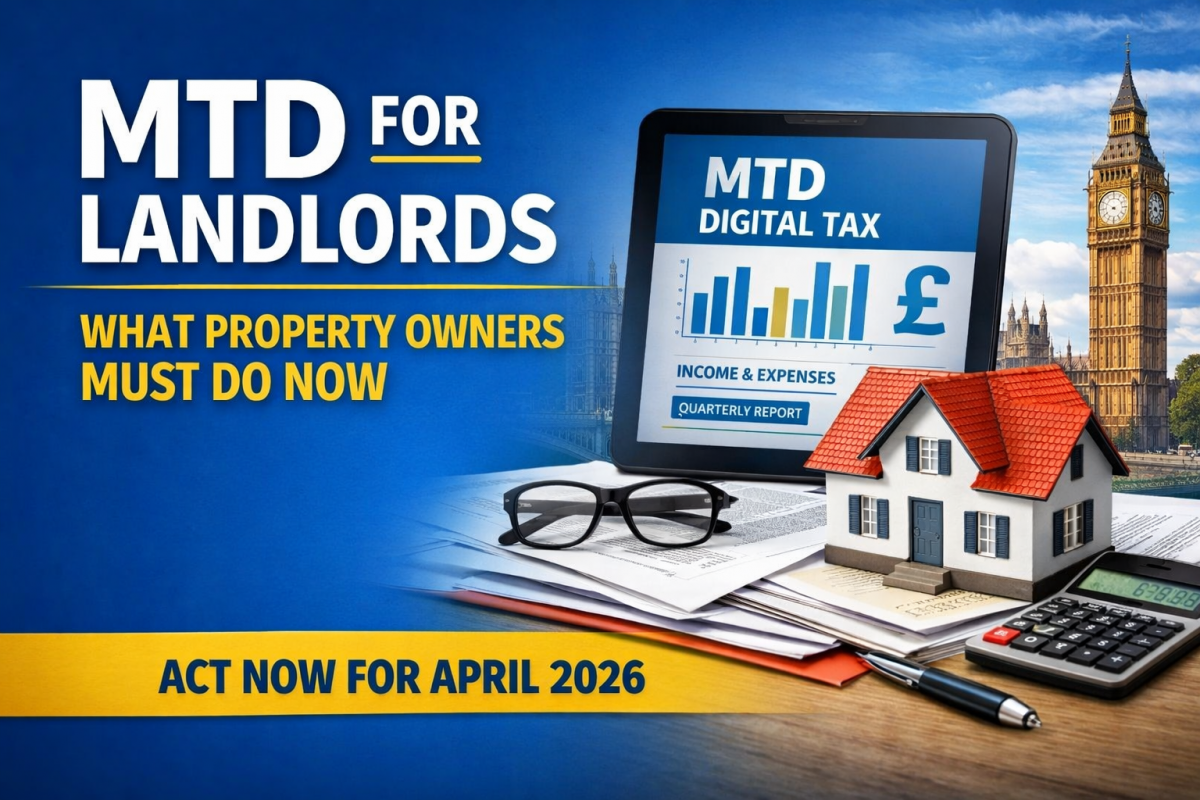
Making Tax Digital (MTD) for Income Tax is one of the biggest changes to UK tax reporting in recent years, and landlords are firmly within its scope. If you own rental property and complete a Self Assessment tax return, it is important to understand how MTD will affect you and what steps to take now to avoid last-minute disruption.
What is MTD for Landlords?
Making Tax Digital for Income Tax Self Assessment (MTD for ITSA) is HMRC’s move towards a fully digital tax system. Instead of submitting one annual Self Assessment return, landlords will need to keep digital records and send quarterly updates of income and expenses to HMRC using compatible software.
This change is designed to improve accuracy, reduce errors and give taxpayers a clearer view of their tax position throughout the year.
Who will be affected?
Landlords will be required to comply with MTD if their combined annual gross income from property and/or self-employment exceeds the relevant threshold.
Current rollout timeline:
• From April 2026 – Landlords with gross income over £50,000
• From April 2027 – Landlords with gross income over £30,000
• Further expansion is expected in later years
It is important to note that this threshold is based on gross income, not profit.
What landlords must do under MTD
1. Keep digital records
You will need to maintain digital records of rental income and allowable expenses. Spreadsheets alone may not be sufficient unless they are linked to bridging software.
2. Submit quarterly updates
Each quarter you will send a summary of income and expenses to HMRC. These are not tax returns but periodic updates that contribute to your annual position.
3. Provide an End of Period Statement (EOPS)
At year end, adjustments such as accounting corrections or claims will be made through an End of Period Statement.
4. Submit a final declaration
This replaces the current Self Assessment tax return and confirms all income sources and tax due.
Why landlords should act now
Although April 2026 may seem distant, early preparation offers clear advantages.
Avoid software panic
Leaving software selection until the last minute can create stress and errors.
Improve record quality
Moving to digital bookkeeping early helps identify missing records and strengthens compliance.
Better tax visibility
Quarterly reporting provides clearer insight into profits and potential tax liabilities.
Access early support
Working with an accountant now allows time to test processes before reporting becomes mandatory.
Common landlord concerns
Will I pay more tax?
MTD changes reporting frequency, not tax rules. However, improved visibility may mean you are more aware of liabilities earlier.
Do I need new software?
Yes, most landlords will require MTD-compatible bookkeeping software or bridging solutions.
What if I have multiple properties?
All property income is combined into one property business for reporting purposes.
Can my accountant handle this?
Many accountants will manage submissions on your behalf, but you will still need to maintain digital records.
Practical steps to take today
• Confirm whether your rental income exceeds MTD thresholds
• Review how you currently track rental income and expenses
• Speak to your accountant about suitable software
• Consider moving bookkeeping to a cloud platform
• Ensure bank accounts are clearly separated for rental activity
Taking these steps now will make the transition far smoother and reduce the risk of penalties once MTD becomes mandatory.
Final thoughts
MTD for landlords represents a significant administrative shift rather than a tax increase. Those who prepare early will find the transition manageable and may even benefit from improved financial visibility and efficiency.
With phased implementation approaching, now is the ideal time for landlords to review systems, adopt digital processes and seek professional guidance.
If you would like help preparing for MTD or choosing the right software for your property portfolio, professional advice can ensure you remain compliant and confident ahead of the rollout.
Need Help?
If you are a landlord unsure how Making Tax Digital will affect you, now is the time to prepare. Contact Taxes Done Right for practical guidance, software setup and ongoing support to keep your property income fully compliant.