What HMRC Expects You to Keep Records Of (And For How Long)
February 2, 2026
Who Actually Needs to Do MTD Right Now (Not Who HMRC Emails)
February 4, 2026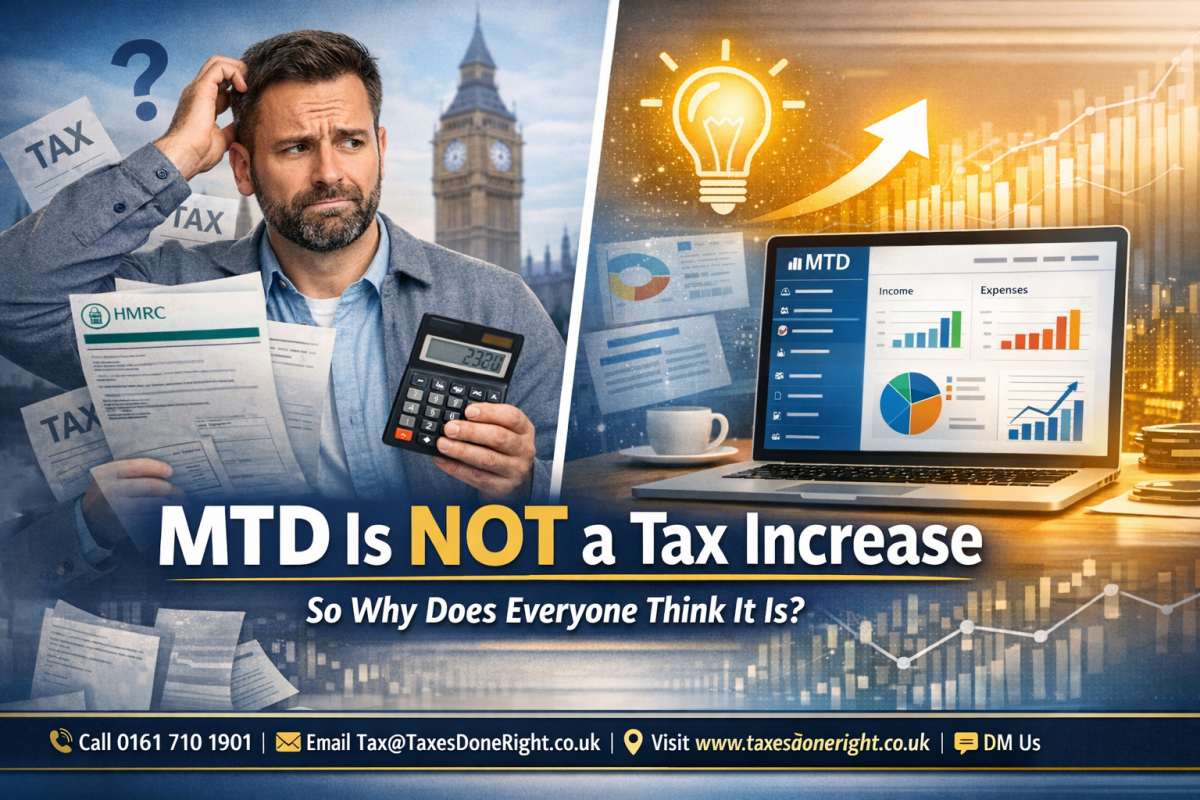
Making Tax Digital (MTD) has been one of the most talked-about changes to the UK tax system in recent years. Many business owners, landlords and self-employed individuals believe MTD means they will pay more tax. This is one of the biggest misconceptions we hear from clients at Taxes Done Right Ltd.
MTD is not a tax increase. It is a change to how tax information is recorded, reported and submitted to HMRC. However, the confusion is understandable. When businesses hear words like “quarterly submissions” and “digital reporting”, it can sound like HMRC is introducing additional tax charges. Let’s break down what MTD really is and why it sometimes feels like a tax increase.
What Is Making Tax Digital?
Making Tax Digital is HMRC’s initiative to modernise the UK tax system. The goal is to move businesses and individuals away from manual record keeping and towards digital accounting software. HMRC believes this will reduce errors, improve accuracy and make tax reporting more efficient.
MTD has already been introduced for VAT-registered businesses. The next phase, Making Tax Digital for Income Tax Self Assessment (MTD ITSA), will apply to self-employed individuals and landlords whose combined business and property income exceeds the relevant thresholds. This will gradually be introduced from April 2026 onwards.
Why People Think MTD Is a Tax Increase
There are several reasons why MTD is often misunderstood as a tax increase.
Increased Reporting Requirements
Under MTD ITSA, affected individuals will need to submit quarterly updates to HMRC instead of filing one annual Self Assessment return. While these quarterly updates are not additional tax returns, they do create the perception that people are reporting and therefore paying tax more frequently.
In reality, quarterly updates are simply summaries of income and expenses. The final tax calculation is still done at the end of the tax year.
Software Costs
Many taxpayers who currently use spreadsheets or paper records may need to move to digital accounting software. This can create additional costs for software subscriptions or professional support, which can feel like an indirect tax increase even though the tax itself remains unchanged.
Greater Visibility of Income and Expenses
Digital record keeping provides clearer and more accurate financial data. Some individuals may previously have underestimated profits or missed reporting certain income streams. When accurate digital records are introduced, tax liabilities may increase simply because the figures are more precise, not because tax rates have changed.
Fear of Change
Tax changes often create anxiety, especially when processes become more complex or unfamiliar. MTD introduces new compliance steps, and for many business owners, this can feel overwhelming. When people feel uncertain, they sometimes assume it will cost them more tax.
What MTD Actually Changes
MTD focuses on compliance and record keeping rather than tax rates. The main changes include keeping digital records of income and expenses, submitting quarterly updates using compatible software and completing a final end-of-year declaration to confirm total taxable income.
The key point is that tax rates, allowances and reliefs remain exactly the same. Your tax liability will still depend on your income, expenses and applicable reliefs, not on the reporting method.
Potential Benefits of MTD
Although MTD introduces additional administrative steps, it can provide several advantages when implemented correctly.
Digital record keeping helps reduce errors and missed expenses. Regular financial updates can help business owners understand their cash flow and profitability throughout the year rather than waiting until the tax deadline. It can also reduce last-minute stress and allow better tax planning opportunities.
For many clients, switching to digital accounting actually improves financial awareness and helps them make stronger business decisions.
How To Prepare For MTD
Preparation is key to making MTD as smooth as possible. Businesses and landlords should start reviewing how they currently keep records, consider suitable accounting software and ensure they understand upcoming reporting requirements.
Working with an accountant early can help avoid compliance issues and ensure digital systems are set up correctly from the start.
Final Thoughts
Making Tax Digital is not a tax increase. It is a change in how financial information is recorded and reported to HMRC. While it may introduce additional administrative responsibilities, it can also improve accuracy, reduce errors and provide better financial insight.
Understanding MTD early and preparing properly can make the transition far easier and help businesses stay compliant without unnecessary stress.
If you are unsure how MTD will affect you or your business, seeking professional advice can help you prepare with confidence.
Need Help Preparing for Making Tax Digital?
Taxes Done Right Ltd specialises in helping landlords, self-employed individuals and business owners prepare for MTD compliance and digital record keeping.
📞 Call 0161 710 1901
📧 Email Tax@TaxesDoneRight.co.uk