MTD Preparation Checklist: 10 Things To Do Before April 2026
February 25, 2026
MTD and Joint Property Income: How Couples Must Report
February 27, 2026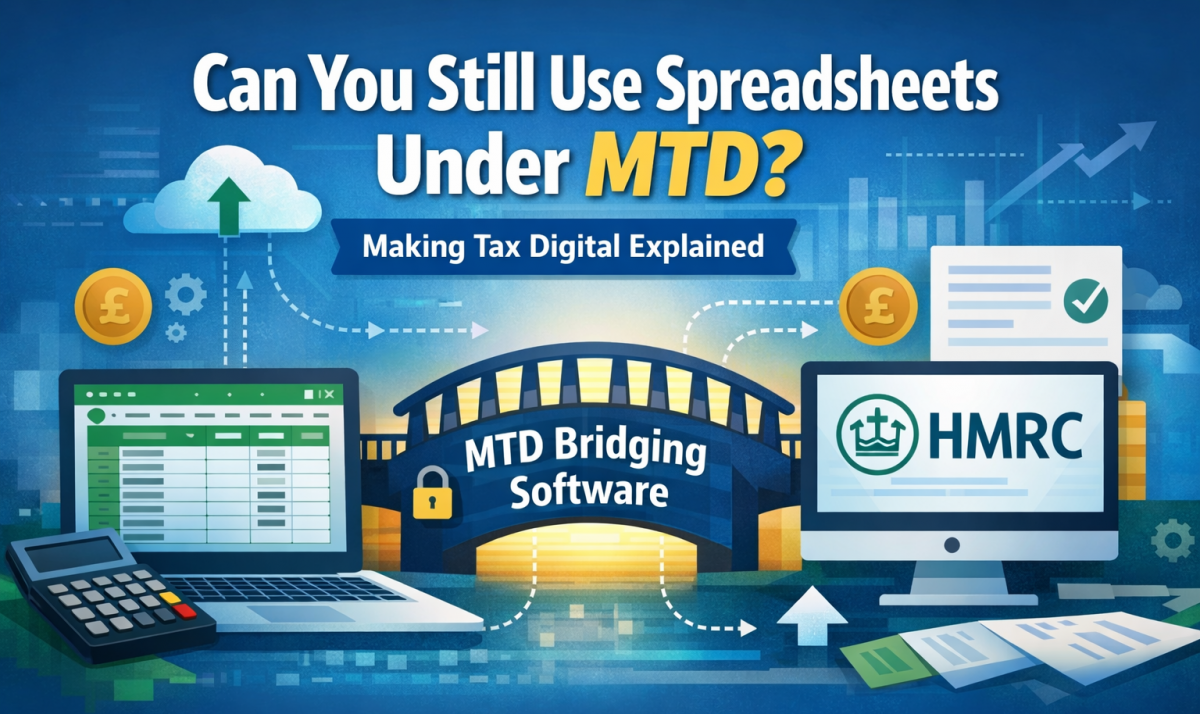
Making Tax Digital (MTD) is transforming how UK businesses and landlords keep records and submit information to HMRC. A common question many clients ask is whether spreadsheets can still be used, or whether specialist accounting software is now mandatory. The answer is reassuring: spreadsheets are still allowed, but with some important conditions.
Spreadsheets are permitted under MTD
HMRC does not prohibit spreadsheets. Businesses and landlords can continue to maintain digital records using spreadsheets provided the records meet MTD requirements. This means transactions must be recorded digitally rather than written manually and the data must be capable of being submitted to HMRC through compatible software.
Bridging software is usually required
Although spreadsheets can store digital records, they cannot normally submit information directly to HMRC. To comply with MTD, spreadsheet users typically need bridging software. Bridging software acts as a link between the spreadsheet and HMRC’s MTD system, enabling digital submission without manual re-keying of figures.
Digital link rules must be followed
MTD requires a digital journey from source data through to submission. Copying and pasting figures manually between systems breaks the digital link requirement. Instead, formulas, API connections, or bridging tools should be used so that data flows electronically.
Pros of continuing with spreadsheets
Spreadsheets remain popular because they are flexible, familiar, and cost-effective. Many smaller businesses and landlords already use spreadsheet templates tailored to their needs, making transition to MTD simpler when bridging software is added.
Limitations to consider
While spreadsheets can work, they often lack automation, bank feeds, error detection, and real-time reporting available in cloud accounting software. As reporting frequency increases under MTD, spreadsheet management may become more time-consuming and prone to errors.
Practical recommendation
Spreadsheets can be a compliant solution, particularly for straightforward affairs or where cost is a concern. However, businesses expecting growth, complexity, or high transaction volumes may benefit from moving to dedicated MTD-compatible software.
Final thoughts
MTD does not force everyone to abandon spreadsheets, but it does require a compliant digital process. Using spreadsheets with appropriate bridging software and maintaining digital links can meet HMRC requirements. The key is ensuring records remain digital, accurate, and capable of direct submission.
Need Help?
If you are unsure whether your spreadsheets meet Making Tax Digital requirements, now is the time to review your setup. We can assess your current records, recommend suitable bridging software, and help you move to a fully compliant digital process with minimal disruption. Contact Taxes Done Right today for tailored MTD support and practical guidance.
📞Call 0161 710 1901
📧Email: Tax@TaxesDoneRight.co.uk
Dm Us:
http://www.taxesdoneright.co.uk