How to Set Up a Limited Company in the UK: Step-by-Step Guide
May 13, 2026
Sole Trader vs Limited Company: Understanding the Key Differences
May 15, 2026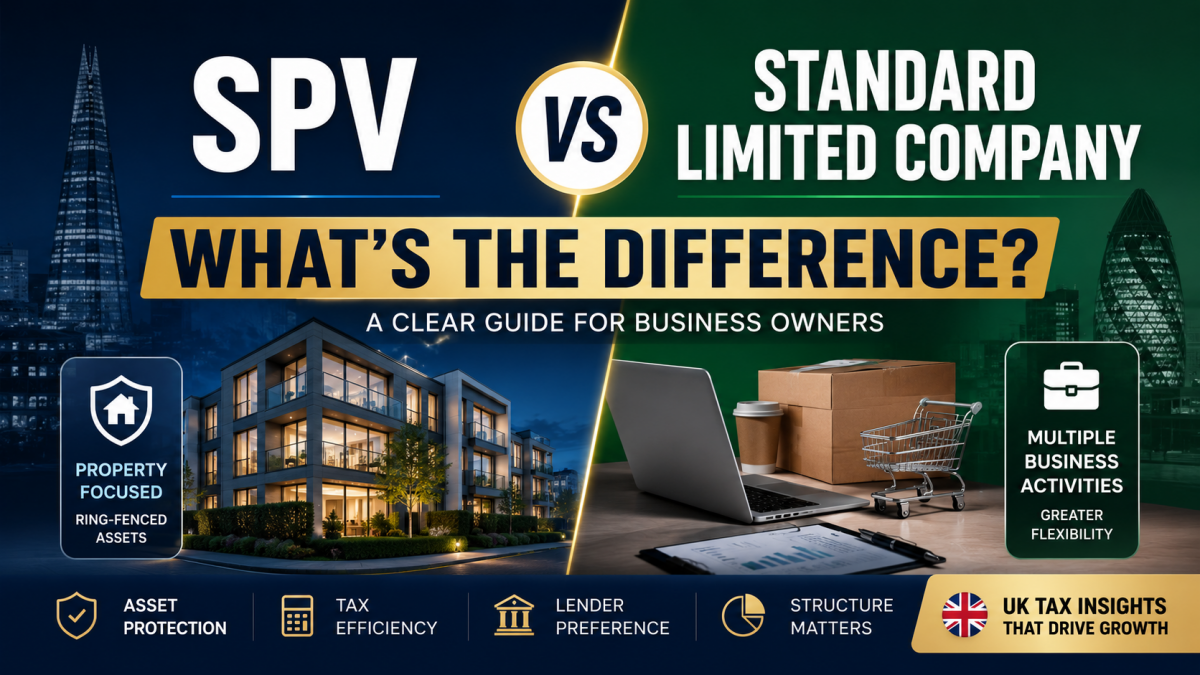
SPV vs Standard Limited Company explained for UK property investors and business owners. Learn the key differences, lender preferences, tax considerations and which company structure may suit your goals.
What Is an SPV?
An SPV, which stands for Special Purpose Vehicle, is a limited company created for a specific activity or purpose. In property investing, an SPV is usually set up solely to buy, hold and manage investment properties.
Most property SPVs use SIC codes linked to property activities such as:
- 68100 – Buying and selling of own real estate
- 68209 – Other letting and operating of own or leased real estate
- 68320 – Management of real estate on a fee or contract basis
The key feature of an SPV is that it normally carries out only one type of activity. This makes the company structure cleaner and easier for mortgage lenders to assess.
What Is a Standard Limited Company?
A standard limited company is a general trading company that can undertake multiple business activities. For example, the same company may operate:
- An e-commerce business
- A consultancy service
- Property investments
- Import/export activities
- Online sales
A standard company gives flexibility because there are fewer restrictions on the activities it can carry out. However, this flexibility can sometimes create complications when applying for Buy-to-Let or commercial mortgages.
SPV vs Standard Limited Company for Property Investing
When comparing SPV vs Standard Limited Company structures for property investment, the biggest difference is often lender preference.
Many UK mortgage lenders prefer lending to SPVs rather than mixed trading companies. This is because SPVs are viewed as lower risk and easier to assess.
A company that trades in multiple industries may have:
- Complex accounts
- Different income streams
- Trading risks unrelated to property
- Existing liabilities from other activities
An SPV usually presents a simpler financial picture focused purely on property income and expenses.
Because of this, some lenders may:
- Offer better rates to SPVs
- Have wider lending criteria for SPVs
- Decline mixed trading companies entirely
This is one of the main reasons many landlords choose an SPV structure from the beginning.
Mortgage Lender Preferences
One of the biggest practical differences in the SPV vs Standard Limited Company discussion is mortgage availability.
Many Buy-to-Let lenders have dedicated lending products specifically designed for property SPVs. Some lenders even require the company to have property-related SIC codes before they will consider an application.
A standard limited company may still obtain finance, but options can sometimes be more limited depending on:
- The type of trading activity
- Existing company liabilities
- Turnover levels
- Industry risks
- Company history
For example, a company involved in construction, retail or hospitality may be viewed differently from a clean SPV that only owns rental properties.
Tax Position of SPV vs Standard Limited Company
From a corporation tax perspective, both structures are generally taxed similarly because both are limited companies.
Rental profits within either structure are typically subject to Corporation Tax through HMRC.
However, the accounting and administrative side may differ significantly.
An SPV often has:
- Simpler bookkeeping
- Easier year-end accounts
- Clear separation of activities
- More straightforward expense tracking
A standard limited company with mixed activities may require:
- Detailed income separation
- More complex accounting treatment
- Additional bookkeeping work
- Greater analysis of expenses between trades
Keeping property activity separate can also make future expansion easier if you plan to build a larger portfolio.
Risk Separation and Asset Protection
Another important factor in the SPV vs Standard Limited Company comparison is risk management.
Many investors prefer to isolate property assets from trading activities. If a trading business faces financial difficulties, creditors may potentially have claims against company assets.
Using a separate SPV for property can help create clearer separation between:
- Trading risks
- Property assets
- Business liabilities
- Different investment activities
This structure is commonly used by experienced investors managing multiple projects or businesses.
Administrative Differences
Setting up either structure through Companies House is relatively straightforward, but ongoing administration can vary.
SPVs are often easier to manage because they usually have:
- Fewer transactions
- Simpler bookkeeping
- Clearer financial reporting
- Less operational complexity
A standard limited company may involve:
- Payroll
- Stock management
- Multiple suppliers
- VAT considerations
- Trading income reporting
For some investors, simplicity is a major advantage of the SPV route.
When an SPV May Be Suitable
An SPV may be suitable if:
- You mainly want to invest in property
- You want access to wider Buy-to-Let lending options
- You prefer simpler accounting
- You want separation between property and trading activities
- You are building a long-term property portfolio
Many first-time property investors now choose SPVs specifically because of lender preferences.
When a Standard Limited Company May Be Suitable
A standard limited company may be more suitable if:
- You already operate an active trading business
- Property is only a small part of your activities
- You want maximum flexibility
- You are comfortable with more complex accounting
- Your lender accepts mixed trading companies
In some cases, investors use both structures together by operating trading activities separately from property SPVs.
Final Thoughts on SPV vs Standard Limited Company
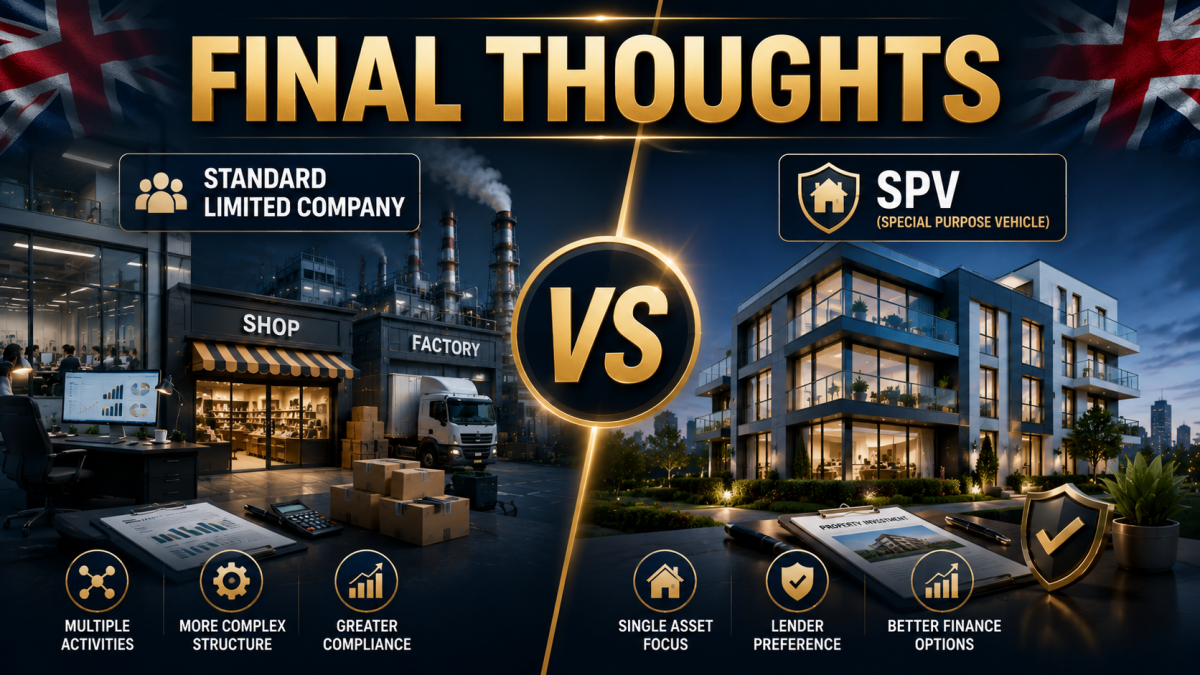
SPV vs Standard Limited Company ultimately comes down to your business goals, financing plans and long-term strategy.
For property investors, SPVs are often preferred because lenders usually favour clean property-only companies with simple structures and clear SIC codes. They can also provide better separation between trading activities and property assets.
However, a standard limited company may still work well for businesses that need flexibility across multiple activities.
Before deciding, it is important to consider mortgage availability, tax implications, administration requirements and future growth plans.
If structured correctly from the beginning, the right company setup can help simplify operations, improve finance options and support long-term business growth.
Need help deciding what’s best for your situation?
📞 Call 0161 710 1901
📧 Email Tax@TaxesDoneRight.co.uk
🌐 Visit www.taxesdoneright.co.uk