Making Tax Digital Is Now in Full Swing With Force
May 12, 2026
SPV vs Standard Limited Company: What’s the Difference?
May 14, 2026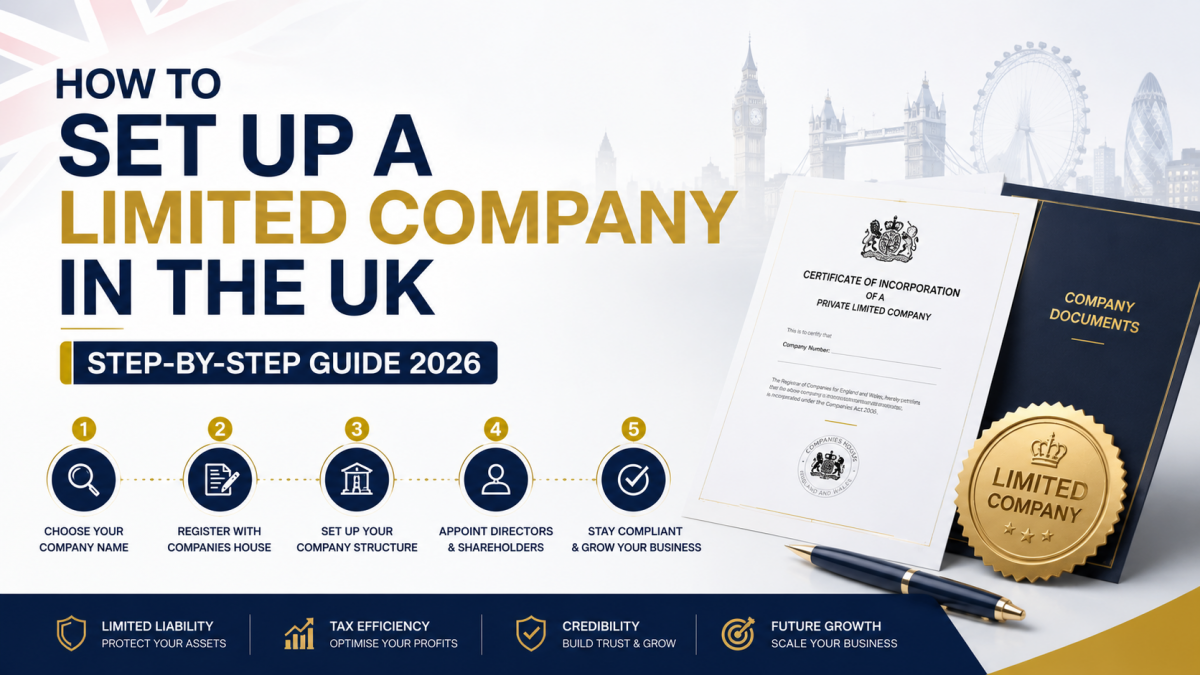
Step 1: Choose a Limited Company Name
The first step when setting up a Limited Company is choosing a company name.
The name must:
- Be unique
- Not already exist at Companies House
- Avoid restricted or sensitive words unless permission is granted
- Usually end with “Limited” or “Ltd”
A good company name should also be:
- Professional
- Easy to remember
- Suitable for branding
- Relevant to the business activity
Many businesses also check domain name availability before registering the company.
Step 2: Choose Your Limited Company Structure
A Limited Company must have:
- At least one director
- At least one shareholder
- A registered office address
In many small businesses, the director and shareholder may be the same person.
The director is legally responsible for running the company and ensuring compliance with Companies House and HMRC requirements.
Shareholders own the company and may receive dividends from profits.
Step 3: Decide on Share Allocation
When creating a Limited Company, you must decide how shares will be allocated.
This determines ownership percentages within the business.
For example:
- One shareholder owning 100 shares may own 100% of the company
- Two shareholders with 50 shares each may own 50% each
Share structure becomes especially important for:
- Business partnerships
- Family businesses
- Investors
- Future business growth planning
It is important to consider ownership carefully from the beginning because changing structures later can become more complicated.
Step 4: Register the Limited Company With Companies House
Once the structure is decided, the Limited Company can be incorporated through Companies House.
The registration process normally includes:
- Company name
- Director details
- Shareholder information
- Registered office address
- Nature of business activities
- SIC code selection
Once approved, Companies House issues:
- Certificate of Incorporation
- Company number
- Official company registration confirmation
The company legally exists from this point onward.
Step 5: Register the Limited Company for Corporation Tax
After incorporation, HMRC must be notified that the Limited Company is active for Corporation Tax purposes.
This is normally required within three months of starting business activity.
Business activity may include:
- Trading
- Advertising services
- Issuing invoices
- Receiving income
- Employing staff
The company will then receive a Corporation Tax reference number from HMRC.
Corporation Tax applies to company profits and deadlines must be monitored carefully.
Step 6: Open a Business Bank Account
A separate business bank account is essential for a Limited Company.
Keeping personal and business finances separate helps:
- Improve bookkeeping
- Simplify accounting
- Maintain compliance
- Support accurate tax reporting
Most UK banks now offer digital business banking options specifically designed for small businesses and startups.
Using a separate account also strengthens the legal distinction between the director and the company.
Step 7: Set Up Accounting and Bookkeeping Systems
Every Limited Company is legally required to maintain proper accounting records.
This includes:
- Sales records
- Expense tracking
- Payroll information
- Invoices
- Bank statements
- VAT records where applicable
Many businesses now use cloud accounting software to simplify bookkeeping and prepare for future HMRC digital reporting requirements.
Good bookkeeping from the beginning prevents major problems later.
Step 8: Understand Payroll and Dividends
A Limited Company director can usually take money from the business through:
- Salary
- Dividends
- Director’s loan accounts
Salary may require PAYE registration and payroll submissions to HMRC.
Dividends can only be paid from company profits after Corporation Tax considerations.
The balance between salary and dividends is an important tax planning area and often depends on:
- Profit levels
- Personal income
- Other employment
- Pension planning
- Tax thresholds
Seeking professional advice here can help improve tax efficiency.
Step 9: Consider VAT Registration
Not every Limited Company needs VAT registration immediately.
However, registration may become compulsory if taxable turnover exceeds the VAT threshold.
Some businesses voluntarily register for VAT earlier depending on:
- Business type
- Customer profile
- Startup costs
- Commercial credibility
VAT can become complicated depending on the industry involved, so businesses should review this carefully.
Step 10: Understand Ongoing Limited Company Responsibilities
Running a Limited Company creates ongoing legal obligations.
Directors are responsible for:
- Filing annual accounts
- Submitting confirmation statements
- Maintaining accounting records
- Paying Corporation Tax
- Meeting PAYE obligations
- Complying with VAT rules where applicable
Missing deadlines can lead to:
- Penalties
- Interest charges
- Companies House action
- HMRC compliance issues
This is why many business owners work with accountants to manage compliance properly.
Benefits of Operating Through a Limited Company
There are several reasons business owners choose a Limited Company structure.
Potential benefits include:
- Limited liability protection
- Professional business image
- Tax planning opportunities
- Easier ownership transfer
- Greater business credibility
- Separation between personal and business finances
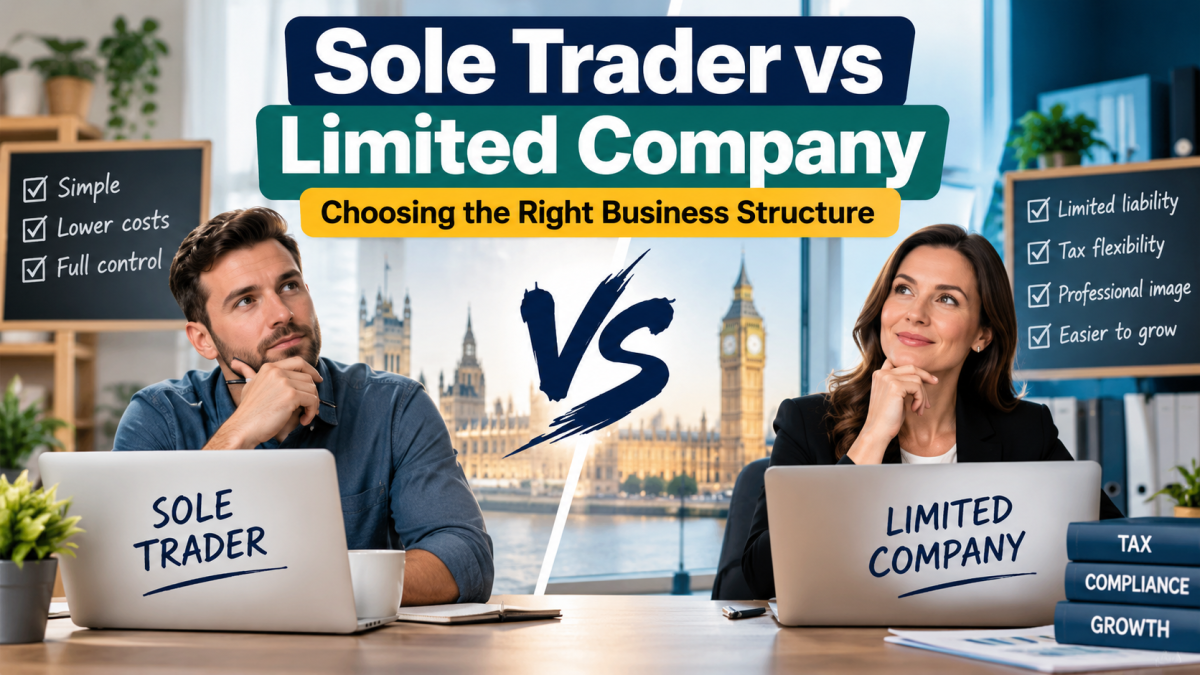
However, a Limited Company also creates additional compliance responsibilities compared to sole trader status.
The right structure depends on the business, profit levels and long-term plans.
Final Thoughts on Setting Up a Limited Company

Setting up a Limited Company in the UK is relatively straightforward, but running it correctly requires proper planning and ongoing compliance.
Many business owners focus only on incorporation and underestimate the importance of bookkeeping, tax planning and Companies House obligations.
Choosing the right structure from the beginning can save time, reduce future complications and improve long-term business efficiency.
A Limited Company can provide strong opportunities for growth and protection when managed correctly, but understanding the responsibilities involved is essential for long-term success.
Need help deciding what’s best for your situation?
📞 Call 0161 710 1901
📧 Email Tax@TaxesDoneRight.co.uk
🌐 Visit www.taxesdoneright.co.uk