SPV vs Standard Limited Company: What’s the Difference?
May 14, 2026
Property Let Campaign Explained for UK Landlords
May 18, 2026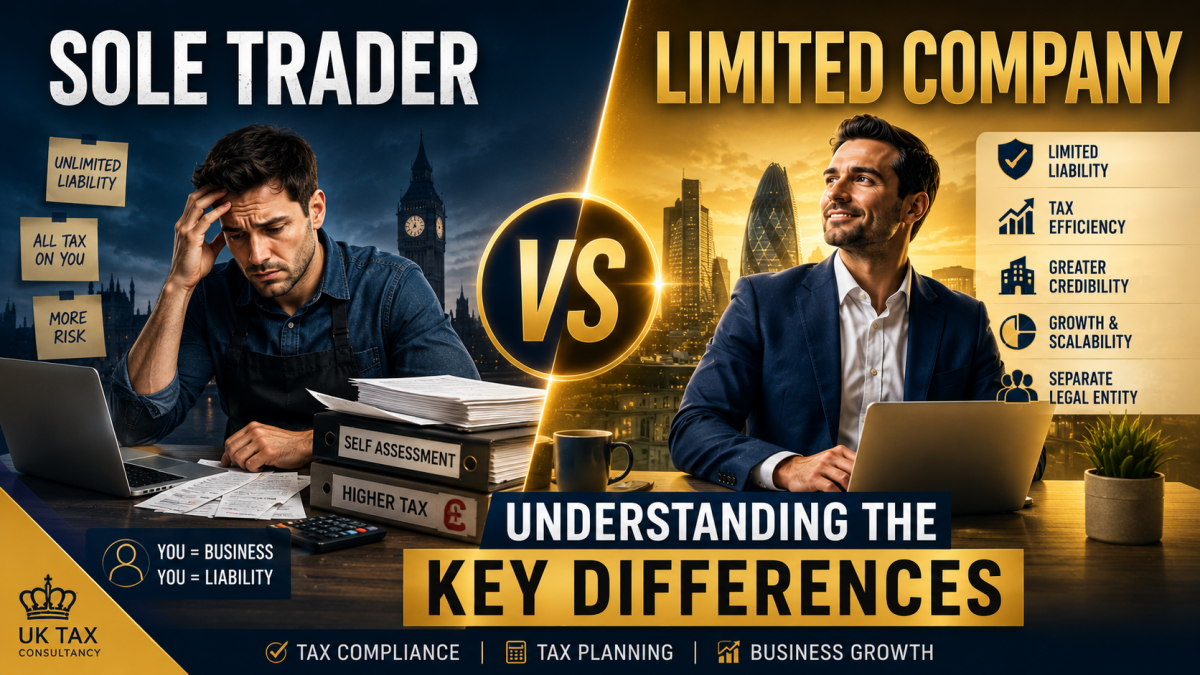
Sole Trader vs Limited Company: Understanding the Key Differences
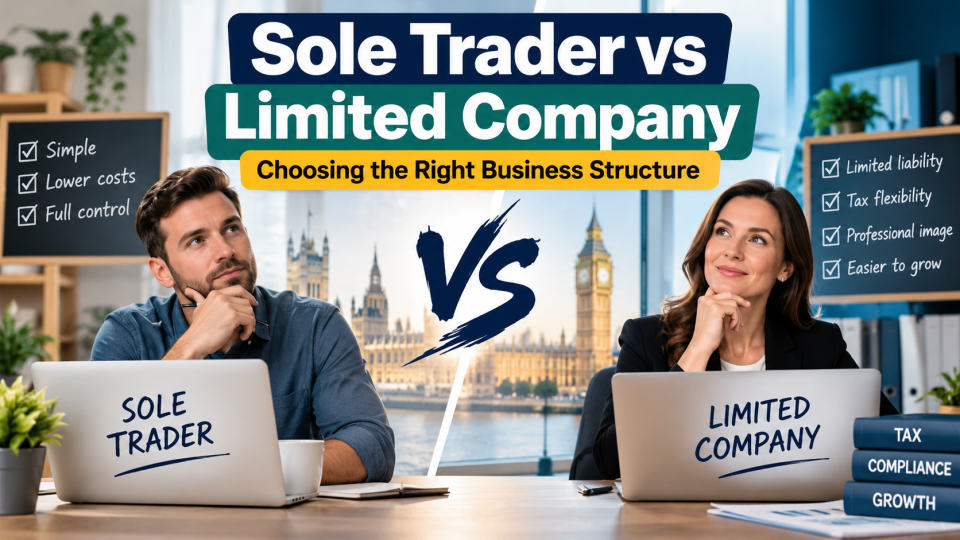
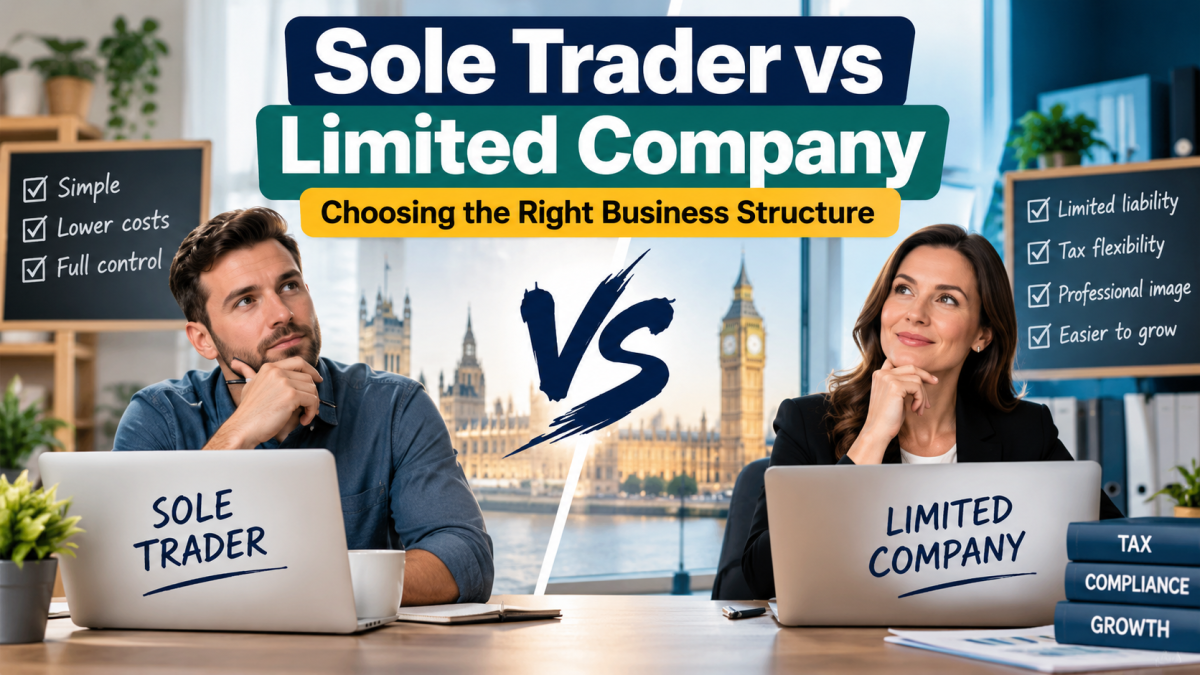
Sole Trader vs Limited Company is one of the most important decisions a new business owner will make when starting a business in the UK. The structure you choose can affect your tax position, legal responsibilities, personal liability, business growth and even how lenders or clients view your business.
Many people start as sole traders because it is simple and easy to set up. Others choose a limited company because it can offer stronger protection and potentially better long-term tax planning opportunities.
Understanding how both structures work is important before deciding which route is right for you.
What Is a Sole Trader?
A sole trader is the simplest business structure in the UK. The business and the individual are legally the same entity. This means the business profits belong directly to the owner, but so do the debts and liabilities.
Setting up as a sole trader is relatively straightforward. You simply register for Self Assessment with HMRC and report your business income each year through a tax return.
Many freelancers, tradespeople, consultants and small online businesses begin as sole traders because there are fewer administration requirements.
Advantages of Being a Sole Trader
One of the main benefits of operating as a sole trader is simplicity. There is less paperwork compared to a limited company, and accounting costs are often lower.
Some advantages include:
- Easy and inexpensive setup
- Simpler bookkeeping requirements
- Direct control over business decisions
- Fewer filing obligations
- Greater privacy because accounts are not publicly available on Companies House
For smaller businesses with lower profits, a sole trader structure can sometimes be more practical during the early stages.
Disadvantages of Being a Sole Trader
Although simplicity can be attractive, there are also important risks.
As a sole trader, there is no legal separation between personal and business finances. If the business experiences financial problems, personal assets such as savings, vehicles or even property could potentially be at risk.
Other disadvantages include:
- Unlimited personal liability
- Potentially higher tax and National Insurance at certain profit levels
- Less credibility with some lenders or larger clients
- Limited options for investment or ownership changes
As profits grow, many business owners begin reviewing whether remaining a sole trader is still the most tax-efficient option.
What Is a Limited Company?
A limited company is a separate legal entity from the individual who owns it. The company itself enters contracts, receives income and pays tax.
This structure creates separation between the business and the owner, which is one of the main reasons many entrepreneurs eventually incorporate.
When operating through a limited company, directors normally pay Corporation Tax on company profits, and individuals can take income through salary and dividends.
Advantages of a Limited Company
One of the biggest advantages of a limited company is limited liability protection. In most cases, personal assets are separated from company liabilities.
Other advantages include:
- Greater legal protection
- Potential tax planning opportunities
- More professional business image
- Easier access to investment or shareholders
- Potentially improved long-term scalability
Many growing businesses eventually move towards a limited company structure once profits increase or risks become larger.
Disadvantages of a Limited Company
Despite the advantages, running a limited company involves additional responsibilities and administration.
Companies must file annual accounts with Companies House and submit Corporation Tax returns to HMRC. Directors also have legal duties that must be followed correctly.
Common disadvantages include:
- More administration and compliance
- Higher accountancy costs
- Public visibility of company information
- Separate company bank account requirements
- Director responsibilities and legal obligations
For some smaller businesses, the extra administration may outweigh the benefits initially.
Sole Trader vs Limited Company: Tax Differences
Tax is often one of the biggest reasons business owners compare Sole Trader vs Limited Company structures.
A sole trader pays Income Tax and National Insurance directly on business profits. As profits increase, tax rates can become significant.
A limited company pays Corporation Tax on profits. Directors can then extract money using a combination of salary and dividends, which may sometimes create tax planning opportunities depending on profit levels and circumstances.
However, there is no single answer that works for everyone. The most suitable structure depends on:
- Annual profits
- Future growth plans
- Personal income needs
- Industry risk
- Mortgage or lending considerations
- Administration preferences
It is important not to focus purely on tax savings without considering compliance and long-term business strategy.
Sole Trader vs Limited Company: Liability and Protection
Another major difference between Sole Trader vs Limited Company structures is liability protection.
A sole trader has unlimited liability. If debts cannot be paid, creditors may pursue personal assets.
A limited company provides separation between personal and company assets in most normal trading situations. While directors still have legal responsibilities, the structure itself usually offers stronger protection.
This is one reason why many property investors, consultants and growing businesses eventually move towards incorporation.
Which Option Is Better?
There is no universal answer when comparing Sole Trader vs Limited Company structures.
A sole trader arrangement may work well for:
- Small side businesses
- Freelancers starting out
- Lower-risk businesses
- Individuals wanting minimal administration
A limited company may suit:
- Growing businesses
- Property investors
- Higher-profit businesses
- Businesses with increased legal or financial risk
- Owners wanting stronger separation and long-term scalability
The right choice depends on your business goals, profit expectations and future plans.
Final Thoughts on Sole Trader vs Limited Company
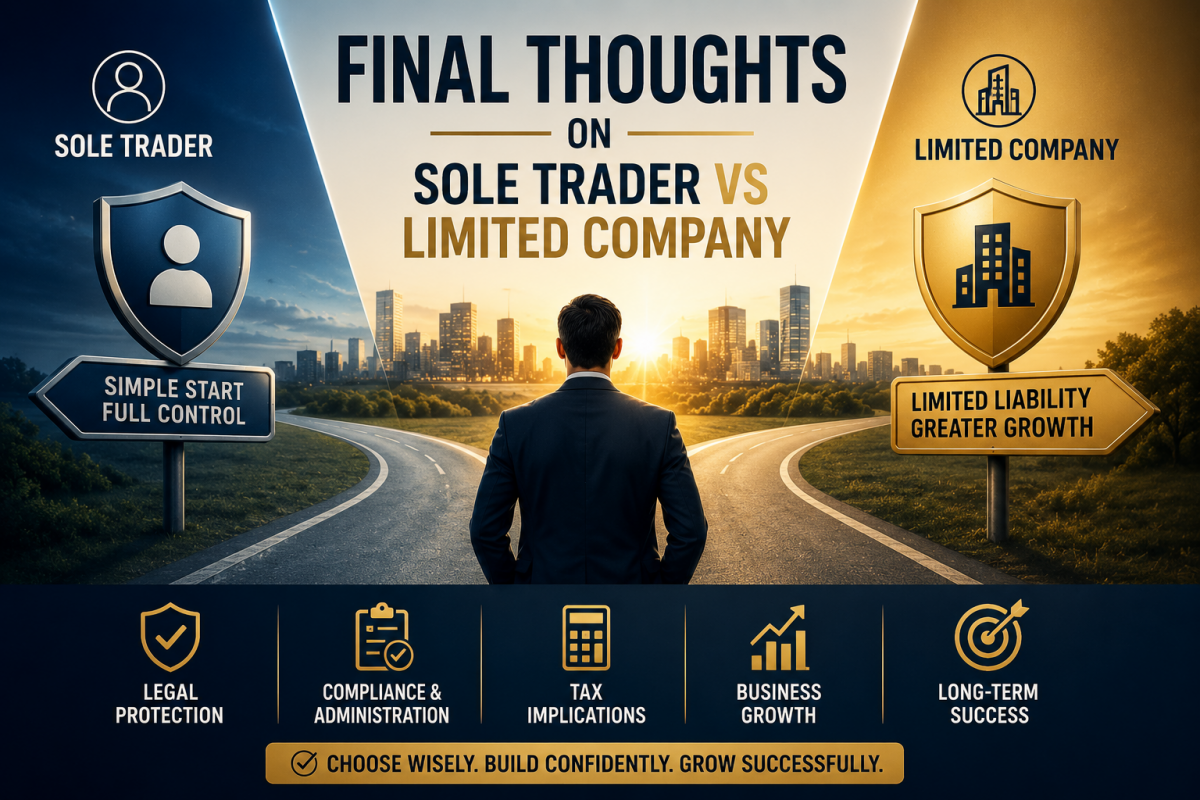
Sole Trader vs Limited Company is not simply about paying less tax. The decision affects legal protection, administration, business perception and future growth opportunities.
Many business owners begin as sole traders before later incorporating as profits and responsibilities increase. Others choose a limited company from the beginning because they want stronger protection or long-term flexibility.
Before deciding, it is important to consider tax implications, liability exposure, compliance requirements and business growth plans carefully.
Choosing the correct structure from the start can help improve efficiency, reduce future complications and support stronger long-term business success.
Need help deciding what’s best for your situation?
📞 Call 0161 710 1901
📧 Email Tax@TaxesDoneRight.co.uk
🌐 Visit www.taxesdoneright.co.uk