
Buying a Car Through a Limited Company: Pros and Cons
April 21, 2026
Payments on Account Explained (Without the Confusion)
April 23, 2026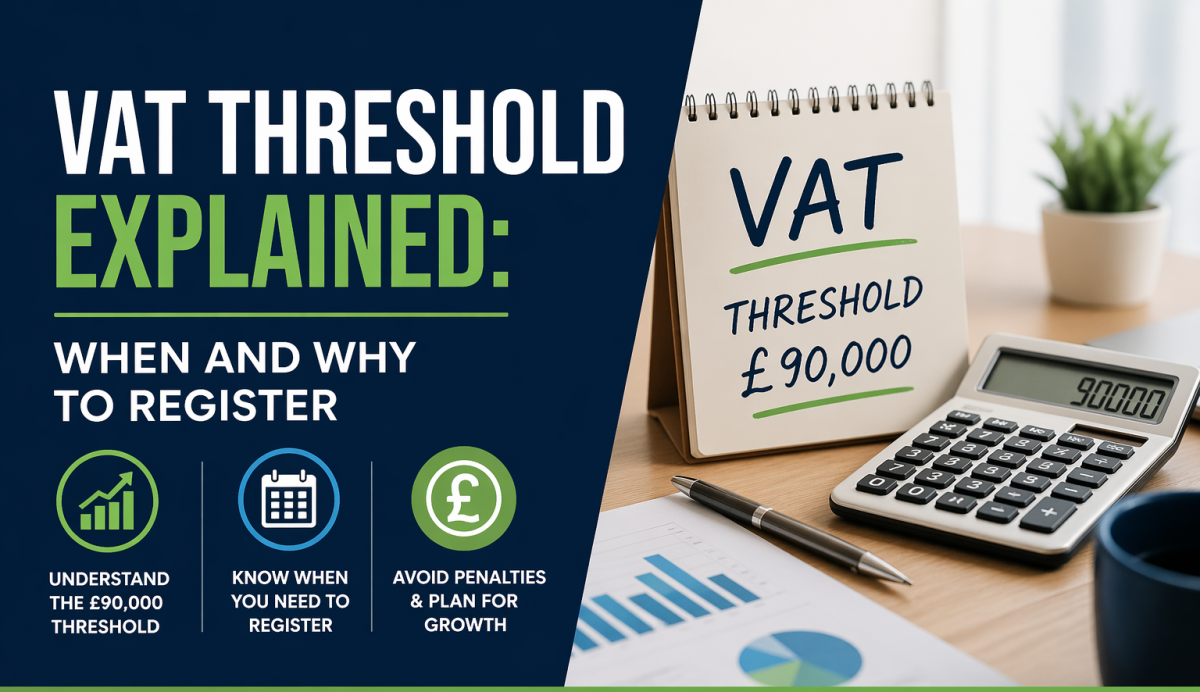
VAT Threshold Explained: When and Why to Register
If you’re running a business in the UK, understanding the VAT threshold is crucial. Register too late and you risk penalties. Register too early and you might create unnecessary admin and pricing pressure. So when should you register — and why might you choose to do it sooner?
What is the VAT Threshold?
The VAT registration threshold is the level of taxable turnover at which you must register for VAT.
As of now, the threshold is £90,000 (rolling 12-month period — not your accounting year).
👉 This means:
- You must monitor your turnover every month
- If your total taxable sales in the last 12 months exceed £90,000, registration is required
📊 Use our rolling 12-month calculator here:
https://www.taxesdoneright.co.uk/vat-turnover-calculator
When Do You Have to Register?
You must register for VAT if:
1. You exceed the threshold
If your turnover goes over £90,000 in any rolling 12-month period, you must:
- Register within 30 days of the end of that month
- Your VAT registration starts from the first day of the following month
2. You expect to exceed the threshold
If you know you will exceed £90,000 in the next 30 days alone (e.g. a big contract), you must:
- Register immediately
- Your registration starts from the date you realised
What Counts Towards the Threshold?
Not all income counts. The threshold includes:
✔️ Sales of goods and services (standard, reduced, and zero-rated)
✔️ Business income (including freelance/side income)
It excludes:
❌ VAT-exempt income (e.g. certain financial services, education, rental income)
❌ Personal income (e.g. salary under PAYE)
Why Register Voluntarily?
Even if you’re below £90,000, you can still register voluntarily — and sometimes it’s beneficial.
✔️ Benefits of registering early:
- Reclaim VAT on business expenses
- Appear more established (useful when dealing with VAT-registered clients)
- Prepare early for growth
❌ Downsides:
- You must charge VAT (can make you more expensive to customers)
- More admin and quarterly submissions (MTD compliant)
- Cash flow impact if not managed properly
Should You Delay Registration?
Some businesses try to stay below the threshold to avoid VAT — but this isn’t always the best strategy.
⚠️ Artificially limiting your income can:
- Restrict business growth
- Reduce profitability long term
Instead, plan ahead and understand the impact VAT will have on your pricing and margins.
Common Mistakes to Avoid
🚫 Only checking turnover at year-end (it’s a rolling 12 months!)
🚫 Forgetting to include all taxable income
🚫 Registering late and facing penalties
🚫 Not planning for VAT in your pricing
Final Thoughts
VAT isn’t just a compliance requirement — it’s a strategic decision.
Registering at the right time can:
✔️ Keep you compliant
✔️ Improve cash flow (if managed well)
✔️ Position your business for growth
But getting it wrong can lead to penalties and unexpected costs.
Need Help with VAT?
Whether you’re close to the threshold or just starting out, we can help you decide the best approach for your business.
📞 Call 0161 710 1901
📧 Email Tax@TaxesDoneRight.co.uk
🌐 Visit www.taxesdoneright.co.uk
Taxes Done Right — we say it and mean it.