What Is the £100,000 Tax Trap and How Can You Avoid It?
May 26, 2026
HMRC’s Major Mileage Rule Shake-Up Explained
May 28, 2026
When Does a Side Hustle Need to Be Declared to HMRC?
Side Hustle Tax Rules Explained
A Side Hustle has become increasingly common across the UK. Many people now earn additional income outside their main employment through online selling, freelancing, social media, property income, tutoring, delivery driving, or small online businesses.
However, one of the most common questions people ask is: when does a it actually need to be declared to HMRC?
The answer depends on several factors, including how much income is being earned, whether the activity is considered trading, and whether any tax allowances apply. Understanding the rules early can help avoid penalties, late filing issues, and unexpected tax bills.
What Counts as a Side Hustle?
A Side Hustle generally refers to any income earned outside your main job. This could include:
- Selling products online
- Freelance graphic design or marketing work
- Driving for delivery apps
- Social media content creation
- Renting out property or rooms
- Tutoring or coaching
- Photography services
- Handmade crafts or Etsy sales
HMRC does not use the term “Side Hustle” officially, but they still expect taxable income to be reported correctly where required.
Does Every Side Hustle Need to Be Declared?
Not necessarily.
In the UK, many people can earn small amounts from a it before needing to report anything to HMRC. One of the key thresholds is the Trading Allowance.
The £1,000 Trading Allowance
The Trading Allowance allows individuals to earn up to £1,000 gross income from self-employment or casual trading activities without needing to register for Self Assessment.
This means if your total Side-Hustle income is under £1,000 during the tax year, you may not need to declare it.
Examples could include:
- Selling occasional handmade products
- Small amounts of freelance work
- Casual online sales
- Hobby income with minimal earnings
However, the allowance applies to turnover, not profit. If you earn over £1,000 in total income from your Side-Hustle, HMRC may require you to register for Self Assessment.
When a Side Hustle Must Be Declared to HMRC
It is generally needs to be declared if:
Your Side Hustle Income Exceeds £1,000
Once total income exceeds the Trading Allowance threshold, you may need to:
- Register as self-employed
- Submit a Self Assessment tax return
- Declare your income and expenses
- Pay Income Tax and National Insurance where applicable
It is important to remember that HMRC looks at total income received, not simply what reaches your bank account after expenses.
HMRC Is Increasingly Monitoring Side Hustle Income
HMRC now receives more digital information than ever before. Online marketplaces and payment platforms increasingly share data with tax authorities.
This means Side-Hustle income from platforms such as:
- eBay
- Etsy
- Vinted
- Airbnb
- Fiverr
- Upwork
may become more visible to HMRC over time.
Many people wrongly assume small online earnings are automatically tax-free. In reality, HMRC may still expect reporting if trading thresholds are exceeded or if activities amount to a business.
Is Selling Personal Items a Taxable Side Hustle?
Usually not.
Selling unwanted personal belongings occasionally is generally not treated as taxable trading income.
For example:
- Selling old clothes
- Selling used electronics
- Clearing household items
would normally not create a tax issue.
However, buying items specifically to resell for profit may be treated differently. If HMRC believes the activity resembles trading, the income could become taxable as a Side Hustle business.
Side Hustle Expenses You May Be Able to Claim
If your Side-Hustle is taxable, allowable business expenses may reduce your taxable profit.
Common examples include:
- Software subscriptions
- Business phone costs
- Advertising expenses
- Website hosting
- Equipment purchases
- Mileage for business travel
- Professional insurance
Keeping accurate records is extremely important. HMRC may request evidence of both income and expenses if they review your tax return.
Do You Need to Register as Self-Employed?
If your Side Hustle income exceeds the reporting threshold, you may need to register as self-employed with HMRC.
This is usually done through Self Assessment.
The registration deadline is typically by 5 October following the end of the relevant tax year.
For example:
- If Side Hustle income started during the 2026/27 tax year ending 5 April 2027
- Registration would normally need to happen by 5 October 2027
Missing registration or filing deadlines can lead to penalties and interest charges.
What Taxes Could Apply to a Side Hustle?
Depending on profit levels, a Side Hustle could create:
- Income Tax liabilities
- Class 4 National Insurance
The amount owed depends on total taxable income, including employment income from your main job.
This is important because many people mistakenly believe Side Hustle income is taxed separately. In reality, all income sources are combined when calculating tax bands.
Side Hustle Record Keeping Matters
Good record keeping is one of the most important parts of running a Side Hustle properly.
You should keep:
- Invoices
- Bank statements
- Receipts
- Expense records
- Mileage logs
- Platform earning reports
Using separate business banking can also help keep records organised and reduce confusion later.
What Happens If You Do Not Declare a Side Hustle?
Failing to declare taxable Side Hustle income can result in:
- HMRC enquiries
- Late filing penalties
- Interest charges
- Additional tax assessments
In more serious situations, HMRC can investigate undeclared income going back several years.
Many taxpayers voluntarily correct undeclared income before HMRC contacts them, which can often reduce penalties significantly.
Final Thoughts on Side Hustle Tax Rules
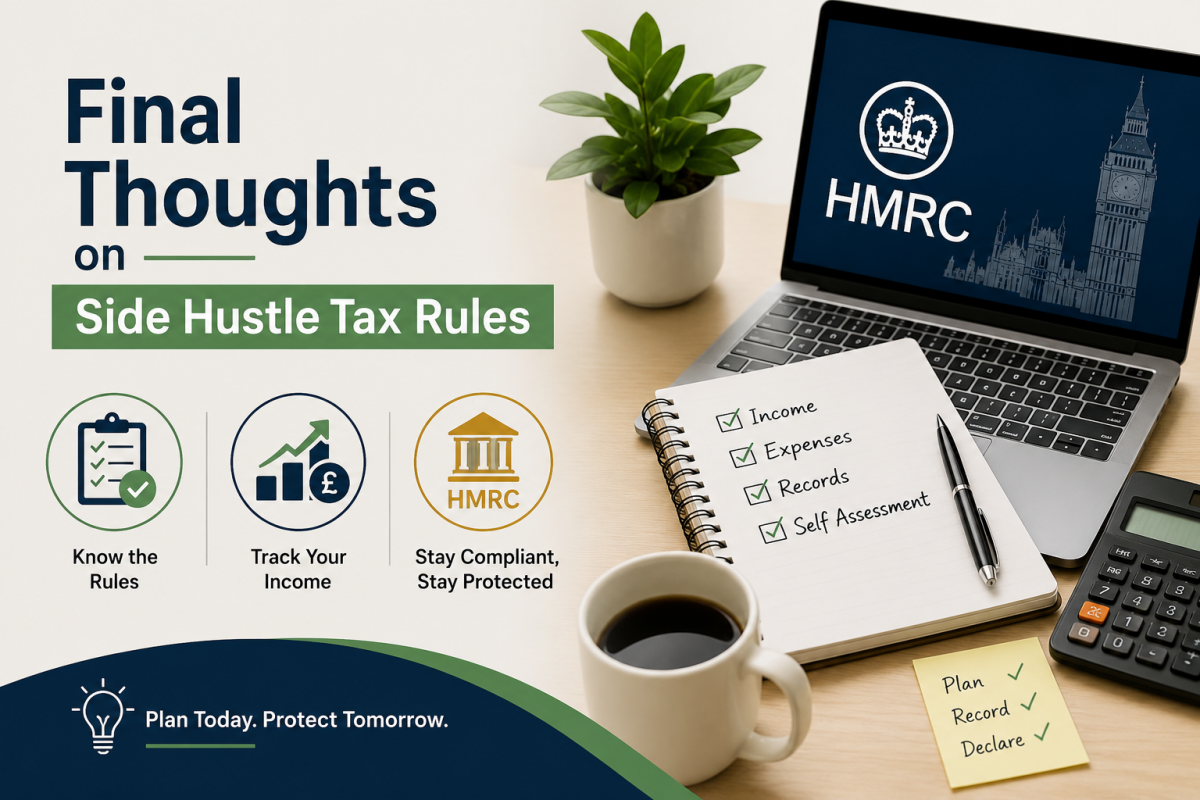
A Side Hustle can be a great way to generate additional income, build a business, or test new ideas. However, many people underestimate the importance of understanding their tax obligations early.
While small amounts of casual income may fall within the Trading Allowance, larger or ongoing Side Hustle activities often need to be declared to HMRC. The key factors are usually income levels, whether the activity is considered trading, and whether profits are being generated regularly.
As HMRC continues increasing its focus on digital income and online marketplaces, keeping accurate records and seeking professional advice where needed has become more important than ever.
Need help deciding what’s best for your situation?
📞 Call 0161 710 1901
📧 Email Tax@TaxesDoneRight.co.uk
🌐 Visit www.taxesdoneright.co.uk