
Company Makes a Loss: 7 Smart Actions Every UK Business Should Know
July 15, 2026
Rental Expense Mistakes: Common Mistakes That Cost UK Landlords Money
July 17, 2026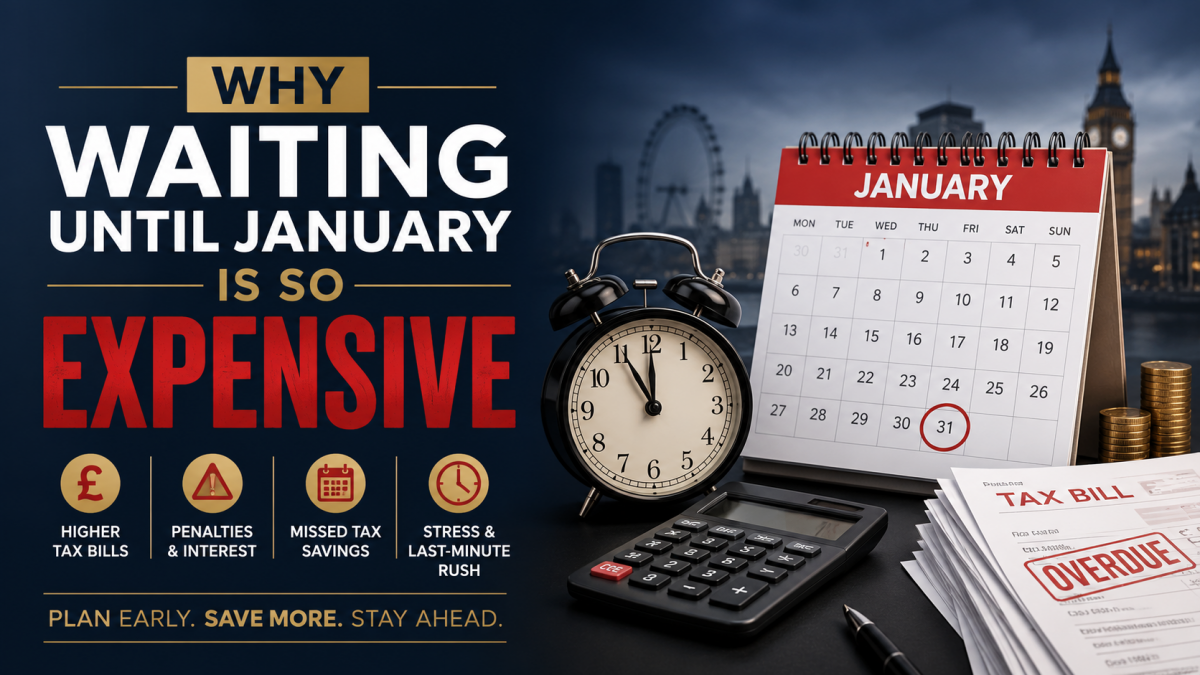
Waiting Until January Is So Expensive
Waiting until January is one of the most common and costly mistakes taxpayers make every year. Whether you’re self-employed, a landlord, a company director, or someone with additional income to declare, delaying your Self Assessment until the final weeks before the deadline can have serious financial consequences.
Many people assume simply they can be waiting until January before they gather their paperwork , submit their tax return, pay HMRC, and move on. In reality, leaving everything until the last minute often results in avoidable penalties, missed tax-saving opportunities, unnecessary stress, and sometimes paying more tax than necessary.
If you want to keep more of your money and avoid a stressful start to the year, here’s why acting early makes financial sense. So try to avoid waiting until January for your paying of tax.
Why Waiting Until January Costs More Than You Think
Waiting until January doesn’t just create pressure—it reduces your options.
When accountants receive hundreds of last-minute enquiries before the 31 January deadline, workloads increase dramatically. That means:
- Limited appointment availability.
- Longer turnaround times.
- Less time to review your records properly.
- Higher likelihood of errors.
- Less opportunity to implement tax planning strategies.
If you are waiting until January many firms also charge premium fees for urgent work completed close to the filing deadline because of the additional pressure involved.
Planning ahead almost always costs less than rushing.
Missed Tax Saving Opportunities
One of the biggest hidden costs of delaying is missing legitimate tax reliefs.
Preparing your return early gives your accountant time to identify:
- Allowable business expenses.
- Property expense claims.
- Pension contribution opportunities.
- Gift Aid tax relief.
- Capital allowance claims.
- Capital Gains Tax planning.
- Foreign tax relief where applicable.
- Marriage Allowance or other available reliefs.
Some tax-saving opportunities require action before certain deadlines or before the end of the tax year. If everything is waiting until January, those opportunities may already have disappeared.
Tax planning works best when it’s proactive—not reactive.
Waiting Until January Leaves No Time to Fix Problems
Waiting until January also means you have almost no time to resolve unexpected issues.
Common problems include:
- Missing P60s or P45s.
- Incorrect employer information.
- Lost rental records.
- Missing dividend vouchers.
- Overseas income documentation.
- Missing bank interest certificates.
- HMRC records not matching your own.
These issues often take days or even weeks to resolve.
If you only discover a problem a few days before the deadline, you may struggle to submit an accurate return on time.
Penalties Can Add Up Quickly
HMRC imposes automatic penalties for late filing.
If your tax return is filed after the deadline, you could face:
- An immediate £100 late filing penalty.
- Daily penalties if delays continue.
- Additional penalties after six months.
- Further penalties after twelve months.
- Interest on late tax payments.
- Late payment penalties.
Even if no tax is owed, a late return can still trigger penalties.
Many taxpayers mistakenly believe that being only a few days late won’t matter. Unfortunately, HMRC’s penalties begin immediately once the deadline has passed.
Less Time to Budget for Your Tax Bill
Preparing your tax return early gives you advance notice of how much tax you owe.
Knowing your liability months before the payment deadline allows you to:
- Set money aside gradually.
- Improve cash flow.
- Avoid borrowing.
- Prevent unexpected financial pressure.
- Plan for Payments on Account where applicable.
Receiving an unexpected tax bill in late January leaves little time to arrange your finances, increasing the risk of late payment interest and penalties.
Your Accountant Can Provide Better Advice
Accountants deliver the greatest value when they have time to analyse your financial position rather than simply processing information under pressure.
Early preparation allows time to discuss:
- Whether incorporation may save tax.
- Pension planning.
- Dividend strategies.
- Profit extraction.
- Capital expenditure timing.
- Loss relief options.
- VAT considerations.
- Record-keeping improvements.
These conversations often generate tax savings that far exceed the cost of professional advice.
Better Records Mean More Accurate Returns
When information is gathered throughout the year or shortly after the tax year ends, records are generally more complete.
By contrast, trying to remember expenses several months later often leads to:
- Forgotten receipts.
- Missing invoices.
- Lost mileage records.
- Incomplete property expenses.
- Unclaimed allowable costs.
Poor record-keeping frequently results in taxpayers paying more tax simply because they cannot evidence deductible expenses.
Avoid the Waiting Until January Rush
January is by far the busiest month for accountants across the UK.
By submitting your information earlier, you benefit from:
- Faster turnaround.
- More detailed review.
- Better communication.
- Greater availability for questions.
- Reduced stress.
- More accurate tax returns.
Rather than competing with thousands of last-minute clients, you receive the time and attention your affairs deserve.
A Small Delay Can Become an Expensive Habit
Many taxpayers tell themselves they’ll “do it next week.”
Weeks quickly become months.
Before long, January arrives, documents are missing, deadlines are approaching, and stress levels rise dramatically.
Breaking that cycle is simple:
- Keep records organised throughout the year.
- Send information to your accountant as soon as it’s available.
- Review your tax position well before January.
- Ask questions early rather than waiting until the deadline.
Good tax management is built on preparation, not panic.
Final Thoughts
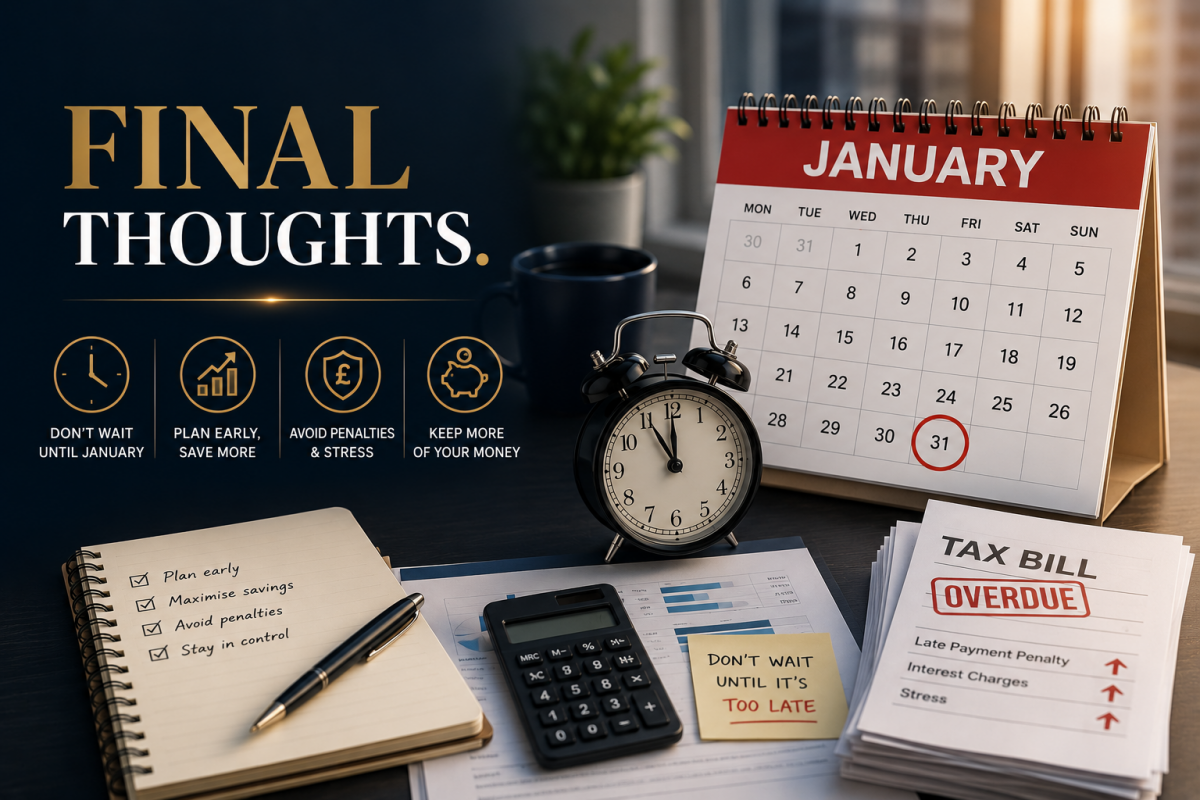
Leaving your tax return until the final weeks before the deadline rarely saves time or money. In fact, it often has the opposite effect.
By acting early, you give yourself more opportunities to reduce your tax bill, avoid penalties, budget for upcoming liabilities, and receive better professional advice. Most importantly, you’ll avoid the unnecessary stress that comes with trying to meet one of the busiest deadlines of the year.
If you’re considering waiting until January, remember that every week you delay reduces your options. Preparing early gives you greater control, better planning opportunities, and peace of mind—making it one of the smartest financial decisions you can make.
Whether you’re a business owner, landlord, freelancer, or employee with additional income, planning ahead puts you in the strongest financial position. If you’re unsure about your tax obligations or want to ensure you’re making the most of every available relief, seeking professional advice well before January can help you stay compliant, minimise your tax liability, and start the new year with confidence.
Need help deciding what’s best for your situation?
📞 Call 0161 710 1901
📧 Email Tax@TaxesDoneRight.co.uk
Visit www.taxesdoneright.co.uk