Can You Pay Yourself Only in Dividends?
May 29, 2026
HMRC Enquiries: The Top Reasons Businesses Get Selected for Review
June 2, 2026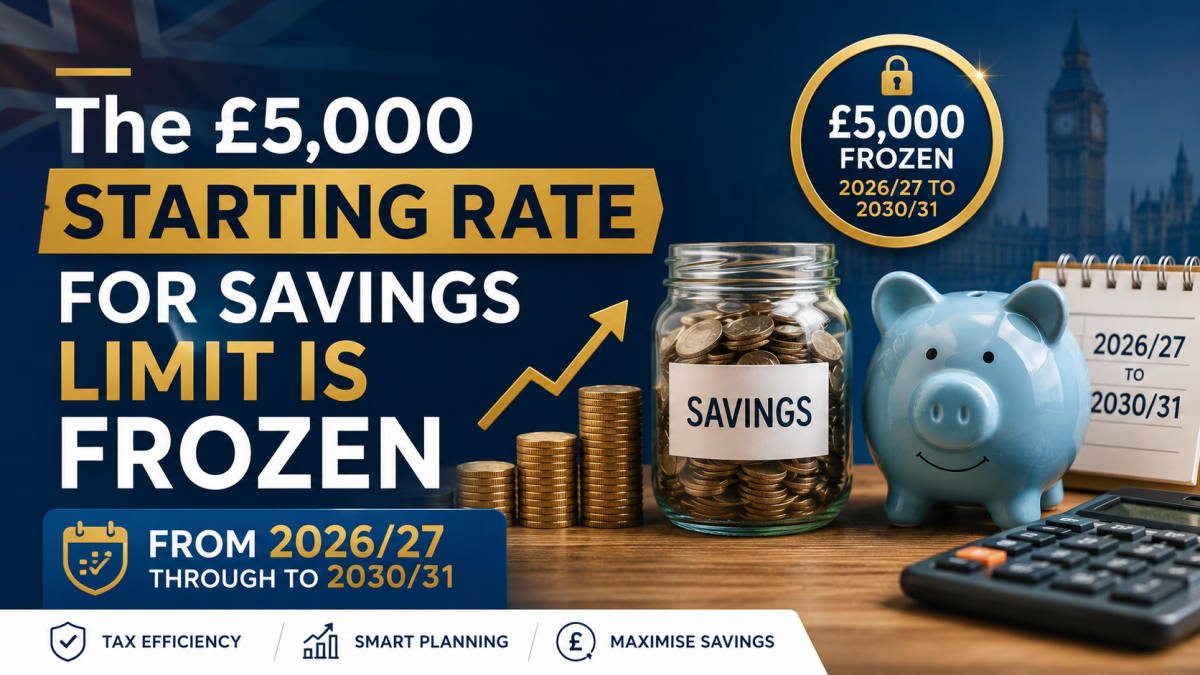
The £5,000 Starting Rate for Savings limit is frozen from 2026/27 through to 2030/31
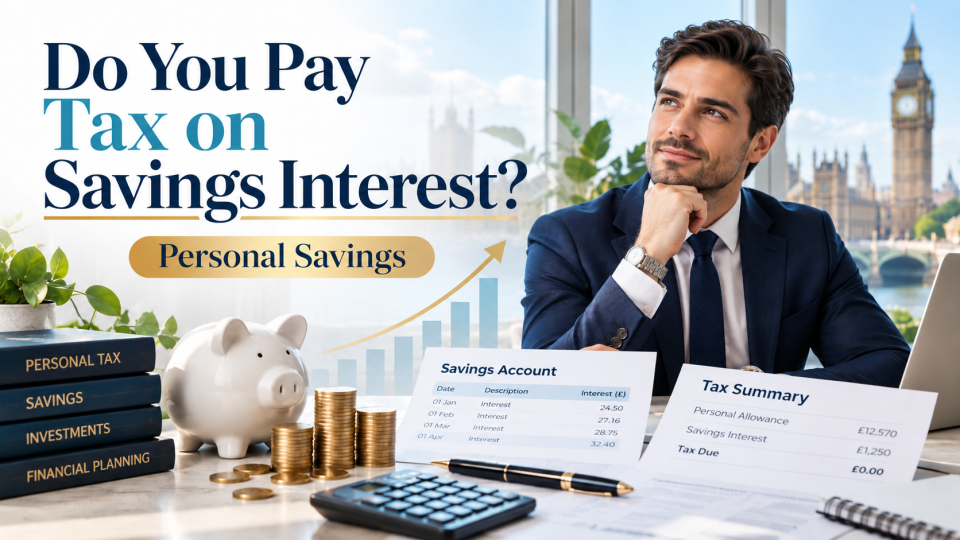
Savings limit rules are an important consideration for individuals who earn interest from savings accounts and other interest-bearing investments. The Government has confirmed that the £5,000 Starting Rate for Savings will remain frozen from the 2026/27 tax year through to the 2030/31 tax year.
While this may initially seem like positive news because the allowance is not being reduced, the reality is that a prolonged freeze can result in more taxpayers paying tax on their savings income over time. As earnings and interest rates increase, frozen tax thresholds can gradually reduce the value of tax relief available.
In this article, we explain how the Starting Rate for Savings works, who can benefit from it, and what the freeze could mean for your finances.
Understanding the Savings Limit and Starting Rate for Savings
The Starting Rate for Savings is a special tax relief designed to help people with lower earned income. It allows eligible individuals to receive up to £5,000 of savings interest tax-free in addition to their Personal Allowance.
The £5,000 figure is often referred to as the Starting Rate for Savings band. However, eligibility depends on the amount of non-savings income you receive, such as salary, pension income, rental profits, or self-employment earnings.
The savings limit available to you reduces by £1 for every £1 of non-savings income you receive above your Personal Allowance.
For example, if your non-savings income exceeds the Personal Allowance by £2,000, your available Starting Rate for Savings reduces from £5,000 to £3,000.
Once your non-savings income exceeds the Personal Allowance by £5,000 or more, the Starting Rate for Savings is completely lost.
How the Savings Limit Works in Practice
To understand the savings limit, consider the following examples.
Example 1: Full Starting Rate Available
Sarah receives:
- State pension income of £10,000
- Savings interest of £3,000
Because her non-savings income is below the Personal Allowance, she may be able to receive the full £3,000 of savings interest tax-free under the Starting Rate for Savings rules.
Example 2: No Starting Rate Available
Emma earns:
- Employment income of £18,000
- Savings interest of £1,000
Her non-savings income exceeds the Personal Allowance by more than £5,000, meaning she is not entitled to any Starting Rate for Savings.
However, she may still benefit from the Personal Savings Allowance.
Savings Limit and the Personal Savings Allowance
It is important not to confuse the Starting Rate for Savings with the Personal Savings Allowance.
The Personal Savings Allowance allows most taxpayers to earn some interest tax-free regardless of their earned income.
Currently:
- Basic rate taxpayers can receive up to £1,000 of savings interest tax-free.
- Higher rate taxpayers can receive up to £500 of savings interest tax-free.
- Additional rate taxpayers do not receive a Personal Savings Allowance.
In some situations, an individual may benefit from both the Starting Rate for Savings and the Personal Savings Allowance simultaneously.
This can create significant tax-free savings income opportunities for individuals with relatively low earned income.
Why the Savings Limit Freeze Matters
The Government has announced that the £5,000 Starting Rate for Savings will remain frozen from 2026/27 until 2030/31.
Although the savings limit is not being reduced, freezing thresholds for several years can have a hidden impact.
As wages, pensions, and other forms of income rise over time, more individuals may find that their non-savings income exceeds the levels required to access the Starting Rate for Savings.
Similarly, inflation can gradually erode the real value of fixed allowances and tax bands.
A taxpayer who qualifies for the full relief today may qualify for less relief in future years if their pension or employment income increases while the savings limit remains unchanged.
Who Should Pay Attention to the Savings Limit?
The freeze is particularly relevant for:
- Retirees with pension income and savings interest.
- Individuals who have recently stopped working.
- People living partly from savings and partly from pension income.
- Low-income taxpayers with significant cash deposits.
- Individuals benefiting from rising savings interest rates.
Many people assume savings interest is always tax-free. However, depending on your income level and the amount of interest earned, tax may become payable.
Reviewing your income position annually can help ensure you understand how much of your savings income remains covered by available allowances.
Planning Opportunities Around the Savings Limit
Although the savings limit is frozen, there are still ways to manage your tax position effectively.
Consider:
- Making full use of ISA allowances, where interest remains tax-free.
- Reviewing savings accounts to estimate expected annual interest.
- Monitoring pension withdrawals and other taxable income sources.
- Considering the interaction between the Starting Rate for Savings and the Personal Savings Allowance.
Tax planning should always be based on your individual circumstances, but understanding these rules can help prevent unexpected tax liabilities.
Final Thoughts on the Savings Limit Freeze
The decision to freeze the £5,000 Starting Rate for Savings until 2030/31 means the savings limit remains unchanged for several years. While the allowance itself is preserved, its real value may gradually decline as incomes rise and inflation continues to affect household finances.
For individuals with lower earned income, the Starting Rate for Savings can still provide valuable tax relief. However, eligibility depends heavily on your overall income position.
If you receive interest from savings accounts, it is worth reviewing how the savings limit, Personal Allowance, and Personal Savings Allowance interact to determine whether any tax may be payable on your savings income in future tax years.
Need help deciding what’s best for your situation?
📞 Call 0161 710 1901
📧 Email Tax@TaxesDoneRight.co.uk
Visit www.taxesdoneright.co.uk