31 January 2026 Self-Assessment Deadline. What Happens If You Miss It?
January 8, 2026
MTD Explained Simply Quarterly Updates Are Not Quarterly Tax Bills
January 11, 2026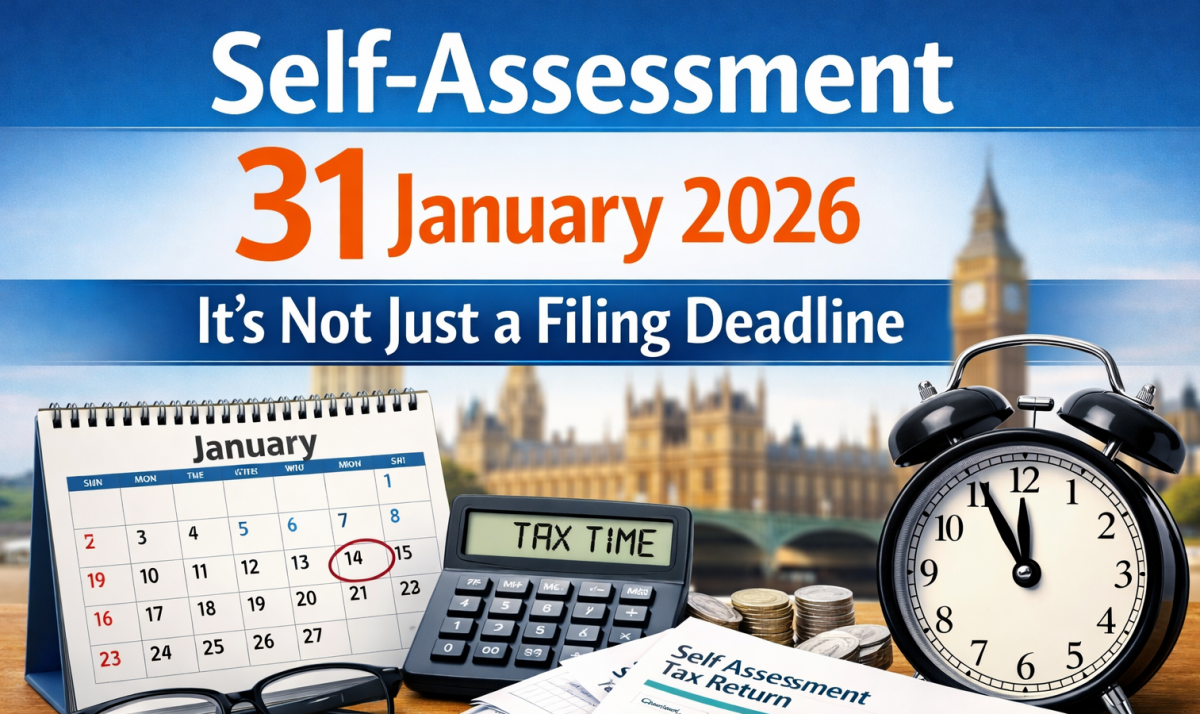
For many people, 31 January is seen as the day you simply submit your Self-Assessment tax return and move on. In reality, it is far more important than that. The 31 January 2026 deadline affects not only your paperwork, but also when and how much tax you must pay, and what happens if you miss it.
Understanding why this date matters can help you avoid penalties, interest, and unnecessary stress.
What Actually Happens on 31 January 2026
The 31 January 2026 deadline covers three key obligations for the 2024 to 2025 tax year.
First, it is the final date to file your online Self-Assessment tax return with HMRC.
Second, it is the deadline to pay any balancing tax due for that tax year. This is the amount still owed after tax already deducted at source, such as PAYE or CIS deductions.
Third, for many taxpayers, it is also the date the first payment on account is due for the 2025 to 2026 tax year. This often comes as a surprise and can significantly increase the amount payable in January.
Why Your January Tax Bill Can Be Much Higher Than Expected
Payments on account are advance payments towards your next tax bill. They usually apply if your previous year’s tax bill was more than £1,000 and less than 80 percent of your tax was collected at source.
Each payment on account is normally half of the previous year’s tax bill. The first half is due on 31 January, and the second half on 31 July.
This means that on 31 January 2026 you may need to pay both the remaining tax for 2024 to 2025 and the first advance payment for 2025 to 2026, making January one of the most expensive months of the year from a tax perspective.
What Happens If You Miss the Deadline
Missing the Self-Assessment deadline can be costly even if you do not owe much tax.
If your return is filed late, an automatic £100 penalty applies immediately. After three months, daily penalties can start to accrue. After six and twelve months, further penalties may be added.
If you file on time but do not pay the tax owed, HMRC will charge interest on the outstanding balance from 1 February 2026. Additional late payment penalties may also apply the longer the bill remains unpaid.
Importantly, penalties for late filing apply even if there is no tax to pay.
Common Mistakes That Cause Problems in January
Many issues arise because people leave everything until the last minute. Common problems include missing income, forgotten expenses, incorrect figures from platforms or agents, and delays in obtaining information such as rental statements or dividend vouchers.
Another frequent issue is underestimating the impact of payments on account, which can make the January bill feel unmanageable if not planned for in advance.
How to Prepare Before 31 January
Good preparation makes the deadline far less stressful. Keeping records up to date throughout the year is key, including income, expenses, and supporting documents.
Submitting your tax return earlier gives you clarity on how much you owe and allows time to budget or explore payment options if needed. If your income has fallen and payments on account are too high, it may be possible to reduce them, but this should be done carefully to avoid future penalties.
Final Thoughts
The 31 January 2026 Self-Assessment deadline is not just about filing a form. It is a critical financial date that determines your tax payments, cash flow, and exposure to penalties.
Treating it as a planning deadline rather than a last-minute task can save money, reduce stress, and put you in control of your tax position well before HMRC comes knocking.
If you want help reviewing your position early or understanding what you need to pay and when, getting
Taxes Done Right advice sooner rather than later can make all the difference.