Things You Should Do Before Your Accountant Files Your Return
January 6, 2026
Self-Assessment 31 January 2026 It’s Not Just a Filing Deadline
January 9, 2026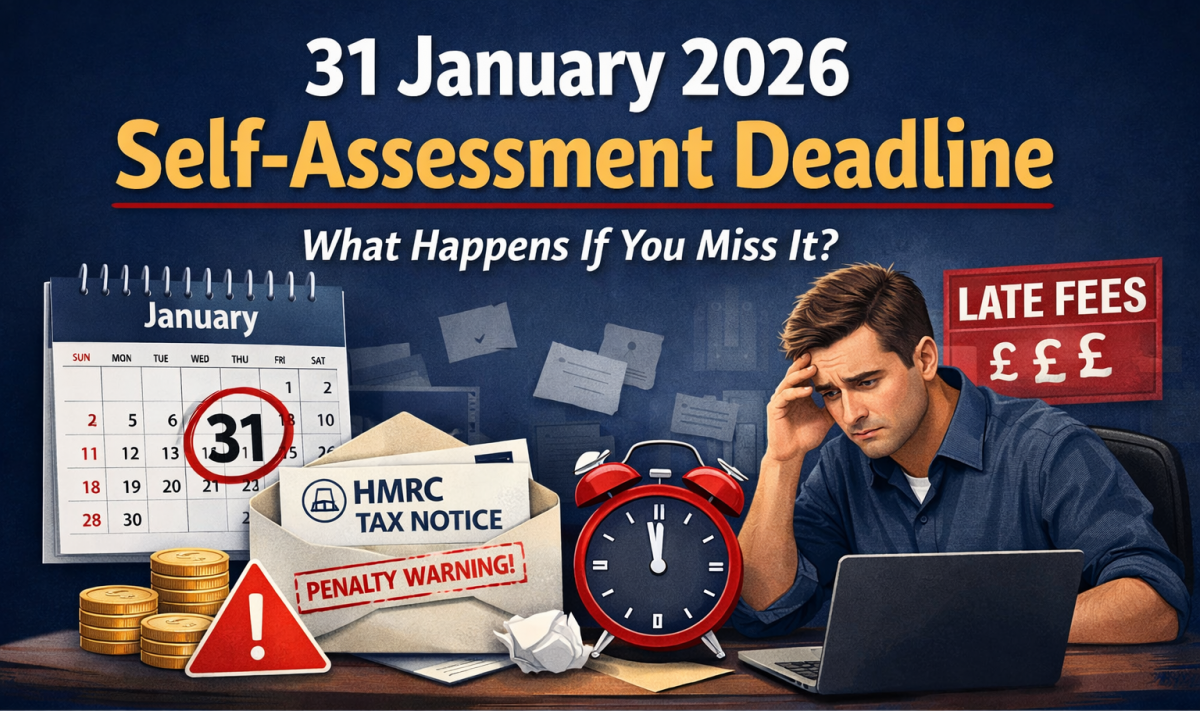
The 31 January 2026 deadline is a big one for anyone who files a UK Self-Assessment tax return. By this date, HMRC expects three things to be sorted: your online tax return for the 2024/25 tax year, any tax owed for that year, and usually your first payment on account for 2025/26. Miss it, and things can get expensive pretty quickly.
What if you miss the filing deadline?
If your tax return is filed late, HMRC issues an automatic £100 penalty, even if you have no tax to pay or you are due a refund. This applies the day after the deadline, so from 1 February 2026. There is no grace period and no warnings beforehand.
If the delay continues, penalties start to stack up. After three months, HMRC can charge daily penalties of £10 per day, up to a maximum of £900. At six months late, you may face an additional penalty of 5% of the tax due or £300, whichever is higher. At twelve months late, another 5% or £300 can be added, and in serious cases HMRC can increase this further.
What if you file but do not pay?
Filing your return on time but not paying the tax does not avoid penalties and interest. Late payment triggers interest from 1 February 2026, charged daily until the balance is cleared. On top of interest, HMRC adds late payment penalties. A 5% penalty is charged if the tax remains unpaid after 30 days, another 5% after six months, and a further 5% after twelve months.
This means a tax bill left unpaid for a year can attract interest plus 15% in penalties, which is money better kept in your pocket.
Payments on account catch people out
Many taxpayers are surprised by payments on account. If your previous Self-Assessment tax bill was over £1,000 and less than 80% was collected at source, HMRC usually asks for advance payments towards the next tax year. On 31 January 2026, you may need to pay both the balance for 2024/25 and the first payment on account for 2025/26, which can feel like a double hit.
If your income has dropped, you may be able to reduce payments on account, but this needs to be done carefully to avoid underpayment penalties later.
Can HMRC be flexible?
HMRC can be understanding in certain situations, such as serious illness or unexpected life events, but this is not guaranteed. You usually need strong evidence and must contact HMRC promptly. If you cannot pay in full, setting up a Time to Pay arrangement as early as possible can help reduce penalties and stress.
How to avoid problems before 31 January
The best way to stay clear of penalties is simple preparation. Make sure all income, expenses, bank interest, dividends, and property figures are ready well before January. Leave time for queries, corrections, and planning. Filing early also gives you clarity on what you owe and time to budget for it.
Final thought
Missing the 31 January 2026 Self-Assessment deadline is more than a small admin slip. Penalties, interest, and stress can build fast. Getting organised early or taking professional advice can save you money and a lot of hassle. If you are unsure where you stand, it is always better to sort it with Taxes Done Right than explain it to HMRC later.