What “Payments on Account” Really Mean – and When You Can Reduce Them
January 28, 2026
Self-Assessment and Pension Contributions – What Actually Reduces Your Tax Bill
January 30, 2026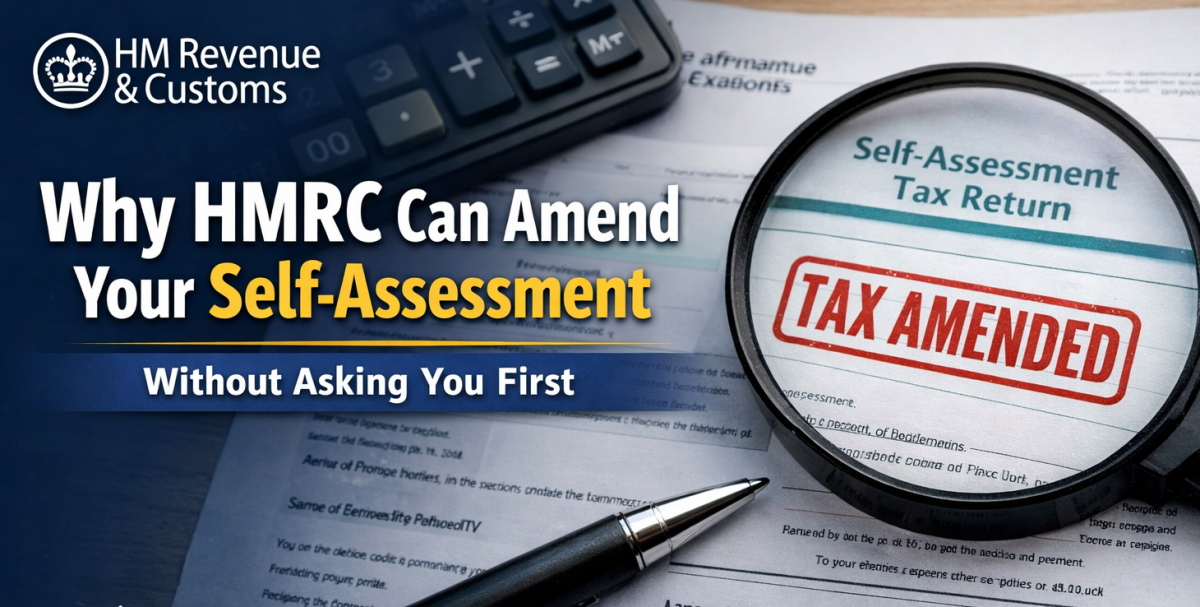
Many taxpayers assume that once they submit their Self-Assessment tax return, HMRC must contact them before making any changes. In reality, HMRC has the legal power to amend your return without asking you first in certain situations. Understanding when and why this happens can help you avoid unexpected tax bills, penalties, or confusion.
HMRC’s Automatic Amendment Powers
After you submit a Self-Assessment return, HMRC carries out a series of automated checks. These compare the figures you entered with information HMRC already holds, such as PAYE records, pension data, bank interest, or benefits reported by third parties. If something does not match, HMRC may amend your return to reflect what they believe is correct.
This is not a formal enquiry. It is simply HMRC correcting what they see as an obvious error or omission based on their data.
The 12-Month Amendment Window
HMRC can amend an individual Self-Assessment return within 12 months of the filing deadline. For example, a 2024/25 return filed by 31 January 2026 can usually be amended by HMRC up to 31 January 2027.
During this period, HMRC does not need your permission to make changes. They will normally notify you after the amendment has been made, either through your online tax account or by letter.
Common Reasons HMRC Amend Returns
HMRC amendments often happen because of simple mismatches rather than deliberate errors. Common triggers include employment income or tax deducted under PAYE not matching HMRC records, missing bank interest or savings income, incorrect pension contributions or relief claimed, duplicated income, or arithmetic errors within the return.
In many cases, the amendment results in extra tax being due, but sometimes it can also reduce the tax payable.
Amendments vs Enquiries
It is important to distinguish between an amendment and a formal enquiry. An amendment is a correction based on HMRC’s data. An enquiry is a deeper investigation into the accuracy of your return and gives HMRC wider powers to ask questions and request evidence.
An amendment does not mean you are under investigation. However, repeated errors or large discrepancies can increase the risk of a future enquiry.
What to Do If HMRC Amend Your Return
If HMRC amends your return and you disagree with the changes, you have the right to challenge them. You can usually appeal or ask for the amendment to be reviewed if you believe your original figures were correct and you have evidence to support them.
Ignoring an amendment is not advisable. Any additional tax shown will still be payable unless the amendment is successfully overturned.
How to Reduce the Risk of HMRC Amendments
The best way to avoid unexpected amendments is to ensure your return matches HMRC’s records as closely as possible. This means checking your PAYE income against your P60 or P45, reviewing your HMRC personal tax account for interest and pension data, and ensuring all figures are accurate and complete before submission.
Using a tax adviser can also help identify discrepancies early and deal with HMRC on your behalf if an amendment is made.
Final Thoughts
HMRC’s ability to amend your Self-Assessment without asking first often surprises taxpayers, but it is a standard part of the system. These changes are usually driven by data mismatches rather than suspicion. Staying organised, checking figures carefully, and seeking professional advice can help you stay in control and avoid unnecessary stress.
If you have received an HMRC amendment and are unsure whether it is correct, it is worth getting advice before paying or appealing.
Unsure why HMRC has changed your tax return?
If HMRC has amended your Self-Assessment and you are not sure whether the changes are correct, getting advice early can save you time, stress, and unnecessary tax. We can review HMRC amendments, check your figures against HMRC data, and deal directly with HMRC on your behalf.
📞 Call: 0161 710 1901
📧 Email: Tax@TaxesDoneRight.co.uk
💬 DM us: TaxesDoneRight