
MTD for Landlords: What Property Owners Must Do Now
February 23, 2026
MTD Preparation Checklist: 10 Things To Do Before April 2026
February 25, 2026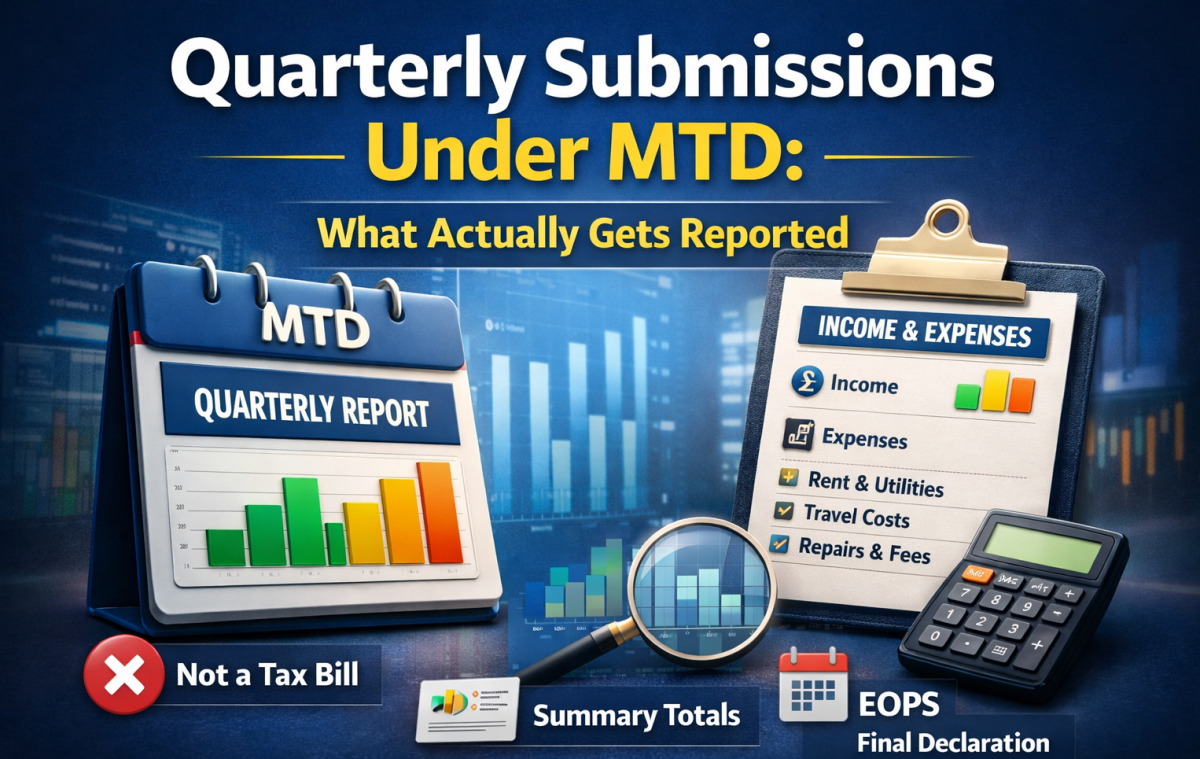
Making Tax Digital for Income Tax Self Assessment (MTD for ITSA) represents one of the biggest reporting changes for UK landlords and self-employed individuals in recent years. A key feature of the regime is the requirement to submit quarterly updates to HMRC. However, many taxpayers remain unclear about what information these submissions actually contain and whether they create additional tax liabilities throughout the year.
This guide explains what quarterly submissions are, what data is included, and what they mean for your tax position.
What are quarterly submissions?
Under MTD for ITSA, taxpayers must maintain digital records and submit summary updates to HMRC every three months. These updates are not tax returns and do not create a tax bill. Instead, they are periodic summaries of income and expenses drawn from your digital accounting records.
Think of quarterly submissions as a “snapshot” of your business or property activity during that period rather than a final calculation of tax due.
What information is reported?
Quarterly submissions generally include totals rather than detailed transactions. HMRC receives aggregated figures across standard income and expense categories, which typically include:
Income
- Business turnover or rental income received during the quarter
Allowable expenses (category totals)
- Cost of goods purchased
- Wages and staff costs
- Premises expenses (rent, rates, utilities)
- Repairs and maintenance
- Motor and travel costs
- Professional fees
- Insurance
- Interest and finance costs
- Other allowable business or property expenses
For landlords, categories will align with property income reporting such as rental income, mortgage interest (restricted relief), repairs, letting fees, and other property costs.
Importantly, HMRC does not receive individual invoice details or bank transaction lines within quarterly submissions. The detailed records remain in your accounting software and can be reviewed if HMRC later opens an enquiry.
What quarterly submissions do NOT include
There are several elements that are deliberately excluded from quarterly updates:
- Capital allowances adjustments
- Private use adjustments
- Accounting adjustments (accruals, prepayments)
- Relief claims
- Final tax calculations
These items are handled during the End of Period Statement (EOPS) and the Final Declaration, which replace the traditional Self Assessment tax return.
Do quarterly submissions trigger tax payments?
No. Quarterly updates do not create tax liabilities or payment obligations. Your tax position is only finalised after submission of the EOPS and Final Declaration.
However, quarterly reporting does provide an estimated tax position within software dashboards, which many taxpayers find useful for planning cash flow and avoiding surprises.
Why HMRC requires quarterly updates
HMRC’s aim is to improve accuracy and reduce errors by encouraging real-time record keeping. Quarterly submissions also allow taxpayers to monitor performance and tax estimates throughout the year rather than preparing everything retrospectively.
In practice, many businesses benefit from improved bookkeeping discipline and clearer visibility of profitability.
Practical tips for smooth quarterly reporting
- Keep bookkeeping up to date monthly rather than waiting until quarter end
- Use MTD-compatible software that maps categories correctly
- Separate personal and business transactions to reduce adjustments
- Review coding accuracy regularly to minimise year-end corrections
- Work with an accountant to ensure EOPS adjustments are optimised
Final thoughts
Quarterly submissions under MTD are best viewed as progress updates rather than tax filings. They report income and expense totals from digital records but exclude year-end adjustments and do not create tax bills. The final tax position is still determined annually through the EOPS and Final Declaration process.
For landlords and self-employed individuals, understanding this distinction removes much of the anxiety around quarterly reporting and highlights the importance of maintaining accurate digital records throughout the year.
If you would like help preparing for MTD for ITSA or selecting suitable software, professional guidance can ensure you remain compliant while keeping reporting simple.
Need Help?
If you want support getting ready for MTD or setting up compliant quarterly reporting, contact Taxes Done Right Ltd today.