
Can You Employ Your Spouse or Children in Your Business? A UK Tax Guide 2026 To Avoid Costly Mistakes
July 28, 2026
Landlord Tax Section 24: Can Landlords Still Save Tax Despite Section 24?
July 30, 2026
Keep Aside For Tax Bill: Why Saving for Tax Should Be Your First Financial Habit
One of the biggest financial mistakes made by UK sole traders, landlords, freelancers and business owners is failing to Keep Aside For Tax Bill obligations throughout the year. It is easy to assume that the money sitting in your bank account belongs to you, but in many cases, a significant portion will eventually be payable to HMRC.
Rather than facing a large tax bill in January and struggling to find the money, it is far better to build good financial habits from day one. By setting money aside every time you receive income, you can pay your tax bill comfortably, avoid unnecessary stress, and improve your cash flow management.
In this guide, we’ll explain how much you should generally save, what affects your tax liability, and practical ways to make sure you’re always prepared.
Keep Aside For Tax Bill is one of the most important financial habits every sole trader, landlord, freelancer, and company director should develop. Learning to Keep Aside For Tax Bill throughout the year can help you avoid unexpected HMRC bills and give you greater control over your finances.
Many people only realise they should Keep Aside For Tax Bill when the payment deadline is approaching. By planning ahead and choosing the right percentage to Keep Aside For Tax Bill, you can reduce stress, improve cash flow, and ensure you always have funds available when your tax becomes due.
Why You Should Keep Aside For Tax Bill Every Month
Many new business owners only think about tax once they receive their Self Assessment calculation. Unfortunately, by then the money has often already been spent.
Setting aside money regularly provides several benefits:
- Avoids unexpected tax bills.
- Reduces financial stress.
- Improves budgeting.
- Prevents late payment penalties and interest.
- Gives you confidence when your tax return is completed.
- Makes quarterly tax planning much easier.
Think of the tax money as HMRC’s money that is temporarily sitting in your account—not your disposable income.
How UK Tax Bills Are Calculated
The amount you owe depends on several factors, including:
- Your total income.
- Business expenses.
- Property income.
- Pension contributions.
- Capital gains.
- Other taxable income.
- Personal Allowance.
- National Insurance contributions.
- Student loan repayments.
- Payments on account.
This means there is no universal percentage that suits everyone.
However, there are sensible guidelines that work for most people.
How Much Should You Save?
Below are general rules of thumb.
Sole Traders
Most sole traders should aim to save:
20%–30% of their profits
If your profits are increasing rapidly or you’re a higher-rate taxpayer, consider saving:
30%–40%
This provides a comfortable buffer for:
- Income Tax
- Class 4 National Insurance
- Payments on account
Freelancers
Freelancers often experience fluctuating income.
A sensible approach is to save:
25%–35% of every payment received
Transfer the money immediately into a separate savings account before spending anything else.
Landlords
Rental property owners should also build a tax reserve.
Although mortgage interest relief is restricted, landlords still benefit from various allowable expenses.
Saving around:
20%–30% of rental profits
is generally sensible.
Higher-rate taxpayers may wish to save more.
Company Directors
Company directors usually pay tax differently depending on how they take income.
If you receive:
- Salary
- Dividends
- Rental income
- Other personal income
your required savings will vary.
Many directors benefit from taking professional tax planning advice before deciding how much to save.
Factors That Affect Your Tax Bill
No two taxpayers are identical.
Several factors can increase or decrease your final tax liability.
Business Expenses
The more legitimate business expenses you claim, the lower your taxable profit may be.
Examples include:
- Office costs
- Professional subscriptions
- Software
- Insurance
- Marketing
- Business travel
- Equipment
Maintaining accurate bookkeeping helps ensure you claim everything you’re entitled to.
Pension Contributions
Personal pension contributions can reduce your overall tax liability.
This is often overlooked by business owners who could significantly reduce their tax bill with proper planning.
Student Loans
If you have a student loan, repayments are usually calculated alongside your tax return.
This increases the total amount payable.
Payments on Account
Many people are surprised when HMRC asks for:
- Current year’s tax
- Plus advance payments towards next year’s tax
These advance payments are known as Payments on Account.
This is one of the biggest reasons why first-time taxpayers receive unexpectedly large tax bills.
Best Ways to Keep Aside For Tax Bill Throughout the Year
Instead of scrambling for money in January, create a simple routine.
Open a Separate Savings Account
One of the easiest solutions is to have a dedicated tax savings account.
Each time money enters your business account, immediately transfer your chosen percentage.
This removes temptation and keeps the money safely ring-fenced.
Save Every Time You Get Paid
Don’t wait until month-end.
Every invoice paid should trigger an automatic transfer.
Many business owners automate this using online banking.
Review Quarterly
Every three months, review:
- Income
- Expenses
- Estimated tax liability
This allows adjustments if profits have increased.
Regular reviews also prepare you for Making Tax Digital (MTD) quarterly updates.
Common Mistakes People Make
Many taxpayers unknowingly create future financial problems.
Here are some of the most common mistakes.
Spending All Business Income
A healthy business bank balance does not mean all of the money belongs to you.
Some of it belongs to HMRC.
Forgetting Payments on Account
Many people budget only for this year’s tax and forget that HMRC may ask for advance payments.
This often doubles the amount due in January.
Poor Bookkeeping
Missing receipts and incomplete bookkeeping make it difficult to estimate tax accurately.
Keeping records up to date throughout the year provides much greater certainty.
Not Seeking Professional Advice
Every person’s tax position is different.
Professional tax planning often saves significantly more than the cost of obtaining advice.
Practical Example
Imagine you’re a sole trader who earns profits of £50,000.
A sensible approach would be to save approximately 30%.
That means putting aside around:
£15,000
throughout the year.
When your tax bill arrives, you’ll already have the money available instead of needing to find it at the last minute.
If your actual liability is lower, the remaining funds become additional savings or working capital.
What Happens If You Don’t Save?
Failing to prepare can lead to:
- Cash flow problems.
- Borrowing money to pay HMRC.
- Credit card debt.
- Late payment interest.
- Penalties.
- Stress.
- Difficulty growing your business.
Many businesses that appear profitable experience financial pressure simply because they failed to plan for tax.
Digital Bookkeeping Makes Saving Easier
Cloud accounting software helps estimate tax throughout the year.
With accurate bookkeeping you can:
- Monitor profits.
- Forecast tax.
- Track expenses.
- Stay MTD compliant.
- Make informed financial decisions.
Knowing your estimated liability allows you to adjust your savings before the year ends.
When Should You Speak to an Accountant?
The earlier, the better.
Professional advice becomes particularly valuable if you:
- Start self-employment.
- Buy rental property.
- Become a company director.
- Have multiple income sources.
- Sell assets.
- Expect profits to increase.
- Receive foreign income.
Good tax planning is proactive—not reactive.
Meeting with an accountant before the tax year ends often creates opportunities to reduce your overall liability legally.
Final Thoughts
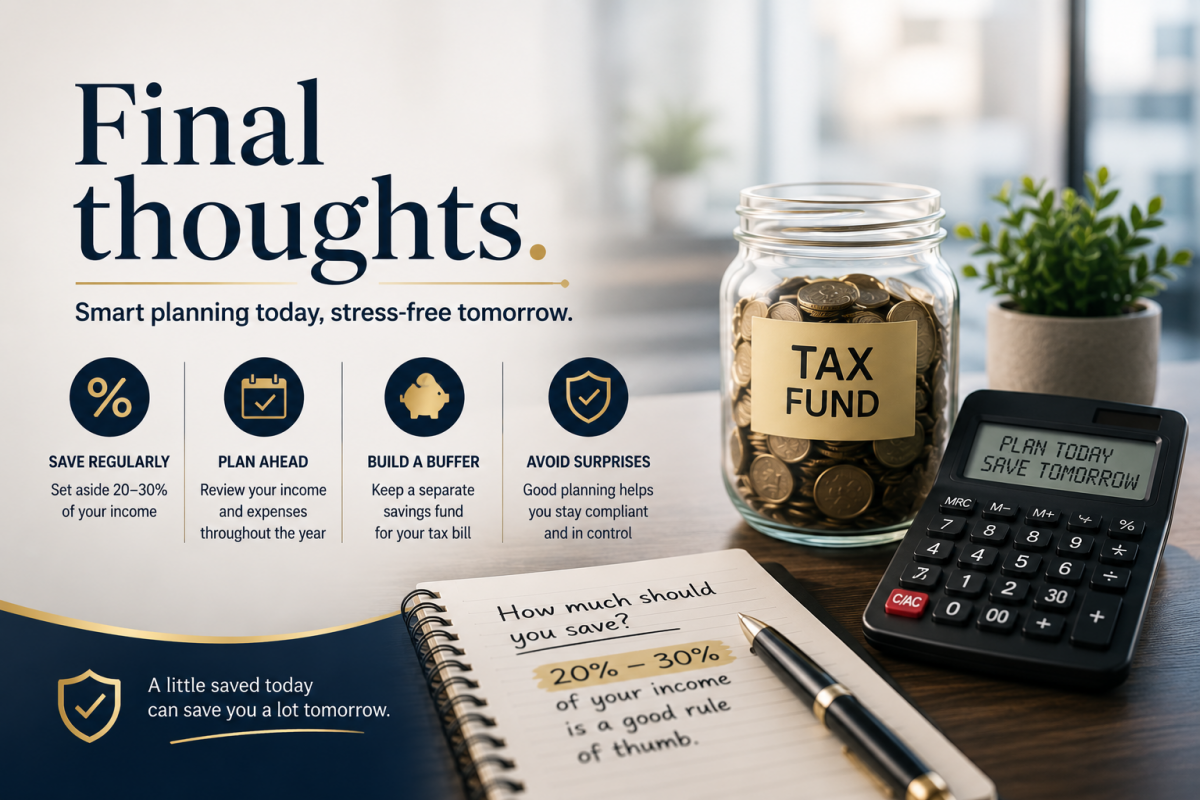
Learning to Keep Aside For Tax Bill obligations is one of the smartest financial habits any business owner can develop. Whether you’re a sole trader, landlord, freelancer or company director, setting aside a fixed percentage of your income throughout the year helps you avoid surprises, improves cash flow and ensures you’re ready when HMRC expects payment. The exact amount will vary depending on your income and personal circumstances, but consistent saving is always better than trying to find the money at the last minute.
Ultimately, the key to successfully managing your finances is to Keep Aside For Tax Bill regularly rather than relying on estimates close to the deadline. Combine disciplined saving with accurate bookkeeping and regular tax reviews, and you’ll gain greater financial confidence while reducing the risk of penalties or cash flow issues. If you’re unsure how much you should save, seeking professional advice can help you create a tailored plan that keeps you compliant and financially prepared all year round.
Making it a habit to Keep Aside For Tax Bill every time you receive income is a simple but effective way to stay financially prepared. Whether you’re self-employed or running a limited company, consistently choosing to Keep Aside For Tax Bill can help you avoid cash flow problems and late payment penalties.
The best time to Keep Aside For Tax Bill is before you spend your income, not after. If you’re unsure how much to Keep Aside For Tax Bill, professional tax advice can help you calculate the right amount and keep your finances on track throughout the year.
The sooner you start to Keep Aside For Tax Bill, the easier managing your finances becomes. By making it part of your regular budgeting routine, you can Keep Aside For Tax Bill confidently, stay compliant with HMRC, and focus on growing your business without worrying about unexpected tax bills.
Need help deciding what’s best for your situation?
📞 Call 0161 710 1901
📧 Email Tax@TaxesDoneRight.co.uk
Visit www.taxesdoneright.co.uk