Company Cars and Benefit in Kind Tax in 2026
June 3, 2026
Can Your Company Pay for Gym Memberships, Phones and Home Internet?
June 7, 2026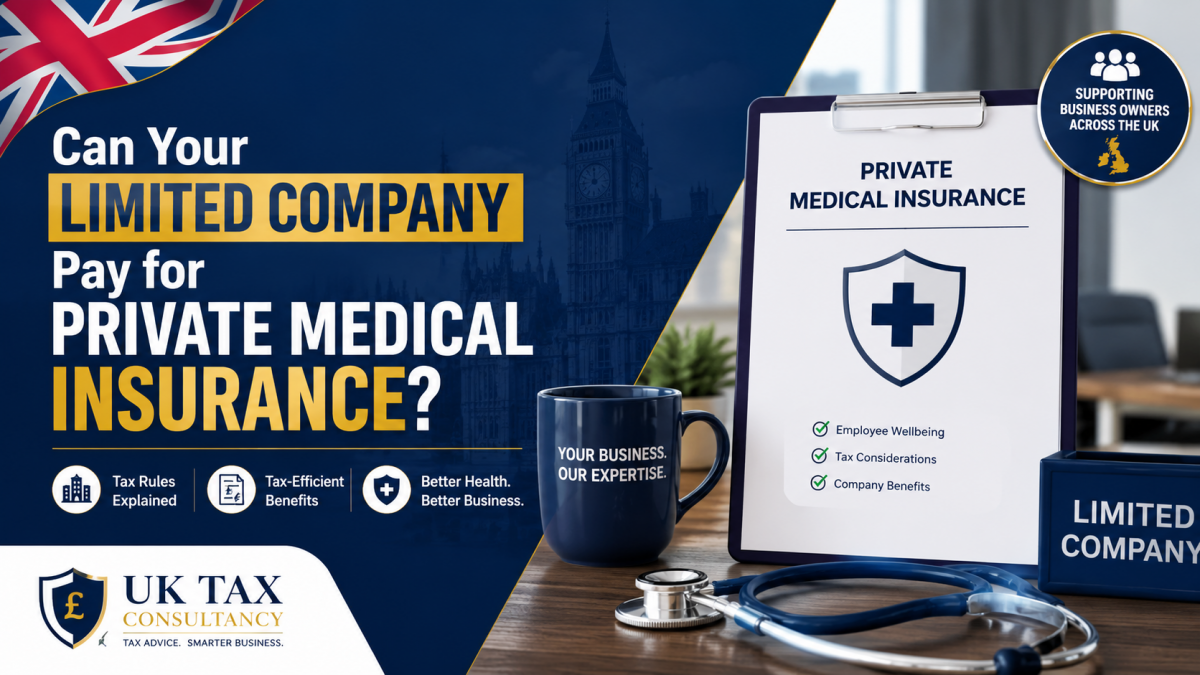
Can Your Limited Company Pay for Private Medical Insurance?
Private Medical Insurance: Can Your Limited Company Pay for It?
Private Medical Insurance is a benefit that many business owners consider as NHS waiting times remain a concern and access to private healthcare becomes increasingly attractive. If you operate through a limited company, you may be wondering whether your company can pay for your healthcare cover and whether doing so is tax-efficient.
The good news is that a limited company can generally pay for Private Medical Insurance on behalf of directors and employees. However, there are tax consequences that both the company and the individual need to understand before putting a policy in place.
In this article, we explain how Private Medical Insurance works when funded through a limited company and what the tax implications may be.
What Is Private Medical Insurance?
Private Medical Insurance provides access to private healthcare services, helping policyholders obtain consultations, diagnostic tests, treatments, and specialist care without relying solely on NHS waiting lists.
Policies can vary significantly in terms of coverage, excesses, and included treatments. Some plans cover only inpatient treatment, while others offer comprehensive protection that includes outpatient appointments, therapies, and mental health support.
For company directors and employees, Private Medical Insurance is often viewed as a valuable workplace benefit that can support wellbeing and reduce time away from work.
Can a Limited Company Pay for Private Medical Insurance?
Yes, a limited company can pay for Private Medical Insurance for directors and employees.
The company can purchase and pay for the policy directly. The premium is treated as part of the employee’s remuneration package and is generally considered an employment benefit.
This means that while the company can pay for the insurance, the benefit is not usually tax-free for the recipient.
Is Private Medical Insurance Tax Deductible for the Company?
In most cases, the cost of Private Medical Insurance is an allowable business expense for corporation tax purposes.
Provided the insurance is offered as part of an employee’s remuneration package and is incurred wholly and exclusively for the purposes of the business, the company can normally claim corporation tax relief on the premiums paid.
This can reduce the company’s taxable profits and therefore lower its corporation tax bill.
However, although the company may receive corporation tax relief, the individual receiving the benefit will generally face a tax charge.
Private Medical Insurance and Benefit in Kind Rules
One of the most important tax considerations is that Private Medical Insurance is normally treated as a Benefit in Kind (BIK)
A Benefit in Kind arises when an employer provides a non-cash benefit to an employee or director.
The value of the annual insurance premium is typically added to the employee’s taxable income. The individual then pays income tax on that benefit at their marginal tax rate.
For example, if a company pays an annual medical insurance premium of £1,000 for a director, that £1,000 is usually treated as taxable income. A basic-rate taxpayer may pay £200 in tax on the benefit, while a higher-rate taxpayer may pay £400.
The employer may also have additional National Insurance obligations relating to the benefit.
Does the Company Pay National Insurance?
Yes, in most cases the company must pay Class 1A National Insurance Contributions on the value of the Private Medical Insurance benefit provided.
The company reports the benefit to HMRC through the relevant payroll or benefits reporting process and pays the associated National Insurance charge.
This additional cost should be considered when assessing the overall value of providing Private Medical Insurance through the company.
Is It Still Worth Having Private Medical Insurance Through a Limited Company?

For many directors and employees, the answer is yes.
Although there may be a Benefit in Kind charge, the company receives corporation tax relief on the premiums, and the individual gains access to private healthcare services that may otherwise be expensive to purchase personally.
The decision often comes down to balancing:
- The corporation tax savings available to the company
- The individual’s income tax liability on the benefit
- The employer’s National Insurance costs
- The value of quicker access to medical treatment
For many business owners, the convenience and healthcare benefits outweigh the additional tax costs.
Can Private Medical Insurance Cover Family Members?
Many insurers allow directors and employees to extend cover to spouses, partners, and dependent children.
Where family members are included on a company-funded policy, the cost of their cover generally increases the value of the Benefit in Kind.
As a result, the taxable benefit reported to HMRC may be higher.
It is important to understand the tax impact before extending cover to family members.
Alternative Healthcare Benefits
While Private Medical Insurance is one of the most popular healthcare benefits, businesses may also consider other wellbeing initiatives.
Examples include:
- Employee Assistance Programmes (EAPs)
- Occupational health services
- Health screening arrangements
- Mental health support services
- Wellness and wellbeing programmes
Some benefits may have different tax treatments, so professional advice can help determine the most suitable approach for your business.
Final Thoughts on Private Medical Insurance

Private Medical Insurance can be paid for by your limited company, and in many cases the premiums will qualify as an allowable business expense for corporation tax purposes.
However, directors and employees should remember that the insurance is usually treated as a Benefit in Kind, meaning there may be income tax and National Insurance implications.
The right approach depends on your personal circumstances, tax position, and business objectives. Before arranging cover, it is sensible to review the overall tax impact and ensure the arrangement delivers value for both the company and the individual.
If you are considering Private Medical Insurance through your limited company and would like tailored tax advice, speaking with a qualified accountant can help you understand the most tax-efficient option available.
Need help deciding what’s best for your situation?
📞 Call 0161 710 1901
📧 Email Tax@TaxesDoneRight.co.uk
Visit www.taxesdoneright.co.uk