Can Your Limited Company Pay for Private Medical Insurance?
June 4, 2026
Inside vs Outside IR35: What Is the Real Difference
June 8, 2026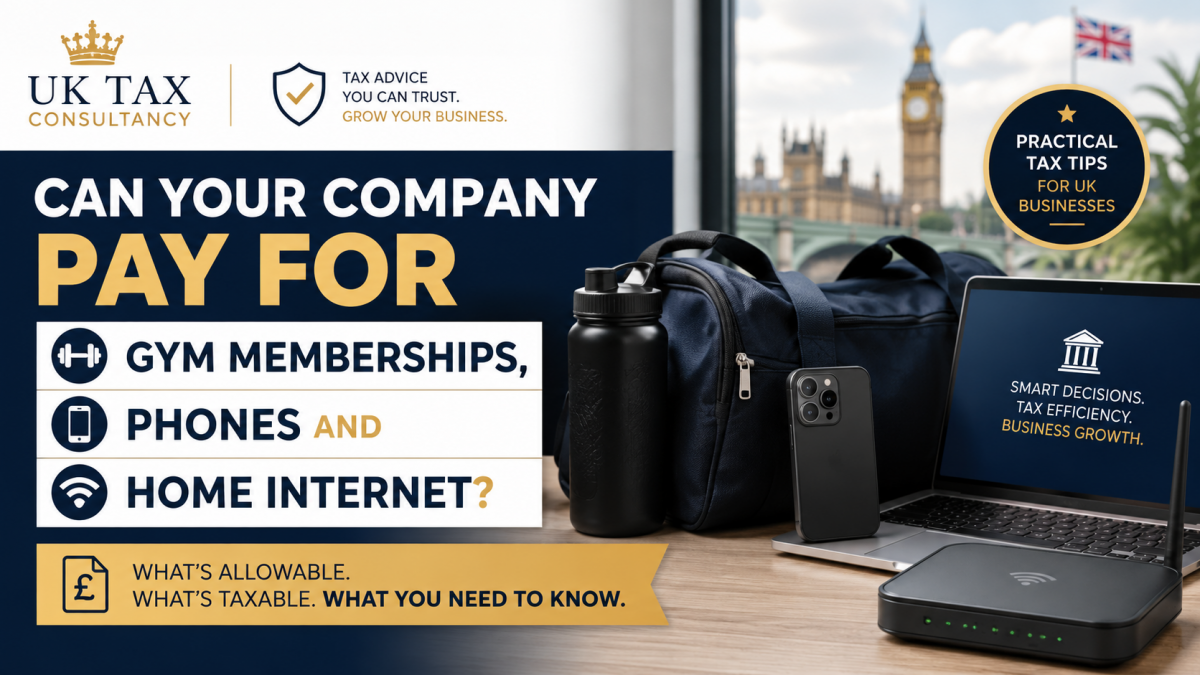
Can Your Company Pay for Gym Memberships, Phones and Home Internet?
Can Your Company Pay for everyday costs such as gym memberships, mobile phones and home internet? It is a common question among company directors looking to make their business more tax efficient.
The answer depends on the type of expense, whether there is a business purpose, and how HMRC treats the benefit. While some costs can be paid by your company without creating a tax issue, others may result in additional tax charges for both the company and the director.
In this guide, we look at how gym memberships, mobile phones and home internet are treated for UK tax purposes.
Can Your Company Pay for Gym Memberships?
Gym memberships are one of the most misunderstood business expenses.
In most cases, if a company pays for a director’s or employee’s gym membership, HMRC treats it as a taxable benefit in kind. This means the value of the membership is added to the individual’s taxable income and reported through the benefits system.
The company may also have to pay Class 1A National Insurance on the benefit provided.
When Gym Memberships May Be Allowed
There are limited situations where gym facilities can be provided without creating a taxable benefit. For example:
- An on-site workplace gym available to all employees.
- A fitness facility located on company premises.
- Certain workplace health and wellbeing initiatives.
However, paying for a private gym membership for a director or employee will usually be treated as a personal benefit.
Is It Tax Efficient?
Although the company can generally claim the cost as a business expense, the benefit in kind charges often reduce or eliminate the tax advantage.
For many directors, paying personally may be simpler unless there is a specific workplace exemption available.
Can Your Company Pay for Mobile Phones?
This is one area where the tax rules are much more favourable.
One Mobile Phone Per Employee
HMRC allows a company to provide one mobile phone to each employee or director without creating a taxable benefit.
The exemption covers:
- Handset costs
- Monthly contracts
- Business calls
- Personal calls
- Data usage
As long as the contract is between the phone provider and the company, the exemption normally applies.
Common Mistake to Avoid
If the contract is in the individual’s name and the company simply reimburses the cost, the exemption may not apply.
To maximise tax efficiency, ensure the contract is taken out directly by the company.
Why Mobile Phones Are Popular
For many owner-managed businesses, a company-paid mobile phone is one of the simplest and most tax-efficient benefits available.
It provides genuine business value while allowing personal use without additional tax consequences.
Can Your Company Pay for Home Internet?
Home internet can be slightly more complicated.
The tax treatment depends on why the internet connection exists and whether it was installed primarily for business purposes.
Existing Home Broadband
If a director or employee already has broadband at home and the company reimburses the monthly bill, HMRC may view this as a taxable benefit because the individual would have incurred the cost personally regardless of their work duties.
New Business Connection
Where a broadband connection is installed specifically to allow an employee to work from home and the contract is in the company’s name, there may be no taxable benefit.
The key factor is demonstrating that the internet service was provided mainly for business purposes.
Mixed Personal and Business Use
Many home internet connections are used for both work and personal activities.
Provided the connection was originally supplied for business reasons and personal use is insignificant compared with business use, tax treatment may remain favourable.
Keeping appropriate records and ensuring the arrangement is properly structured can help support the position if questioned by HMRC.
Can Your Company Pay for These Costs and Still Claim Tax Relief?

In many cases, the company can claim corporation tax relief on expenses incurred wholly and exclusively for business purposes.
However, claiming corporation tax relief does not automatically mean there are no personal tax consequences.
This distinction is important:
- The company may obtain tax relief.
- The director or employee may still face a benefit in kind charge.
- National Insurance contributions may also apply.
Therefore, it is important to consider both corporation tax and personal tax implications before deciding how an expense should be paid.
Can Your Company Pay for Employee Wellbeing Costs?
Many businesses are investing more in employee wellbeing and flexible working arrangements.
HMRC recognises certain health and welfare benefits, but each arrangement should be reviewed individually.
Examples may include:
- Workplace health screenings
- Eye tests for screen users
- Certain occupational health services
- Employee assistance programmes
The tax treatment can differ significantly from gym memberships, so professional advice is often worthwhile before implementing any scheme.
Final Thoughts

Can Your Company Pay for gym memberships, phones and home internet? The answer varies depending on the specific expense.
Mobile phones are generally the most tax-efficient option when the contract is in the company’s name. Home internet may qualify in certain circumstances where it is provided mainly for business use. Gym memberships, however, will usually create a taxable benefit unless a specific exemption applies.
Before putting any personal or mixed-use expense through your limited company, it is important to consider both corporation tax relief and any potential benefit in kind implications. A little planning can help ensure you remain compliant while making the most of the tax rules available to your business.
Need help deciding what’s best for your situation?
📞 Call 0161 710 1901
📧 Email Tax@TaxesDoneRight.co.uk
Visit www.taxesdoneright.co.uk