Self-Employed vs Limited Company: The Answer Isn’t Always What You Think
July 13, 2026
Company Makes a Loss: 7 Smart Actions Every UK Business Should Know
July 15, 2026
HMRC Penalties can affect anyone, from self-employed individuals and landlords to limited companies and employers. Receiving a letter from HMRC stating that you’ve been fined can be worrying, especially if you don’t understand what you’ve done wrong.
The good news is that most HMRC Penalties are entirely avoidable. Understanding why HMRC Penalties are issued and knowing the important deadlines can save you hundreds—or even thousands—of pounds.
In this guide, we explain HMRC Penalties in plain English, covering the most common reasons they’re issued, how much they can cost, and what you can do to avoid them.
What Are HMRC Penalties?
HMRC Penalties are financial charges imposed when taxpayers fail to meet their legal tax obligations. Their purpose is to encourage compliance rather than simply punish mistakes.
Depending on the circumstances, HMRC Penalties may apply if you:
- Submit a tax return after the deadline.
- Pay tax late.
- File incorrect information.
- Fail to register for tax when required.
- Keep inadequate business records.
- Ignore statutory notices from HMRC.
The amount of any penalty depends on the type of tax involved, how late the submission or payment is, and whether HMRC believes the mistake was careless, deliberate or concealed.
Although the rules may seem complicated, understanding the basics makes avoiding HMRC Penalties much easier.
Common Reasons People Receive HMRC Penalties
Many people think HMRC Penalties are only issued to those deliberately avoiding tax. In reality, honest mistakes account for a large proportion of penalties every year.
Some of the most common causes include:
- Missing the Self Assessment filing deadline.
- Paying tax after the due date.
- Forgetting to register as self-employed.
- Filing incorrect VAT returns.
- Late Corporation Tax returns.
- Payroll reporting errors.
- Poor bookkeeping.
- Missing Making Tax Digital obligations where applicable.
The best way to avoid HMRC Penalties is to stay organised throughout the year rather than rushing near filing deadlines.
HMRC Penalties for Late Self Assessment Returns
Late Self Assessment returns remain one of the biggest reasons taxpayers receive HMRC Penalties.
Missing the filing deadline can trigger several stages of penalties, including:
- An initial fixed late filing penalty.
- Daily penalties if the return remains outstanding.
- Additional penalties after longer periods of delay.
- Interest on unpaid tax where applicable.
Importantly, filing your tax return on time—even if you cannot pay immediately—can prevent certain HMRC Penalties from increasing.
Submitting your return well before the deadline also gives you time to correct any mistakes and reduces unnecessary stress.
Late Payment and Business Penalties
Submitting your return and paying your tax are two separate legal obligations.
If tax remains unpaid after the deadline, HMRC may charge:
- Late payment penalties.
- Daily interest on the outstanding balance.
Interest continues until the tax is paid in full, meaning delaying payment almost always increases the final bill.
Businesses also face additional HMRC Penalties relating to:
- VAT returns.
- Corporation Tax returns.
- PAYE reporting.
- Construction Industry Scheme (CIS) submissions.
- Failure to comply with Making Tax Digital requirements.
Whether you’re a sole trader or company director, keeping accurate records and reviewing deadlines regularly can significantly reduce the likelihood of receiving HMRC Penalties.
Can You Appeal HMRC Penalties?
Yes. Not every penalty is final.
HMRC recognises that genuine circumstances can prevent taxpayers from meeting their obligations. If you have a reasonable excuse, you may be able to appeal.
Examples include:
- Serious illness.
- Bereavement.
- Unexpected hospital admission.
- Significant IT failures.
- Natural disasters.
- Postal delays outside your control.
However, simply forgetting a deadline, being too busy or not understanding the rules will rarely be accepted as a reasonable excuse.
If you believe HMRC Penalties have been issued incorrectly, you should appeal promptly and provide as much supporting evidence as possible.
Practical Tips to Avoid Penalties
Avoiding HMRC Penalties is usually far easier than appealing them.
Some simple habits can make a significant difference:
- Record every important tax deadline in your calendar.
- Keep bookkeeping updated throughout the year.
- Save invoices and receipts digitally.
- File tax returns well before deadlines.
- Budget regularly for future tax bills.
- Double-check figures before submitting returns.
- Seek professional advice whenever you’re unsure.
Taking these small steps greatly reduces the chance of receiving unexpected HMRC Penalties.
Why Professional Advice Can Save You Money
Tax legislation changes regularly, making compliance more challenging each year.
Working with a qualified accountant helps ensure returns are accurate, deadlines are met and potential issues are identified before they become expensive.
Professional advice can help you:
- Meet filing deadlines.
- Prepare accurate returns.
- Reduce the risk of costly mistakes.
- Respond to HMRC enquiries.
- Identify legitimate tax-saving opportunities.
In many cases, the cost of professional advice is far lower than the cost of avoidable HMRC Penalties.
Frequently Asked Questions
Do HMRC penalties affect my credit score?
Generally, HMRC Penalties themselves do not affect your credit score. However, if unpaid tax debts escalate into court action or insolvency proceedings, there may be wider financial consequences.
Can HMRC remove penalties?
Yes. If you have a valid reasonable excuse and appeal within the required time limits, HMRC may cancel or reduce certain penalties.
Is interest different from a penalty?
Yes. Interest is charged on overdue tax balances, whereas HMRC Penalties are separate financial charges for failing to meet tax obligations.
Final Thoughts
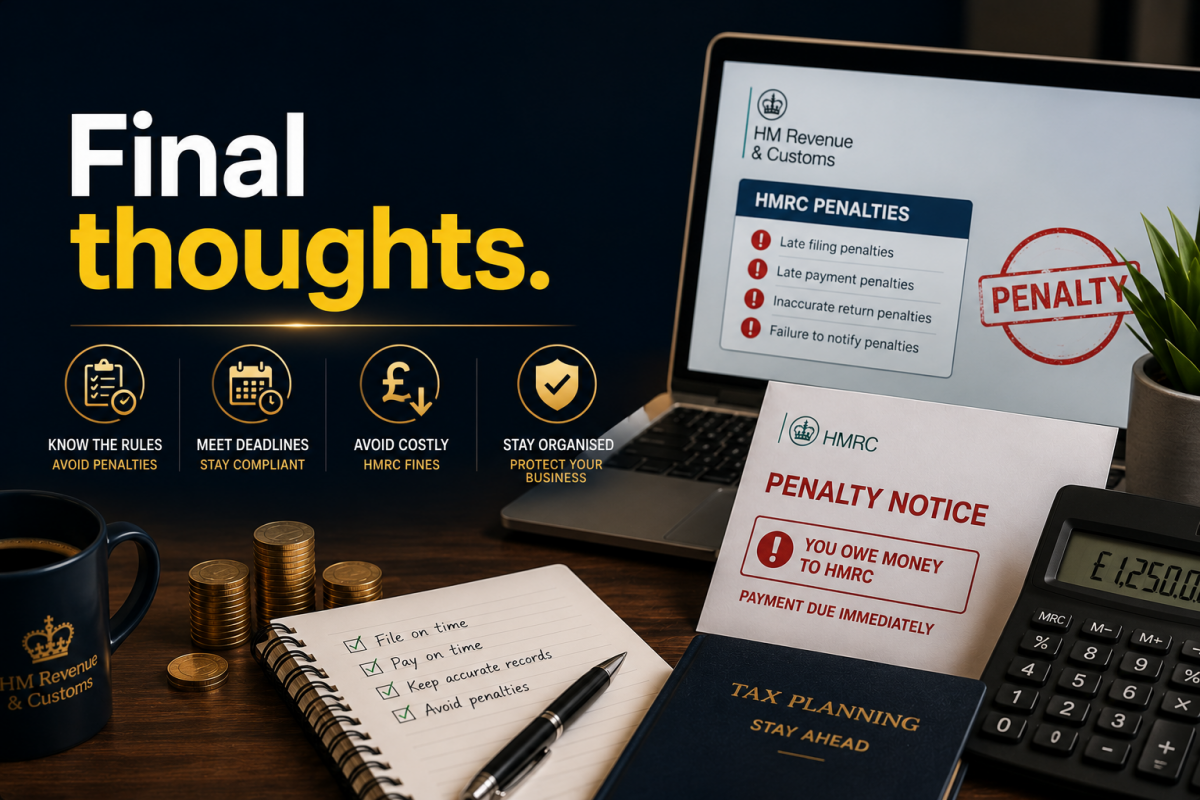
Receiving HMRC Penalties can be frustrating, but most penalties are entirely preventable with good organisation and timely action.
Whether you’re self-employed, a landlord, a company director or an employer, keeping accurate records, meeting deadlines and seeking professional advice when needed will significantly reduce your risk.
If you’re unsure about your tax responsibilities or have already received HMRC Penalties, obtaining expert advice early can often prevent the situation from becoming more expensive. Understanding the rules today could save you considerable time, money and stress in the future.
Need help ?
Need help deciding what’s best for your situation?
📞 Call 0161 710 1901
📧 Email Tax@TaxesDoneRight.co.uk
Visit www.taxesdoneright.co.uk