Making Tax Digital UK: Who Must Use It in the UK? Complete Guide :2026
July 10, 2026
HMRC Penalties Explained in Plain English: Mistakes to Avoid
July 14, 2026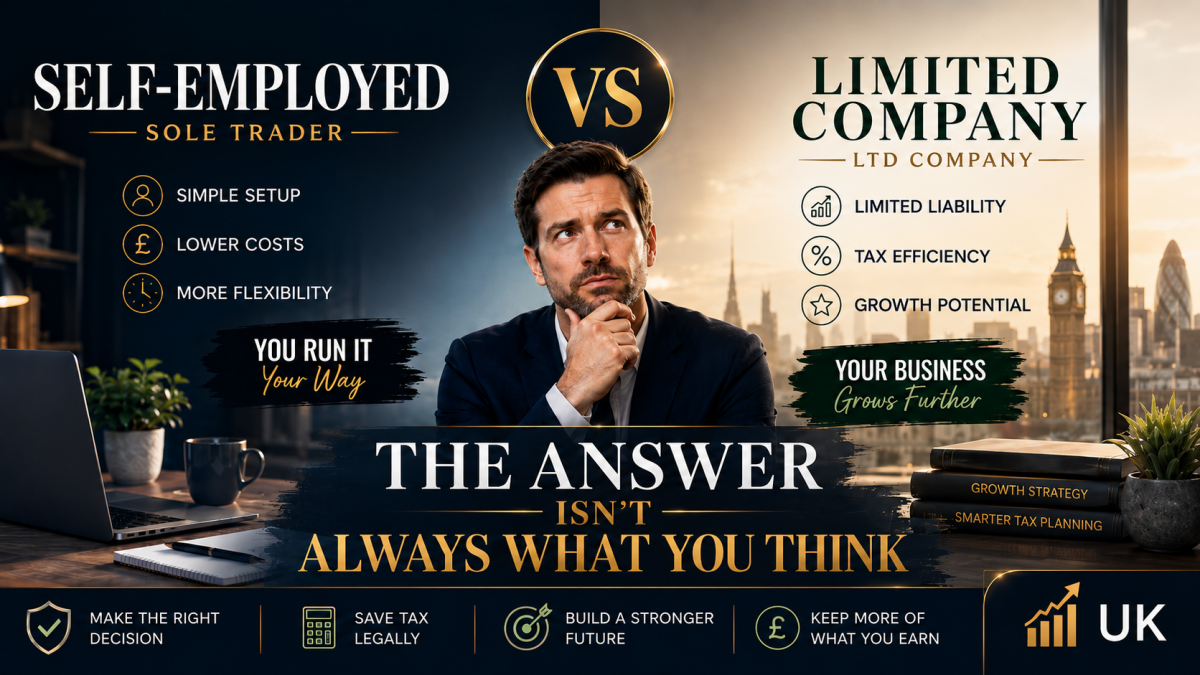
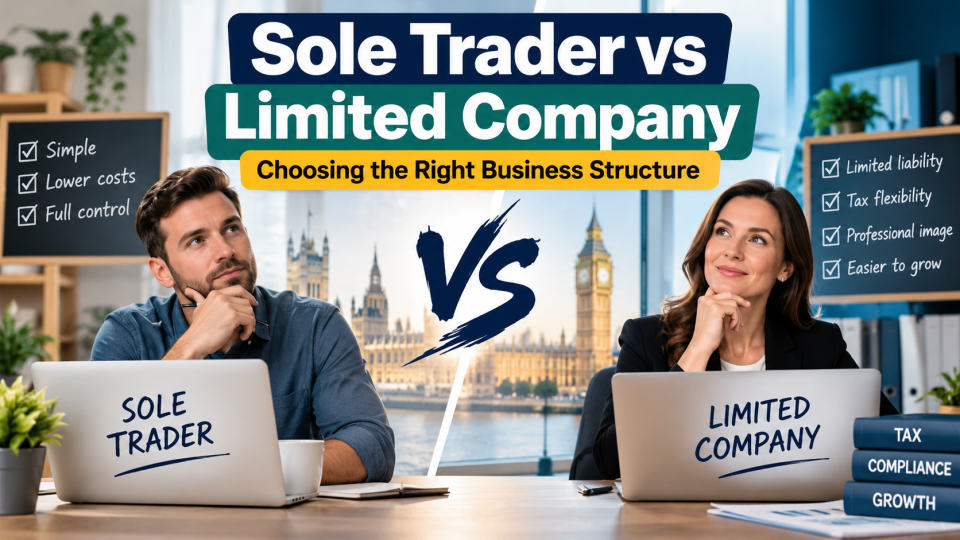
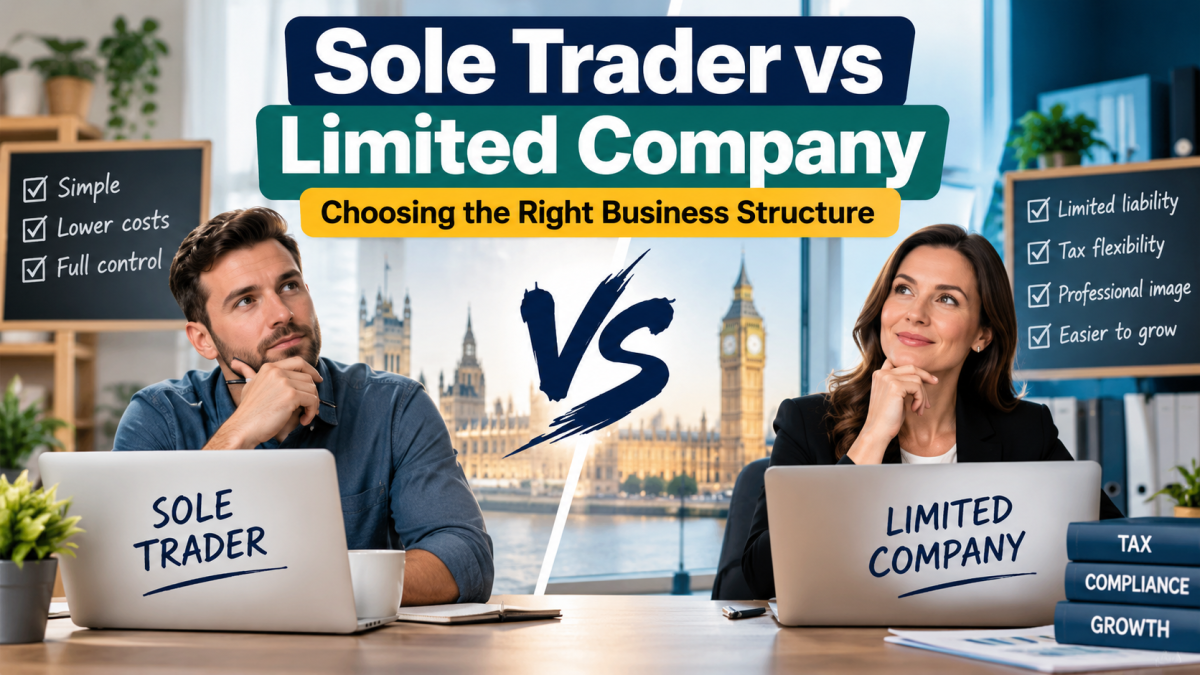
Starting a business is exciting, but one of the first and most important decisions you’ll make is choosing the right business structure. Self-Employed vs Limited Company is one of the most common questions we receive from new entrepreneurs, freelancers, contractors and landlords. Many people assume a limited company is always the most tax-efficient option, while others believe remaining self-employed is simpler and therefore better.
The reality is far more nuanced.
The best structure depends on your profits, future plans, liability concerns, administrative responsibilities and personal circumstances. Choosing the wrong option can result in unnecessary tax, additional costs or administrative burdens that outweigh any perceived benefits.
Let’s explore the key differences so you can make an informed decision.
What Does Self-Employed vs Limited Company Really Mean?
When comparing Self-Employed vs Limited Company, you’re deciding how your business legally operates.
A self-employed individual (sole trader) and the business are legally the same entity. You personally own the business, receive the profits and are responsible for all debts.
A limited company, however, is a separate legal entity. The company owns its assets, enters into contracts and pays Corporation Tax on its profits. Directors and shareholders then extract money through salary, dividends or a combination of both.
While both structures can be successful, each offers different advantages depending on your circumstances.
Self-Employed vs Limited Company: Tax Isn’t the Whole Story
Many business owners focus solely on tax savings when comparing Self-Employed vs Limited Company, but tax should never be the only deciding factor.
As a sole trader:
- Business profits are taxed through Self Assessment.
- You pay Income Tax and National Insurance on taxable profits.
- Record keeping is generally simpler.
- Accounting costs are usually lower.
With a limited company:
- The company pays Corporation Tax on its profits.
- Directors can choose how to extract income.
- Dividend planning may improve tax efficiency.
- Additional filing and compliance requirements apply.
While limited companies can often become more tax-efficient as profits increase, this isn’t guaranteed. Changes to tax legislation, dividend taxation and National Insurance mean the savings are sometimes much smaller than expected.
Professional advice often saves considerably more than relying on general assumptions.
When Being Self-Employed Makes More Sense
Remaining self-employed is often the better choice for businesses that are:
- Just starting out.
- Generating modest profits.
- Testing a business idea.
- Operating with low financial risk.
- Looking for simple administration.
Many sole traders appreciate the straightforward nature of operating without company accounts, dividend paperwork or Companies House obligations.
For businesses earning relatively modest profits, the additional accountancy fees and administrative work involved in running a limited company may outweigh any tax advantages.
Simplicity has value.
When a Limited Company May Be Better
There are many situations where incorporation provides genuine advantages.
A limited company may be appropriate if you:
- Generate consistently higher profits.
- Want to reinvest profits into the business.
- Plan to employ staff.
- Need greater business credibility.
- Want limited liability protection.
- Intend to bring in investors or additional shareholders.
Limited liability can also help separate personal and business finances, although directors still have legal responsibilities and personal guarantees may sometimes apply.
For growing businesses, a limited company often provides greater flexibility for future expansion.
Self-Employed vs Limited Company: Questions You Should Ask Yourself
Rather than asking which structure pays the least tax, ask yourself:
- How much profit do I expect to make?
- Will I need business finance?
- Am I comfortable with additional administration?
- Do I intend to grow rapidly?
- Do I want to employ people?
- What level of personal financial risk am I taking?
- Will I retain profits within the business?
These questions often have a greater impact than comparing tax rates alone.
The correct answer today may not be the correct answer in two years’ time. Many successful businesses begin as sole traders before incorporating as they grow.
Other Important Considerations
Business structure affects much more than taxation.
You should also consider:
Administration
Limited companies have more filing requirements, including annual accounts, Corporation Tax returns and Companies House obligations.
Banking
Although sole traders can use a business bank account, limited companies should always maintain completely separate company finances.
Mortgages
Some mortgage lenders assess sole traders and company directors differently. The structure you choose can influence borrowing options.
Business Image
Certain clients and larger organisations prefer working with limited companies, although this varies across industries.
Future Exit
Selling a limited company can sometimes offer more planning opportunities than selling assets from a sole trader business.
These wider commercial factors are often overlooked but can significantly influence your long-term success.
Common Misconceptions
There are several myths surrounding Self-Employed vs Limited Company.
“Limited companies always pay less tax.”
Not necessarily. The overall position depends on profit levels, personal income, dividend taxation and future tax changes.
“Sole traders look less professional.”
Many highly successful businesses operate as sole traders.
“Incorporating removes all personal liability.”
Limited liability offers protection in many situations, but directors can still have personal responsibilities and guarantees.
“It’s difficult to change later.”
Many businesses successfully incorporate when the timing becomes right.
Final Thoughts
Choosing between Self-Employed vs Limited Company is not simply about paying the lowest tax bill.
The right decision depends on your business goals, expected profits, future growth plans, risk profile and willingness to manage additional compliance responsibilities.
A structure that works perfectly for one business owner may be completely unsuitable for another. That’s why generic online advice should never replace personalised professional guidance.
Before making your decision, consider both the short-term and long-term implications. A well-planned business structure can save money, reduce risk and support future growth, while the wrong choice can create unnecessary costs and complications.
If you’re unsure which option is right for your circumstances, obtaining tailored advice before you start—or before you decide to incorporate—can help you make the most informed decision and avoid costly mistakes later.
Need help deciding what’s best for your situation?
📞 Call 0161 710 1901
📧 Email Tax@TaxesDoneRight.co.uk
Visit www.taxesdoneright.co.uk