The Simple Formula to Compare Flat Rate vs Standard VAT
April 30, 2026
Tax Deductible Guide: When It’s a Repair or an Improvement
May 4, 2026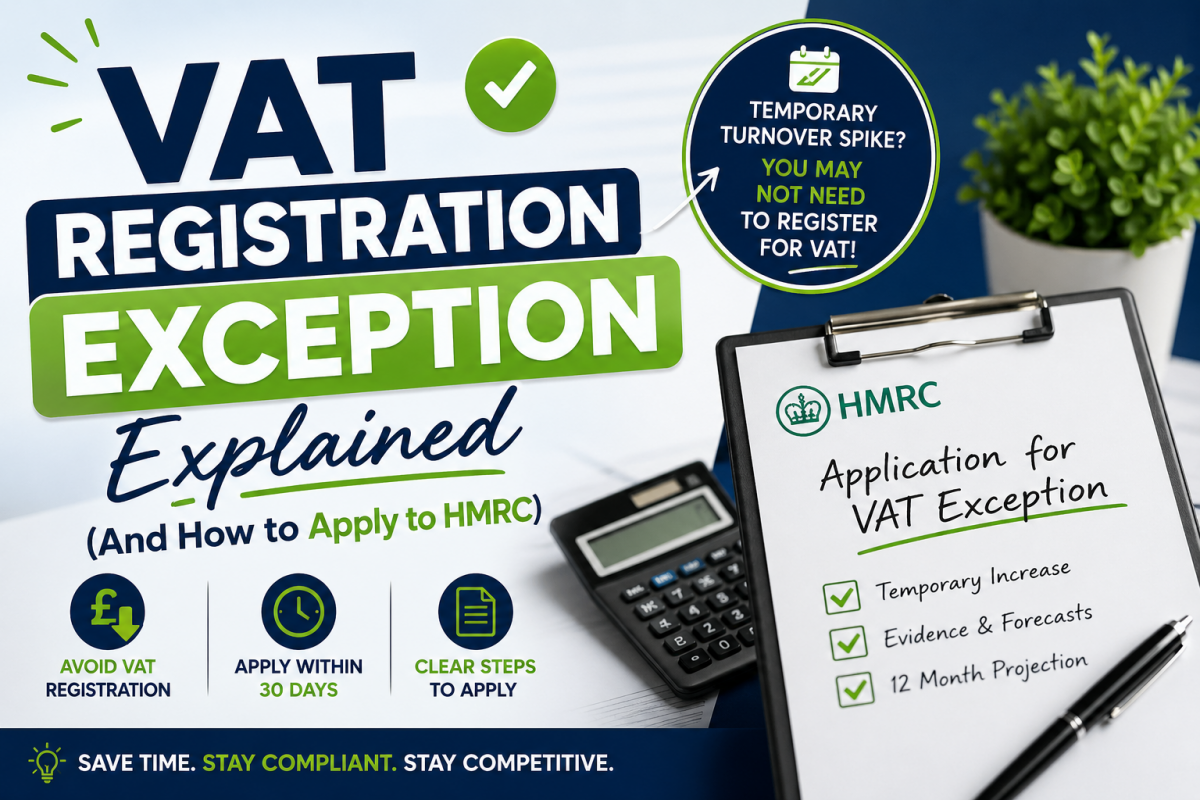
VAT Registration Exception Explained (And How to Apply to HMRC)
VAT Registration Exception is a useful but often overlooked option for businesses that temporarily exceed the VAT threshold. Many business owners assume that once they cross the threshold, VAT registration is mandatory, but that is not always the case.
This article explains what VAT Registration Exception is, when it applies, and how to apply to HMRC correctly.
What Is VAT Registration Exception?
VAT Registration Exception allows a business to avoid registering for VAT even if its taxable turnover exceeds the VAT registration threshold, currently £90,000 in the UK.
However, this only applies where the increase in turnover is temporary. HMRC must be satisfied that your turnover will fall back below the threshold in the next 12 months.
In simple terms, VAT Registration Exception gives you a chance to prove that the spike in income is not ongoing.
When Can You Use VAT Registration Exception?
You can apply for VAT Registration Exception if:
- Your taxable turnover has gone over the VAT threshold
- The increase is due to a one-off event or short-term contract
- You expect your turnover to fall below the threshold again within the next 12 months
Common examples include:
- A large one-off project or contract
- Seasonal spikes in sales
- Catch-up payments or delayed invoices
If your business is growing steadily and will remain above the threshold, VAT Registration Exception will not apply.
VAT Registration Exception Criteria (What HMRC Looks For)
HMRC will assess your application carefully. To approve an VAT Registration Exception, they will expect:
- Evidence that the spike in turnover is temporary
- Realistic forecasts showing reduced income over the next 12 months
- Supporting documents such as contracts, invoices, or correspondence
They are not just taking your word for it. Your projections must be credible and backed by evidence.
How to Apply for VAT Registration Exception
Applying for VAT Registration Exception is straightforward but must be done correctly.
Step 1: Act Quickly
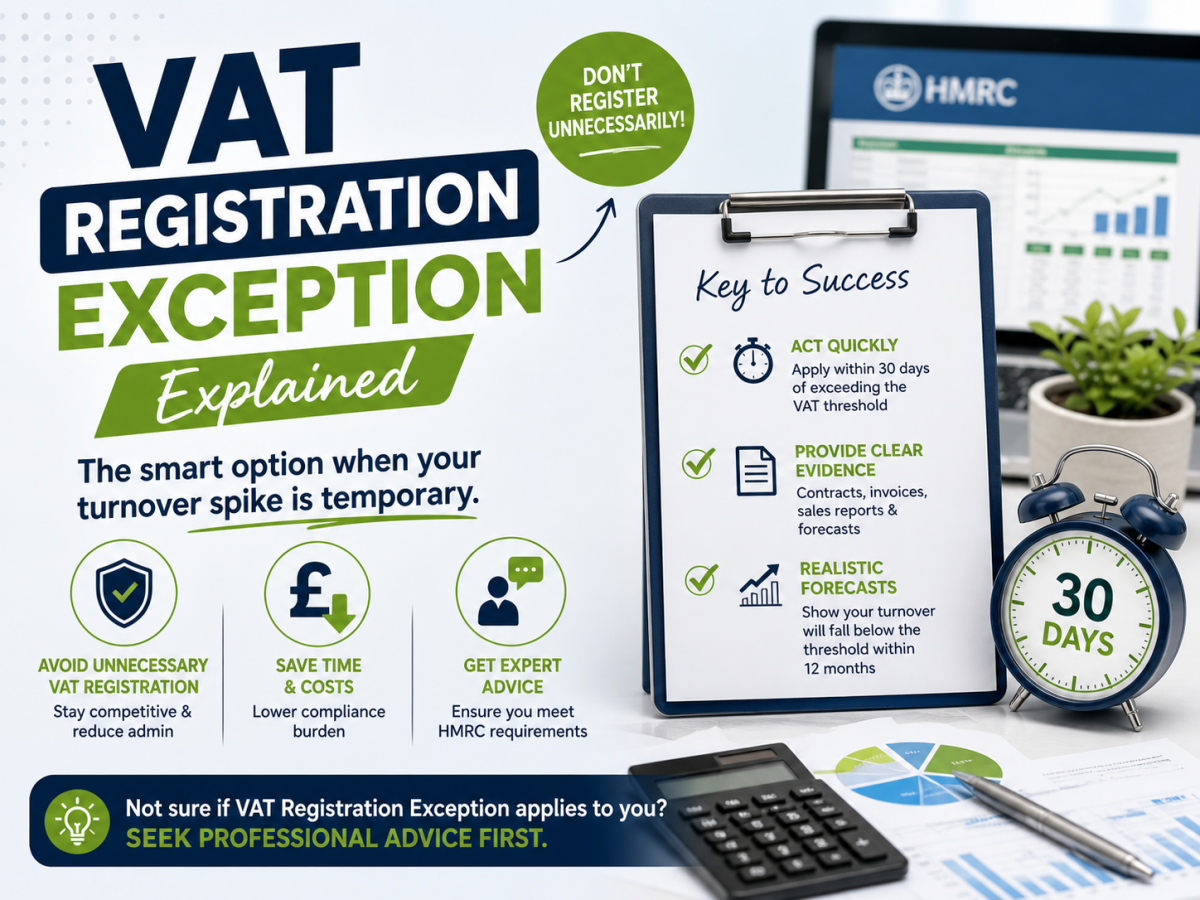
You must apply within 30 days of exceeding the VAT threshold. Missing this deadline can result in HMRC automatically registering you for VAT.
Step 2: Write to HMRC
There is no standard online form. Instead, you need to contact HMRC directly and request an exception.
Your application should include:
- Your business details (name, UTR, VAT status if applicable)
- The date you exceeded the threshold
- The reason for the temporary increase
- A forecast of your turnover for the next 12 months
- Supporting evidence
Step 3: Provide Evidence
This is the most important part of your VAT Registration Exception application.
Include:
- Copies of contracts showing work has ended
- Sales reports demonstrating the spike
- Future projections showing reduced income
Step 4: Wait for HMRC Decision
HMRC will review your request and either:
- Approve the VAT Registration Exception, meaning no VAT registration is required
- Reject the request, meaning you must register for VAT
What Happens If Your Application Is Approved?
If HMRC accepts your VAT Registration Exception:
- You will not need to register for VAT
- You do not charge VAT on your sales
- You continue operating as normal
However, you must monitor your turnover closely. If you exceed the threshold again and it is not temporary, you may need to register.
What Happens If It Is Rejected?
If your VAT Registration Exception is rejected:
- You must register for VAT from the date you exceeded the threshold
- You may need to account for VAT on past sales
- Penalties may apply if you delayed applying
This is why it is important to apply on time and provide strong evidence.
Common Mistakes with VAT Registration Exception
Many businesses get caught out due to simple errors:
- Assuming they automatically qualify
- Applying too late
- Providing weak or no evidence
- Underestimating future turnover
VAT Registration Exception is not guaranteed. It depends entirely on your circumstances and the strength of your application.
Is VAT Registration Exception Worth It?
For some businesses, VAT Registration Exception can be very beneficial.
Avoiding VAT registration means:
- You do not increase your prices by 20%
- You remain competitive, especially with non-VAT registered customers
- You reduce admin and compliance requirements
However, if your business is growing long term, registering for VAT may actually be the better option.
Final Thoughts
VAT Registration Exception is a valuable option if your turnover temporarily exceeds the VAT threshold. It gives businesses flexibility and prevents unnecessary VAT registration where income spikes are short-lived.
The key is acting quickly, providing clear evidence, and ensuring your forecasts are realistic.
If you are unsure whether VAT Registration Exception applies to you, it is always best to seek professional advice before contacting HMRC.
If you need help applying for VAT Registration Exception or reviewing your VAT position:
Call 0161 710 1901
Email Tax@TaxesDoneRight.co.uk
Visit www.taxesdoneright.co.uk